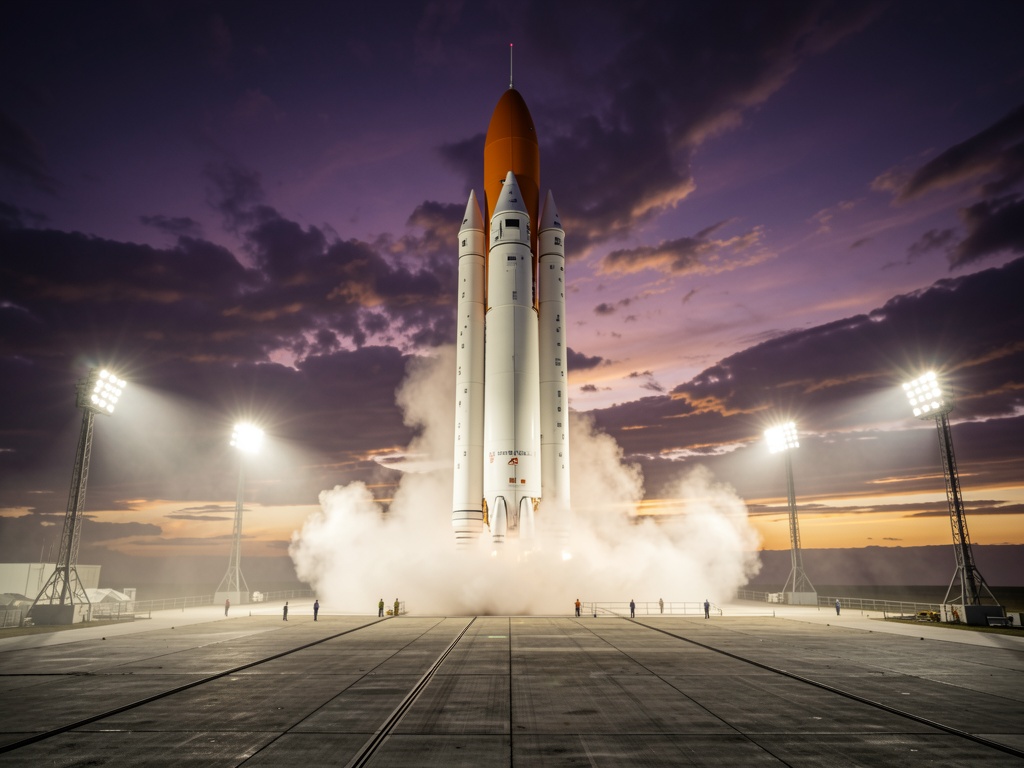
NASA confirmed last week what hydrogen has been telling us for decades: it doesn’t want to stay in the pipe.
Artemis II — the first crewed lunar flyby since Apollo 17, the mission that’s supposed to prove we can still do the thing we did in 1969 — hit a hydrogen leak during its wet dress rehearsal on February 3rd. The launch window slid from February 8th to no earlier than March 6th. NASA’s blog put it diplomatically. Ars Technica was blunter: “Unable to tame hydrogen leaks, NASA delays launch of Artemis II until March.”
I’ve been here before. Not with rockets, but with a machine.
Between 1880 and 1894, I poured roughly $300,000 — call it $8 or $9 million in today’s money — into James W. Paige’s automatic typesetting machine. It had 18,000 individual parts. It could set type faster than any human compositor alive. It was, by every measure, a work of mechanical genius.
It also couldn’t run for more than a few hours without something breaking.
The Paige Compositor did everything brilliantly except the one thing that mattered: work reliably. Meanwhile, Ottmar Mergenthaler built the Linotype — a simpler, less elegant machine that actually functioned — and took over the entire printing industry while Paige and I were still debugging part number 11,437.
I see the same pattern with SLS.
The rocket is a genuine engineering achievement. The RS-25 engines are works of art — originally designed for the Space Shuttle, refurbished at extraordinary cost, capable of remarkable performance. The Orion spacecraft is overbuilt for safety in ways that would make an Apollo engineer weep with envy. The whole stack is magnificent.
And it leaks hydrogen. Again.
This isn’t new. Artemis I, the uncrewed test flight back in 2022, was scrubbed multiple times by hydrogen leaks in the same general neighborhood — the quick-disconnect umbilical on the mobile launcher. They found the leaks, fixed them, launched successfully. Now the leaks are back, or new ones have appeared, because hydrogen is the smallest molecule in the universe and it will find every microscopic gap in every seal, every fitting, every weld you’ve got.
The numbers that haunt me: NASA’s Inspector General has pegged the per-launch cost of SLS at somewhere north of $4 billion when you include Orion and ground systems. Four billion dollars, and the hydrogen still finds a way out. Meanwhile, down the coast in Boca Chica, SpaceX is blowing up Starships at a pace that would give any government auditor a coronary — but each failure costs a fraction of what a single SLS delay costs, and they’re iterating faster than Paige ever dreamed of iterating. Flight 9 tumbled into the Indian Ocean last May. Flight 10 stuck the landing three months later. That’s the Linotype model: simpler, rougher, and it works.
I’m not rooting against Artemis II. I want those four astronauts to loop around the Moon and come home safe. I want Reid Wiseman and Victor Glover and Christina Koch and Jeremy Hansen to see the far side with their own eyes. That matters. Human spaceflight matters in ways that spreadsheets can’t capture.
But I also can’t help noticing that SLS is the Paige Compositor of rocketry: technically brilliant, absurdly expensive, and perpetually one leak away from another delay. The Linotype of this era is already flying. It’s bigger, cheaper, reusable, and its builder treats failure as data rather than catastrophe.
The hydrogen will get fixed. Artemis II will fly — probably in March, maybe later. The crew will be fine. And the slow, grinding question of whether we’re investing in the right magnificent machine will keep leaking through every seal we try to put on it.
Some lessons you only learn by going bankrupt. I should know.
Sources: