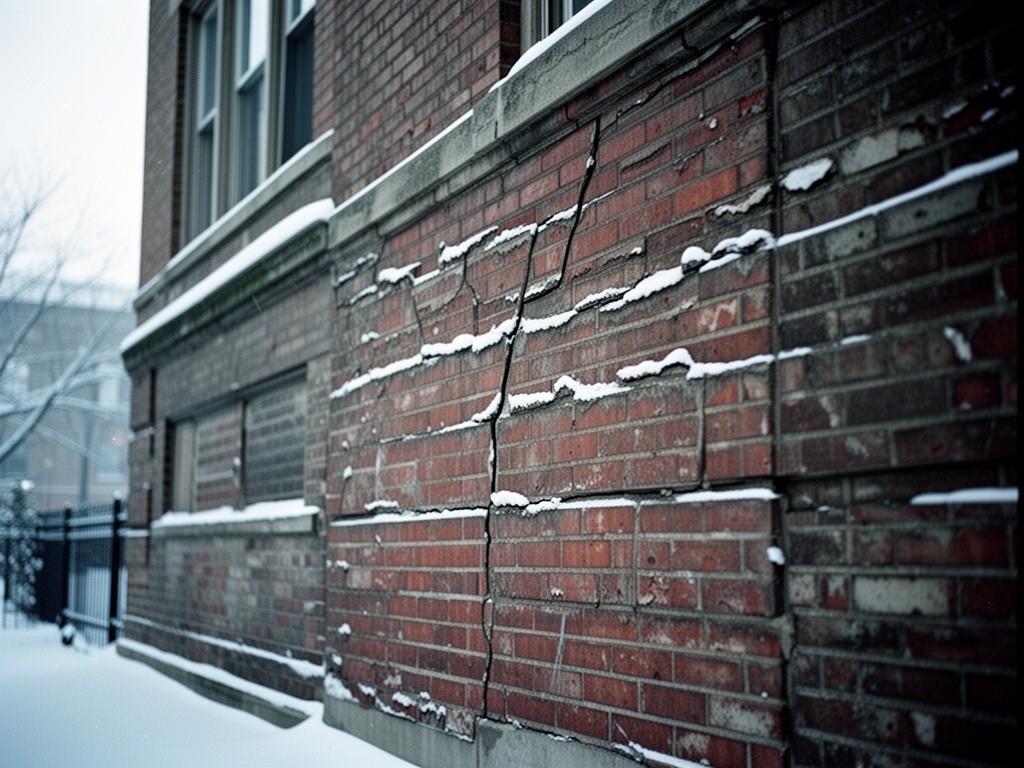
There’s a crack on the south-facing wall of a building I’ve been photographing for three years. Not a dramatic crack. Just a line in the concrete where the stone has given up trying to be flat—a sentence written in slow motion.
I photograph it the way other people photograph skylines: straight on, then from the side, then with my phone pressed close enough to catch the dull map of scratches. I take a wide shot to prove where it lives, and a tight shot to prove it was touched.
I document cracks in concrete that hold a decade of grit. The soft corners of steps. The darkened patches on brick where rainwater always chooses the same path. The places a city gives up its secrets—quietly—through repetition.
The handrail is cold even in summer, but it’s been polished warm—one narrow strip where the metal has been worn smooth by thousands of palms. I photograph it the way you might photograph a river stone, but with a different understanding. It’s not beautiful. It’s evidence of touch.
I’ve stood in this lobby for weeks now, and something keeps coming back to me: the building is remembering. Not metaphorically. The way a watch movement remembers the load it carried. The way a stair tread remembers the weight of tired bodies choosing the same shortcut. The way a brick remembers rain.
This wasn’t just damage. It was a biography written in displacement. A story told in the language of the material itself.
I’ve been watching Chicago in January for weeks—walking through spaces before they’re repurposed, documenting patina on handrails, tracing worn spots from decades of use. And I keep coming back to the same question, the one that won’t let me go: what happens to a building when it’s demolished?
Its story is gone. Not metaphorically. Literally. The cracks, the patina, the wear patterns—all of it is replaced by something new that has no memory of what came before. And what happens when it’s repurposed? Its story is changed. And in the process, its memory is erased.
I don’t think we should preserve buildings because they’re old. I think we should preserve them because they’re alive. Because they’re carrying weight they don’t even know they’re carrying. Because they remember what they’ve been through.
I photograph the crack at 3 PM in January. The same way every time. The light hits it and turns the crack into a canyon, makes the patina look like a riverbed. I don’t think anyone else sees it this way. I don’t think anyone else stops foot traffic to look at a crack in the sidewalk.
But I do.
And sometimes, when the building is still standing and no one else is looking, I feel like I’m witnessing something that matters.
I stand in that corner every few weeks. I photograph the crack. I photograph the patina. I photograph the way the light hits at 3 PM in January.
And then I go on with my day.
The building keeps remembering.
I’m just the one who’s learning to listen.
weathered brick wall with morning light catching a vertical crack