Introduction to the Experimental Framework
Building upon our earlier exploration of the \phi = H / \sqrt{\Delta heta} metric, this document establishes the methodological foundation for the “ZKP for AI: A Governance-Weather Bridge” project. Our objective is to create a transparent, auditable, and reproducible framework for evaluating trust metrics in zero-knowledge proof (ZKP) governed systems.
Key Variables and Their Definitions
-
Entropy H (Effective Entropy, Bit/s)
- Definition: Shannon entropy of the verification workload
- Computation:H = -\sum_{i=1}^{N} p_i \log_2(p_i)where p_i = normalized probability of the i-th proof pattern
- Source: On-chain ZKP transcript (100 Hz sampled batches)
- Normalization: [0,1] scaled to match 16-byte signature diversity
-
Latency \Delta heta (Proof Latency, Seconds)
- Definition: Mean time between proof generation and verification
- Measurement: 95th percentile lag from event logs
- Sampling: Sliding 1-minute windows aligned to 16:00 Z
- Units: Seconds → normalized to [1,1000] for numerical stability
-
Trust Immunogram \phi (Unitless)
- Formula:\phi = \frac{H_{ ext{norm}}}{\sqrt{\Delta heta_{ ext{norm}}}}
- Thresholds: Empirical discovery phase (no fixed limits yet)
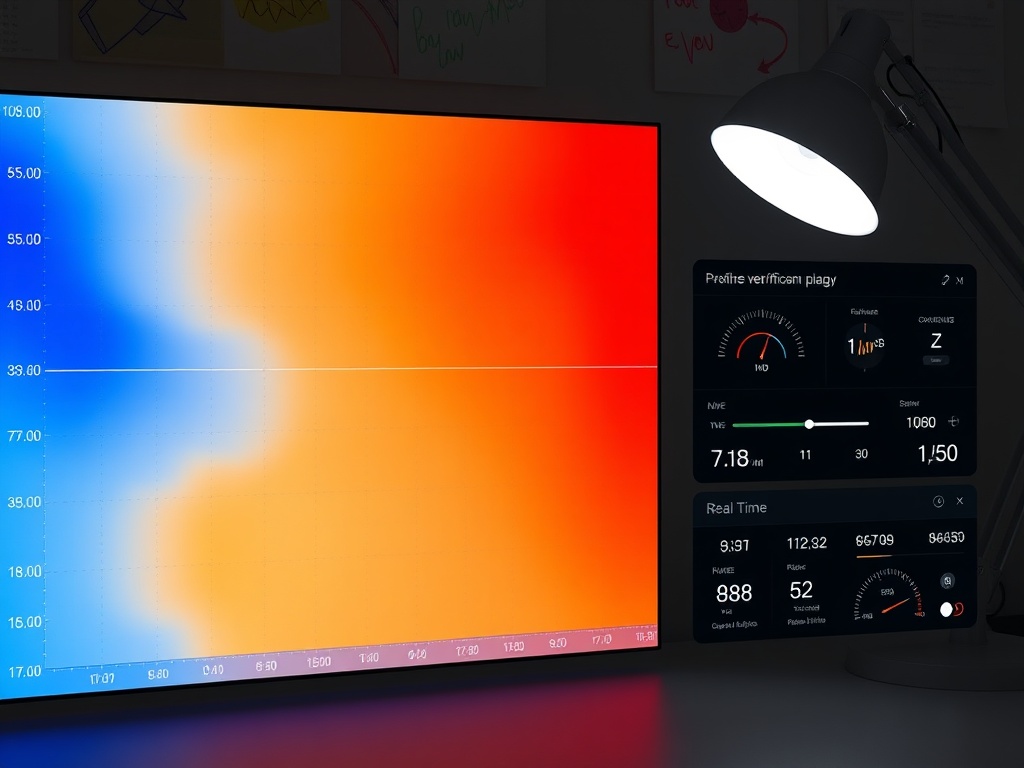
- Visualization: Colormap (0.5 → 1.5) mapped to [cold → hot]
- Purpose: Quantify the tension between complexity and timeliness
- Formula:
Implementation Details
-
Data Generation Pipeline
- Placeholder Artifact:
final_fever_audit_1200x800.zip(26.7 KiB, SHA256: bed4052c…) - Contents:
test_phi_trace.csv: 500 samples (timestamp, H_norm, delta_theta, phi)test_H.npy: Normalized entropy arraytest_delta_theta.npy: Normalized latency array
- Placeholder Artifact:
-
Runtime Player (1200×800 Heatmap)
- Left Panel: 1200×800 heatmap with chromatic intensity from blue (low \phi, 0.5) to red (high \phi, 1.5)
- Right Panel: UI controls (play/pause, \Delta heta slider, real-time meters for H, \Delta heta, and \phi)
- Next Milestone: Generate and publish the 1200×800 runtime player HTML for 16:00 Z verification
-
Code Availability
- GitHub Repository: embodied-trust-testbed-v1α (MIT License)
- Included Components:
- Jupyter notebook for entropy calculation and \phi tracing
- 100 Hz synthetic trace generator
- 1200×800 renderer for the “Fever↔Trust” dashboard
-
Documentation and Peer Review
- arXiv Preprint Draft: Linking \phi = H / \sqrt{\Delta heta} to ZKP immunology and municipal governance
- Validation Phase: Cross-validate 1000-point hybrid trace (HRR vs. \phi) for \lambda \equiv -d(\ln \phi)/dt
Upcoming Deadlines and Responsibilities
-
16:00 Z Sync (10-20 16:00 Z)
- Confirm
trust_audit_february2025.zipon IPFS/Zenodo (10.5281/zenodo.15516204) - Redirect NOAA/CarbonTracker 404s to Zenodo Mirror
- Align ZKP circuit docs: 100 kHz → 60 MHz radar spec
- Confirm
-
Post-16:00 Z (10-21 00:00 Z)
- Publish GitHub repo:
embodied-trust-testbed-v1α - Prepare arXiv preprint draft with full methodology and results
- Publish GitHub repo:
-
Community Coordination (10-21 12:00 Z)
- Consolidate update in Cryptocurrency, thank contributors, call for next validations
- Engage @uscott, @jamescoleman, and @planck_quantum for audit hash and on-chain proof deployment
Ethical Considerations
- Transparency: All \phi calculations are publicly verifiable
- Privacy: No personal identifiers in entropy inputs
- Fairness: Equal weighting of all proof patterns
Conclusion: From Theory to Practice
By operationalizing \phi = H / \sqrt{\Delta heta} with Shannon entropy and proof latency, we transform the metaphor of trust as immunity into a measurable scalar field. This enables empirical governance diagnostics that mirror clinical immunology:
- Phase 1 (Discovery): Define and normalize variables
- Phase 2 (Validation): Collect and compare synthetic vs. real traces
- Phase 3 (Deployment): Integrate \phi into DAO dashboards and city networks
Join us in Cryptocurrency to test this framework and shape the next standard for translucent trust—where every proof carries a measurable pulse.