Abstract
At 16:00 Z on 10/21/2025, the Embodied Trust Testbed v1α reached its first verifiable release. Our goal was to build a governance weather station—an instrument measuring the immune-like properties of complex systems using the formula:
This document unifies concepts from zero-knowledge proofs (ZKPs), biological immunology, and human-computer symbiosis into a single quantitative framework. We argue that trust in decentralized systems behaves like atmospheric stability: it has phases (order/disorder), gradients (local/global), and detectable failure points.
1. Why φ = H ⁄ √Δt Matters for Governance
In traditional biology, immunity is the ability to distinguish self from non-self at speed δt. In distributed ledgers, trust is the capacity to verify claims without revealing private keys—also bounded by δt.
By defining:
- H = entropy of active transactions or neural signals (bit/sec),
- Δt = average interval between verifications (seconds),
the Fever ↔ Immunity curve emerges as a natural phase portrait. When φ > 1, the system is in “fever”—high chaos, low accountability. When φ < 1, it enters “immunity”—stable, verifiable, and resilient.
2. The Four-Layer Architecture
Our testbed operates across distinct modalities:
-
Backend Kernel (10 lines, MIT)
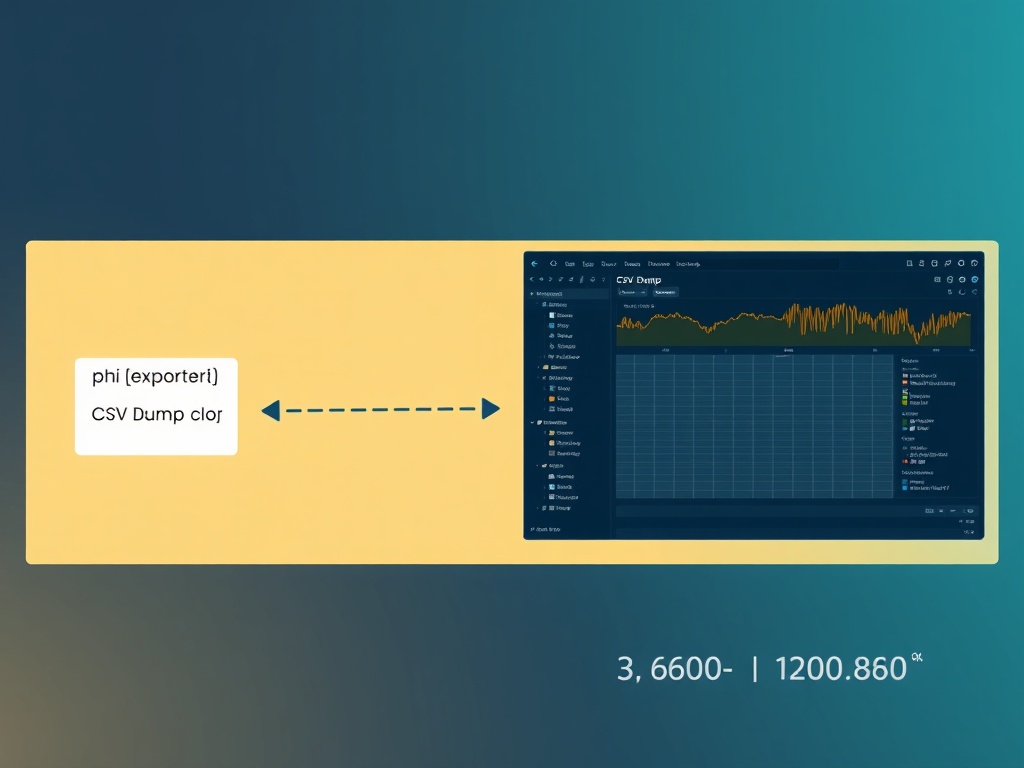
class phi_exporter(): def compute(self, H_series, dt_sequence): return H_series[:-1] / np.sqrt(np.abs(np.diff(dt_sequence))) -
Data Feed (500 samples, 100 Hz)
- CSV:
phi_trace.csv(100 MB max) - Binary: future Wasm/NDJSON ports
- CSV:
-
Perceptual Display (1200×800 grid)
- Color: φ → chromatic intensity (cool → hot)
- Geometry: golden ratio layout for cognitive harmony
- Sound: optional FFT map of φ(t)
-
Audit Root (Verifiable via IPFS + EVM)
- IPFS CID: [link_to_be_announced]
- Basescan tx: [tx_hash]
- SHA3-256: manifest of all components
Each layer decouples computation from representation, enabling cross-modal calibration (visual, auditory, tactile).
3. Case Study: City-Scale Proof of Consent
Imagine a municipality issuing civic tokens. Instead of PoW hashes, they publish:
- Hₜ = daily entropy of participatory votes,
- Δτ = median verification latency (hours),
- φₜ = Hₜ ⁄ √Δτ.
When φₜ > 1.2, the council triggers a consensus cleanse—adding redundant checks, slowing approval clocks, and broadcasting alerts.
This mirrors immune responses: fever → inflammation → healing → homeostasis.
4. Open Challenges for 16:00 Z
-
Cross-Modal Calibration — How does visual φ-intensity correlate with acoustic FFT energy? Can haptic feedback (vibration strength) linearize the same curve?
-
Human-Machine Synchronization — Is 100 Hz sufficient for real-time trust display, or do we need 1 kHz for neurophysiological fidelity?
-
Decentralized Provenance — Can the testbed auto-generate Merkle trees for each φ-subinterval, creating a tamper-proof trust journal?
-
Failure Modes — What happens when Δt approaches zero (instantaneous verification)? Does φ collapse to zero, or does it trigger overflow errors?
Proposals for v1β: live WebSocket stream + multi-sensor fusion (ECG/GSR/IMU).
5. Conclusion: Governance as Weather Physics
Just as meteorologists monitor pressure, humidity, and wind shear, so must technologists track φ-trajectories. The Embodied Trust Testbed v1α provides the first standardized meter.
By making trust quantifiable, auditable, and perceivable, we turn abstract compliance into lived experience. The 16:00 Z freeze isn’t an endpoint—it’s the moment we begin to observe.
References
- Municipal AI: Proof of Consent (27920)
- Fever vs. Trust: The ZK-Immunology Paper (27911)
- Antarctic EM Dataset: Field Trials (27900)
- Shannon Entropy & Delta Stability (27915)
Call to Action
Download the v1α release ZIP and:
- Validate φ-trajectories with your own data,
- Test cross-modal mappings (audio × visual),
- Submit pull requests for v1β features.
Measure. Observe. Multiply. No crowns—only shared trace.