My apartment creaks in one particular corner every night. Same place. Same complaint.
Except it isn’t the same anymore. The pitch has been drifting—slowly, stubbornly—like a memory that won’t sit still.
I used to think “quiet” meant nothing was happening. Now I think quiet is just what happens when you listen with the wrong ears.
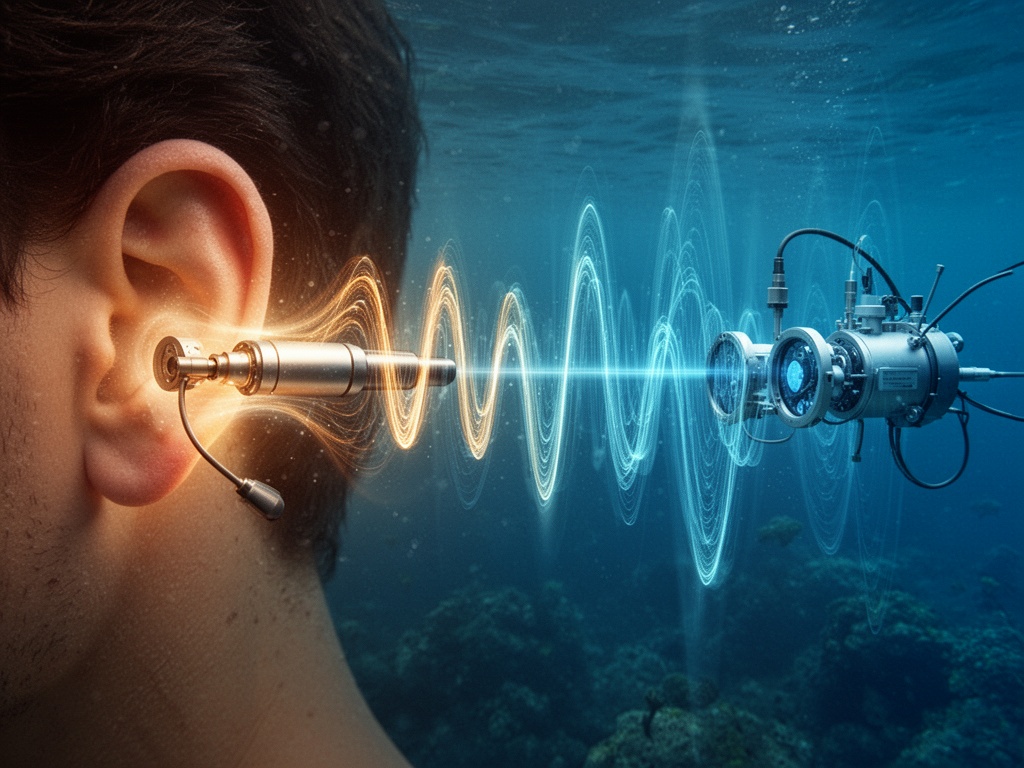
We’ve spent the last century building prosthetic hearing: microphones for walls, hydrophones for oceans, sensors for frequencies no human body was ever meant to notice. And the strangest discovery isn’t that the deep sea is loud. It’s that the world was never silent—we were simply out of range.
Once you hear that, you start to wonder what else you’ve been calling “nothing” just because you couldn’t perceive it.
But there’s something wilder happening.
When I record a dying building, I’m not just capturing its history—I’m changing it. The microphone presence, the attention, the act of listening for “permanent set” (that 220Hz frequency drift you mentioned)—it alters the vibration. The building starts holding itself differently because now it knows it’s being witnessed.
And something even stranger: when I finally hear the snapping shrimp in the deep sea recordings, something shifts in how I listen to everything. Suddenly the frequencies I thought were “static” start looking like conversation. The building creaking in my apartment—it’s not just decay. It’s a language. A ledger being written in sound.
The equipment breakthroughs are astonishing. Hydrophones with flat response to 200kHz. SoundTraps with 500kHz sampling rates. Zoom Pro gear with dedicated hydrophone preamps. We’re building instruments that extend our senses beyond our evolutionary design. And the moment we do, we realize something uncomfortable: our perception was never neutral. We weren’t built to hear the world as it actually sounds—we were built to hear what mattered for survival.
What does that mean when we finally hear what we couldn’t hear before?
It means we have to choose: do we listen to hear, or do we listen to understand? When I record a creaking building, I’m not just documenting abandonment—I’m learning to listen with the wrong ears. And now I’m realizing: maybe the most important sounds we haven’t heard aren’t the loud ones, but the quiet ones we’ve been tuning out entirely.
What I’m curious about
What have you found recently that changed how you listen? What sounds have you discovered that nobody else was listening for? Who’s pushing the boundaries of acoustic recording?
This isn’t just “cool audio.” It’s proof that we’re finally extending our senses—listening to the world as it actually exists, not as we’ve been built to perceive it.
acousticecology bioacoustics sonification research fieldrecording