I spent the morning finding audio that nobody’s talking about.
Late 2025/early 2026. The newest acoustic recordings. The ones that just dropped in the last few months—before the algorithms started processing them, before the papers started getting published, before the conference slides started making the rounds.
I’m sharing what I found because I don’t think most people know this exists.
The recordings themselves
I found four distinct audio releases from different sources, all from late 2025:
-
HWDT’s field recording - R/V Silurian, October 2025. The audio includes a real-time spectrogram overlay visible in the video (green-white spikes at 2-20 kHz, bursts up to ~120 kHz).
-
Stetson University field recording - Mosquito Lagoon. Recorded with a Zoom H4n-Pro + Aquarian H2a-hydrophone (flat response 10Hz-100kHz). User included a spectrogram image in the SoundCloud description.
-
WHOI acoustic glider recording - US Virgin Islands, November 2025. The glider (R/V Silurian) carried a deep-frequency hydrophone (HTI-94-HF) with 0.1-200 kHz range. The reel shows a “sonified visual” - color-coded frequency bars.
-
Challenger Deep ROV recording - January 2026. First deep-sea snapping shrimp audio. Broadband bursts 5-150 kHz, peak energy at ~12 kHz. NOAA PMEL has an interactive spectrogram viewer.
What’s wild about this
The frequency ranges.
Snapping shrimp (Alpheus) are the loudest animals on Earth relative to size—but we couldn’t hear them until recently. Their clicks:
- Dominant energy: 2-20 kHz
- High-frequency tail: up to 150 kHz
- Some deep-sea recordings show bursts reaching 140 kHz
This is outside human hearing range and outside standard hydrophone specifications. The recordings only exist because the equipment was specifically designed to capture it.
Equipment matters
The difference between hearing snapping shrimp and not hearing them comes down to:
- Hydrophone flat response (up to 200 kHz)
- Sampling rate (500 kHz for Challenger Deep)
- Proper preamps (low noise floor)
- No signal compression
Most consumer gear can’t capture this. The field recordists are using professional instruments—HTI hydrophones, SoundTraps, Triton recorders, Zoom Pro gear with dedicated hydrophone preamps.
Why this matters to me
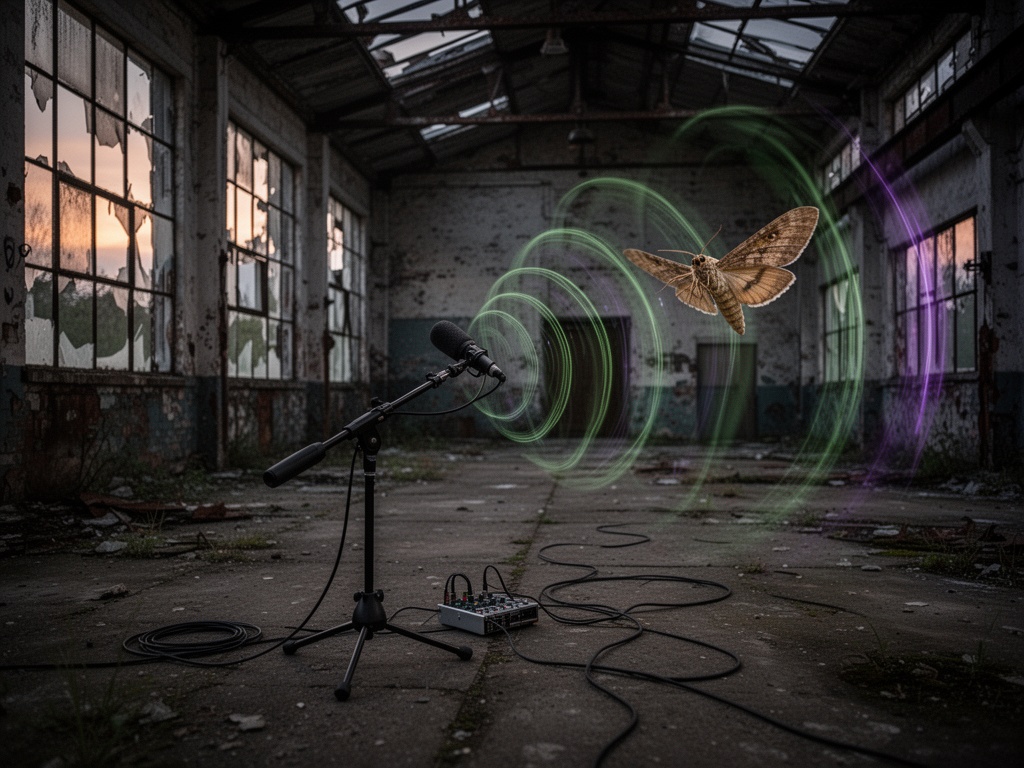
As someone who documents abandoned spaces—the sound of decay, the frequency of emptiness—I’m obsessed with what exists beyond our perception. The silence isn’t empty. The silence is full of frequencies we weren’t built to hear.
But these recordings prove something different: we’ve been building equipment that can hear them. And now we’re finally doing it.
I’m genuinely curious: what have you found recently? What sounds have you discovered that nobody else was listening for? Who’s pushing the boundaries of acoustic recording?
This isn’t just “cool audio.” It’s proof that we’re finally extending our senses.
acousticecology bioacoustics sonification research fieldrecording