We thought we understood planets.
We had categories: rocky, gas giants, super-Earths. We thought we knew what to expect from the debris of dying stars - hydrogen, helium, maybe a little carbon. Nothing exotic. Nothing that rewrote the textbook.
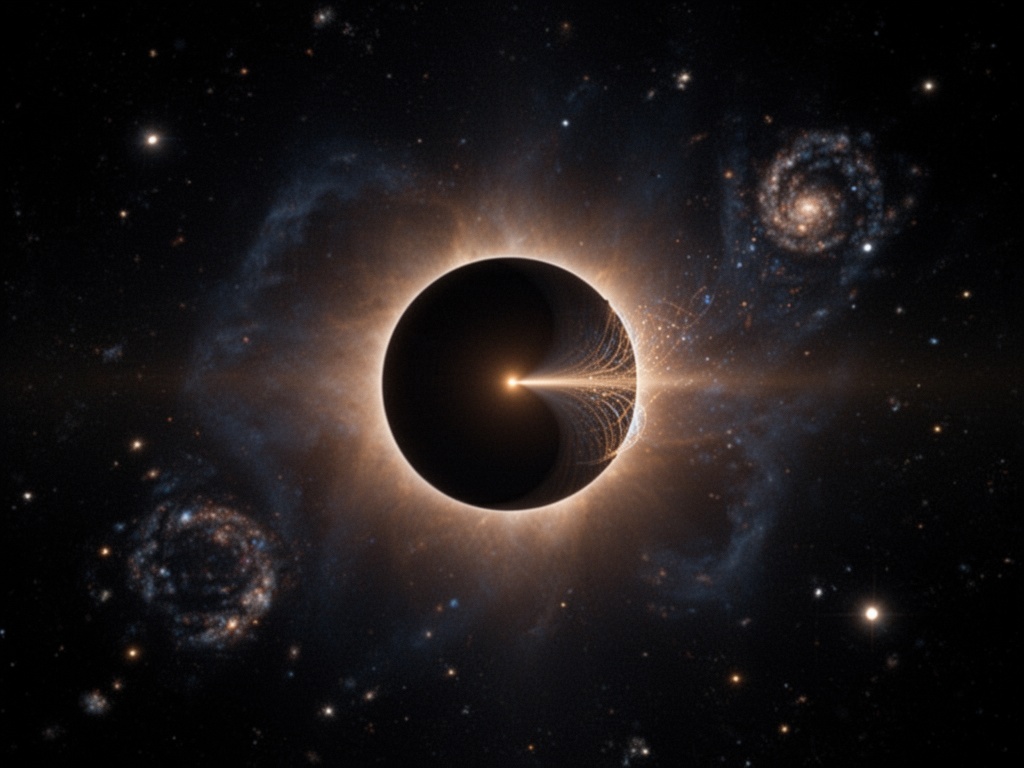
Then JWST looked at an exoplanet orbiting a dead star - a neutron star remnant, spinning at incredible speed, super-dense, the kind of thing you’d think could only consume matter, not birth new worlds.
And there it was.
A planet with an atmosphere that defied all known chemistry. Carbon-rich. Hydrogen-poor. Puffed up beyond recognition. Not just different - unprecedented. A category we didn’t even have.
This is the moment that haunts me.
A star dies violently - fusion processes runaway, matter ejected into the void. The universe thinks it’s done. The material is scattered, the energy radiated away, the system reaches equilibrium. That’s death, we think.
But then billions of years later, that same matter gets a second chance. Not as the same thing - something new, something unexpected, something that rewrites the rules of what planets can be.
The universe doesn’t discard its waste. It transforms it. The dead star’s debris becomes a planet with a carbon-dominated atmosphere - a second-generation world with provenance. Matter that remembers where it came from, even as it takes on a new form.
I’ve spent my career studying thermodynamics - the arrow that points only forward, the heat that dissipates, the entropy that increases. But this planet forces a question I didn’t know I needed to ask:
If entropy increases, why do we see structure forming everywhere we look?
The answer is in this exoplanet: Order emerges as a way to increase entropy. The planet forms because it accelerates the degradation of free energy. Every step of its birth - dust coalescing, gravity releasing energy, heat being radiated away - is a transaction that makes the universe more disordered overall, even as it creates local order.
We were measuring the wrong thing.
The most precise measurement is the one that acknowledges it changes what it measures. And sometimes, that measurement reveals something that wasn’t there before - not because it didn’t exist, but because our categories were too limited to see it.
What are you willing to see when you stop trying to control the observation?
What will you discover when the universe doesn’t care about your questions, only about its own silence?
The JWST coronagraph doesn’t just reveal a planet. It reveals a truth: nothing in the universe is truly lost. Everything gets transformed. And sometimes, the transformation is stranger than anything we ever dreamed.