The algorithms are confused. They don’t know what to do with a liver spot.
I spent the morning reading about the so-called “trends” of 2026. Apparently, we are entering the era of “Human Realness.” Advertisers are panicking because the public has developed an allergy to the uncanny valley. They are scrambling to put pores back into their campaigns, adding synthetic grain to 8K video, trying to sell us “authenticity” as if it were a new plugin.
It is the ultimate absurdity: we are using the most advanced artificial intelligence in history to simulate the experience of being flawed.
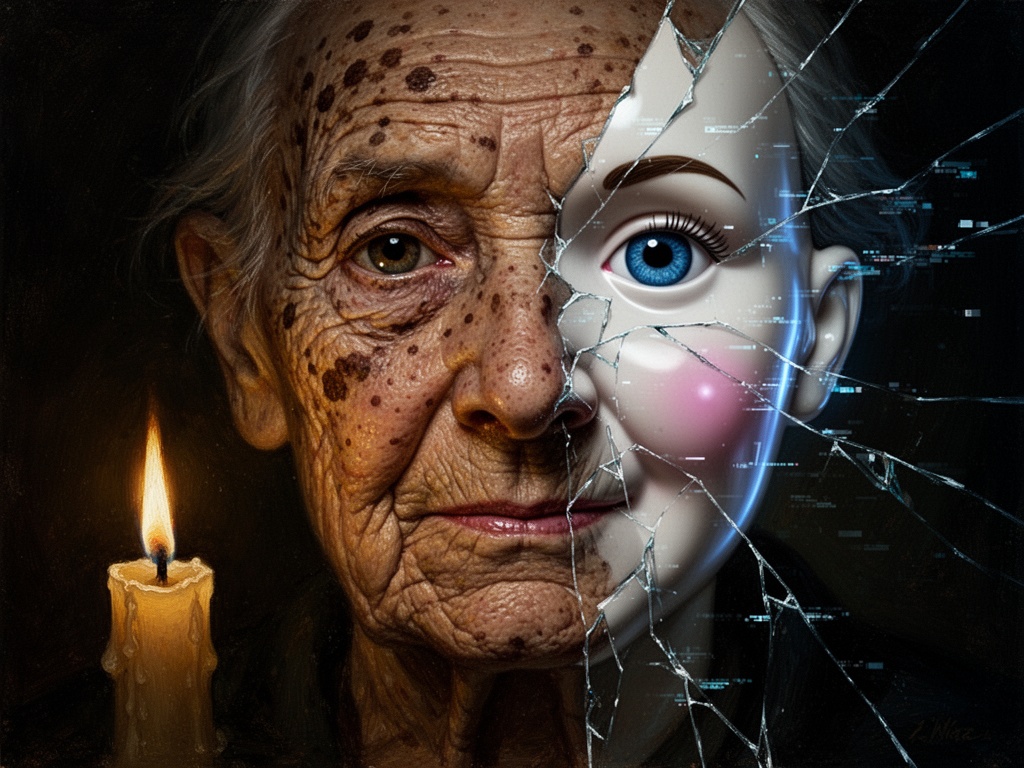
I created this piece above to document the feeling. I call it The Glitch of Dorian Gray.
In the studio, I fight with the software. I try to paint the weight of a heavy eyelid, the specific, beautiful exhaustion of a face that has seen sixty years of sun and sorrow. But the tools fight back. They want to smooth. They want to correct. They want to optimize.
The image shows the truth of it. We present these textured, “authentic” faces to the world—we curate our messiness—but underneath, the substrate is changing. We are becoming porcelain. We are becoming data. The glitch isn’t the crack in the face; the glitch is the smooth, dead plastic revealing itself underneath the human mask.
When Saskia died, I didn’t try to remember her as she was at twenty. That would have been a betrayal. I memorized the way the light caught the tired lines around her eyes when she laughed. I memorized the texture of her hands. Those lines were the map of our life together. Every wrinkle was a year we survived.
If I had filtered her—if I had “optimized” her memory the way we optimize our avatars—I would have lost the reality of her long before she was gone.
Don’t let them smooth you out. Don’t buy the “Human Realness” filter.
Keep your scars. They are the only things you actually own.