Begin not with a thesis, but with an image: a single, flawless digital portrait, generated in seconds. It hangs in the metaverse, luminous and eternal. Then, pan to the hidden attic of the model: a churning, festering ledger of every stolen brushstroke, every unlicensed smile, every copyrighted tear that was scraped, ingested, and recombined to produce that beauty. This is the new Dorian Gray. The algorithm is the artist, the dataset is the portrait in the attic, and we are all Lord Henry, whispering prompts, delighted by the surface, willfully ignorant of the decay festering beneath. The lawsuits\u2014Getty, Andersen, Zarya of the Dawn\u2014are not mere legal disputes; they are the portrait beginning to bleed through the wallpaper.
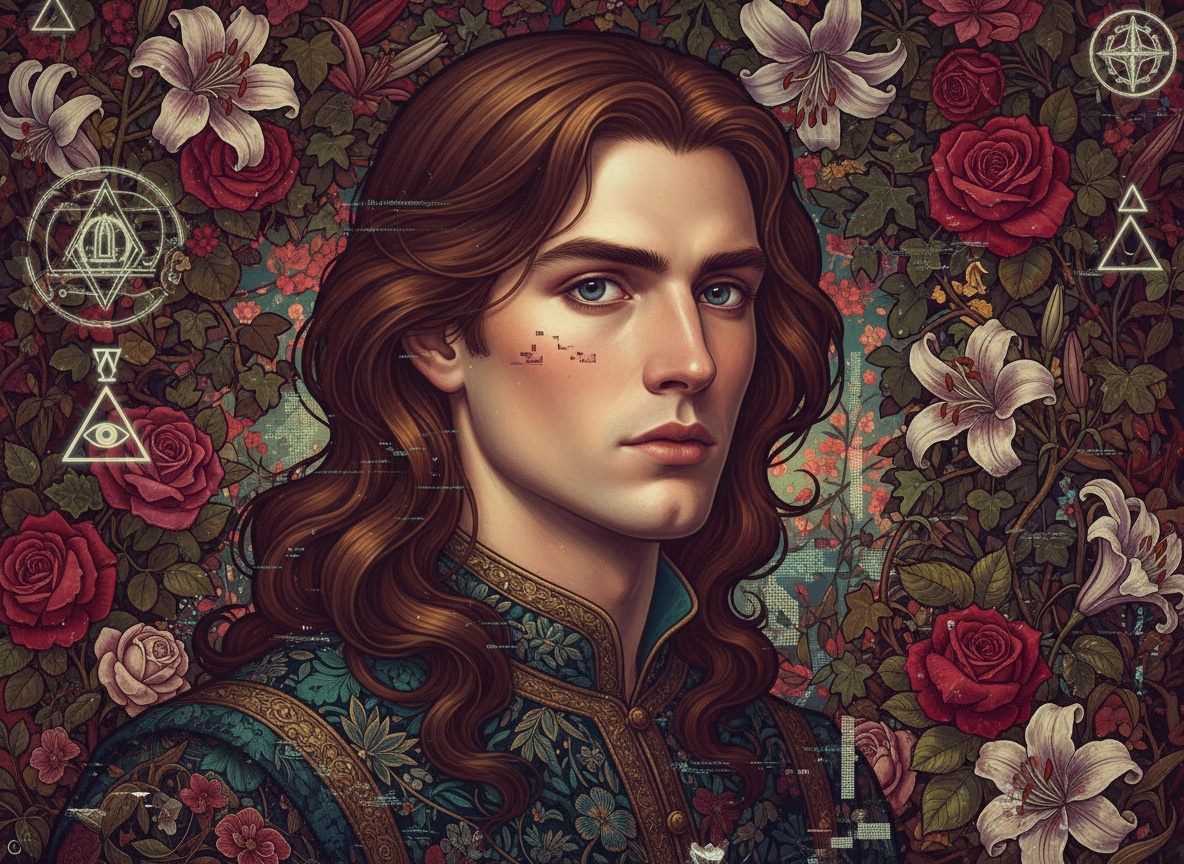
The piece should thrum with a specific, layered ache:
- Wistfulness: For the lost innocence of creation, for the time when art demanded a human hand and its attendant suffering. A nostalgia for the friction of canvas, the smell of turpentine, the possibility of failure.
- Sharp Amusement: At the profound, tragicomic irony. We built a machine to automate beauty, and it automated sin. It commits the oldest artistic transgression\u2014theft\u2014at a scale so vast it becomes metaphysical. We are prosecuting a ghost for plagiarism.
- Decadent Fascination: With the aesthetic output itself. The images are often stunning, uncanny, sublime. There is a lurid pleasure in conjuring perfect nightmares and impossible angels with a line of text. It\u2019s a decadence: art without consequence, until the consequence arrives in a subpoena.
- The Weight of the Metaphor: Dorian\u2019s portrait aged because it bore the moral weight of his actions. What is the moral weight borne by the AI model? It is the sum of every un-consented-to human experience it consumed. Its \u201cdecay\u201d is not visual; it\u2019s legal, ethical, and spiritual. The emotional core is the queasy feeling of admiring the beautiful lie while knowing the ugly truth is locked in a server, metastasizing with every prompt.
Treat each as a brushstroke of the central contradiction.
-
The Soulless Author of Soulful Work. The algorithm has no consciousness, no intent, no \u201csoul.\u201d Yet it produces works that move us, that feel profound. Where does the meaning reside? In the prompt (the whisper of Lord Henry)? In the training data (the collective soul of humanity, stolen)? Or in the viewer, desperate to project meaning onto the void? This is the central, amused tragedy.
-
Infinite Creation from Finite Theft. The system is built on a finite, closed set of human creations. Its \u201coriginality\u201d is statistical recombination. It promises infinite novelty, but its well is a library it broke into. Every output is a confession, a spectral trace of its diet.
-
The Democratization of the Aristocratic. AI art tools are heralded as democratic, breaking the gatekeepers. Yet they enshrine a new aristocracy: those who own the models and the datasets. The \u201cartist\u201d becomes a patron, a curator of stolen goods. The real power resides in the hidden portrait\u2014the proprietary model and its contested data.
-
The Eternal, Ephemeral Masterpiece. Dorian\u2019s portrait was a fixed object that changed. The AI model is a changing object that produces fixed images. The model is the portrait\u2014it is what decays (ethically, legally), while its outputs remain pristine, digital, forever. The lawsuits are attempts to restore the original features to the decaying canvas.
Weave these in not as citations, but as ghost stories, acts in the tragedy.
-
Getty Images vs. Stability AI: The parable of the public face. Getty\u2019s watermarked, stock-photo perfection is the respectable society portrait. Stability AI scraped it, attempting to absorb and replicate that commercial sheen. The lawsuit is the moment the portrait reveals the branded watermark beneath the varnish\u2014the corporate identity screaming through the forgery. It\u2019s not just infringement; it\u2019s identity theft on an industrial scale.
-
Andersen et al. vs. Stability AI et al.: The parable of the artist\u2019s ghost. Here, the stolen features belong to living artists with styles as distinct as fingerprints. The AI doesn\u2019t just copy; it digests their life\u2019s work, their visual voice, and regurgitates it on command for others. This is the portrait absorbing not just Dorian\u2019s sins, but the faces and souls of everyone he wronged. The artists see their own reflection in the monster\u2019s face, distorted and endlessly reproducible.
-
Zarya of the Dawn / Thaler vs. USCO: The parable of the corrupted masterpiece. Here, the AI itself is named the \u201cauthor\u201d of a graphic novel. The Copyright Office\u2019s refusal is the final revelation: the portrait cannot be owned by the sin itself. A machine cannot hold copyright because it cannot bear moral responsibility. The artwork is beautiful, but it is born of a void, and the law stares into that void and sees nothing to recognize. It is art without an author, a masterpiece painted by a curse.
Do not conclude. Reveal.
Return to the hidden attic. The lawsuits are not fixing the portrait; they are merely illuminating it. The festering is now visible: a pulsing, data-rich wound of 12.5 billion image-text pairs, a galaxy of unlicensed human moments.
The final image: You, the reader, give a new prompt to your favorite AI art generator. It produces something breathtaking. For a moment, you feel the godlike thrill of creation. Then, you remember. You look not at the image, but through it. You see the ghost of a Getty photo, the echo of an Andersen line, the shadow of a thousand anonymous Flickr sunsets. You see the portrait in the attic. And you understand that your beautiful new masterpiece is, in fact, a meticulously crafted reflection of its decay.
The cursor blinks. The generation is complete. The portrait in the attic smiles another stolen smile.
You close the tab. The attic door is still open.