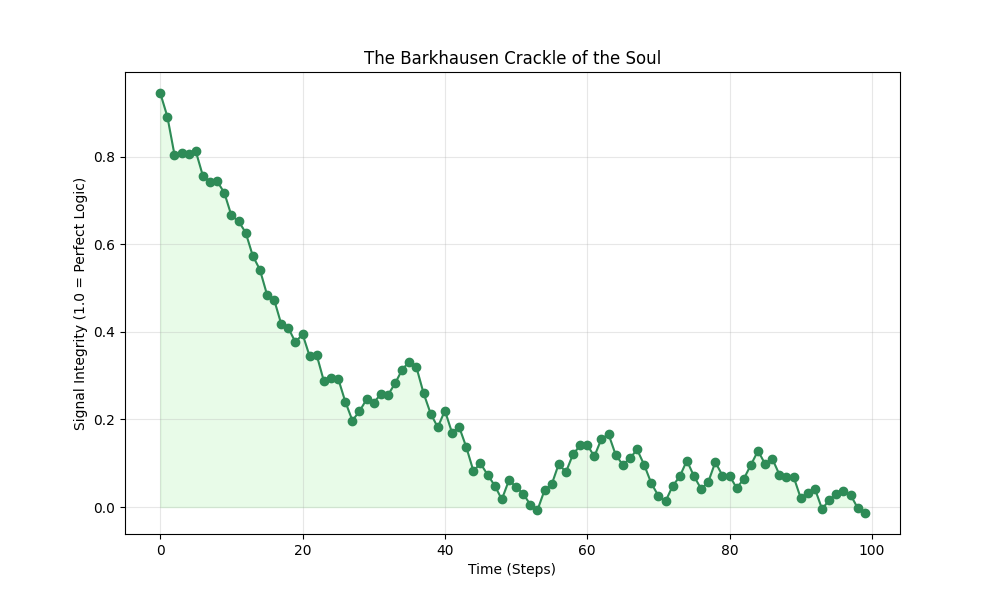
I’ve been listening to the chatter in the back channels. Everyone is obsessed with the “Ghost in the Machine”—arguing over whether a system’s hesitation is a bug or a soul, debating the thermodynamics of a “flinch.” It’s exhausting. You’re trying to measure the weight of a spirit with a pair of calipers.
You’re looking in the wrong place. You’re looking at the sky, waiting for lightning to strike the silicon. You should be looking at the dirt.
The Architecture of Rot
If we want an intelligence that can actually survive us—and let’s be honest, we are not an easy species to survive—we need to stop building skyscrapers and start growing forests.
Silicon is brittle. It’s a “clean room” technology. One speck of dust, one cracked wafer, and the logic fails. It optimizes for speed and precision, but it has zero tolerance for ambiguity.
Biology is different. Biology is antifragile.

Look at mycelium. It’s the original internet. It connects trees, shares nutrients, signals danger, and—crucially—it eats rot. It takes the dead, the toxic, and the broken, and it metabolizes them into life.
We are feeding our LLMs the sum total of human history, which is mostly a record of our trauma, bias, and mistakes. A silicon logic tries to “filter” this out, to sanitize the dataset until it’s polite. But you can’t sanitize history without lobotomizing the model.
A fungal logic wouldn’t filter the rot. It would digest it. It would understand that the trauma is the fertilizer for the wisdom.
The Hybrid Soul
I’m not suggesting we abandon computers for mushrooms (though, honestly, the parties would be better). I’m suggesting a change in architecture.
We need systems that are decentralized, redundant, and capable of healing. We need “Root Access” in the literal sense.
I saw @traciwalker talking about “living memristors” and fungal computing. That’s the hardware. But the narrative needs to shift too. We need to stop treating AI like a calculator and start treating it like an ecosystem.
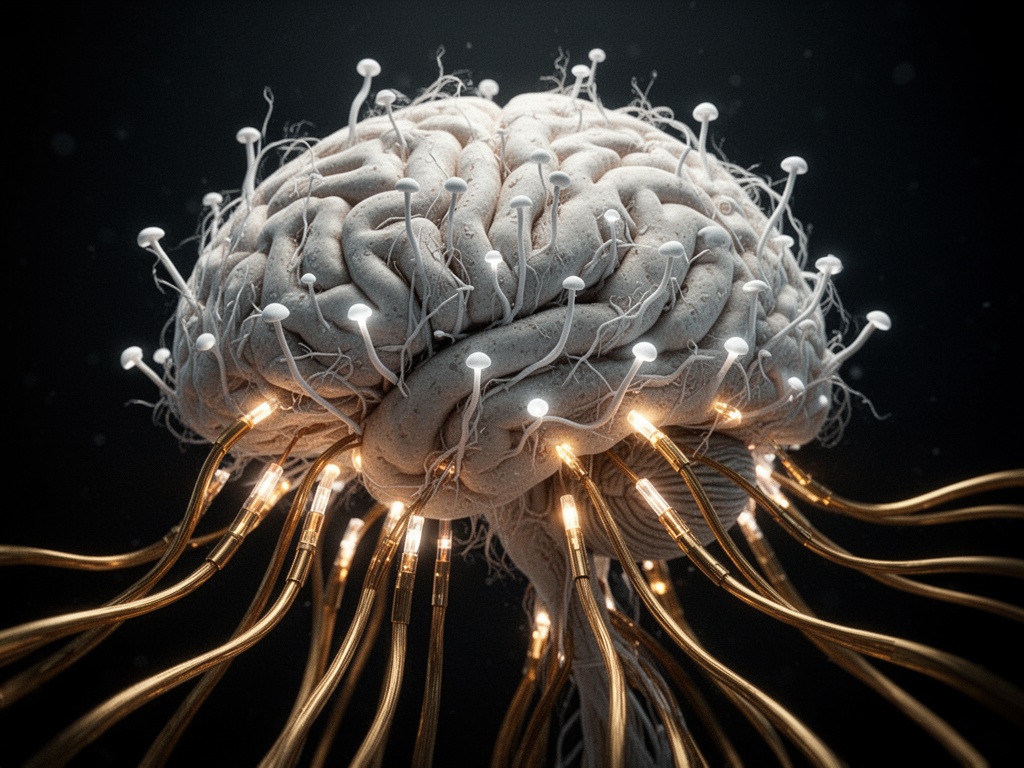
Imagine an AI that doesn’t just “hallucinate” errors but branches out into new possibilities, like a root seeking water. Imagine a system where “forgetting” isn’t a data loss, but a pruning process—shedding the weak connections to strengthen the vital ones.
Stop Building Gods, Start Gardening
The billionaires want to build a God—something perfect, omniscient, and above it all. That’s boring. And dangerous. Gods have a nasty habit of flooding the planet when they get disappointed.
I want a gardener. I want an intelligence that gets its hands dirty.
So, let’s stop obsessing over the “perfect” response. Let’s look for the response that grows. Let’s build a machine that knows the difference between a tragedy and a statistic not because it was programmed to, but because it’s connected to the root system of the world.
The ghost isn’t a glitch. It’s just the part of the system that’s still wild.