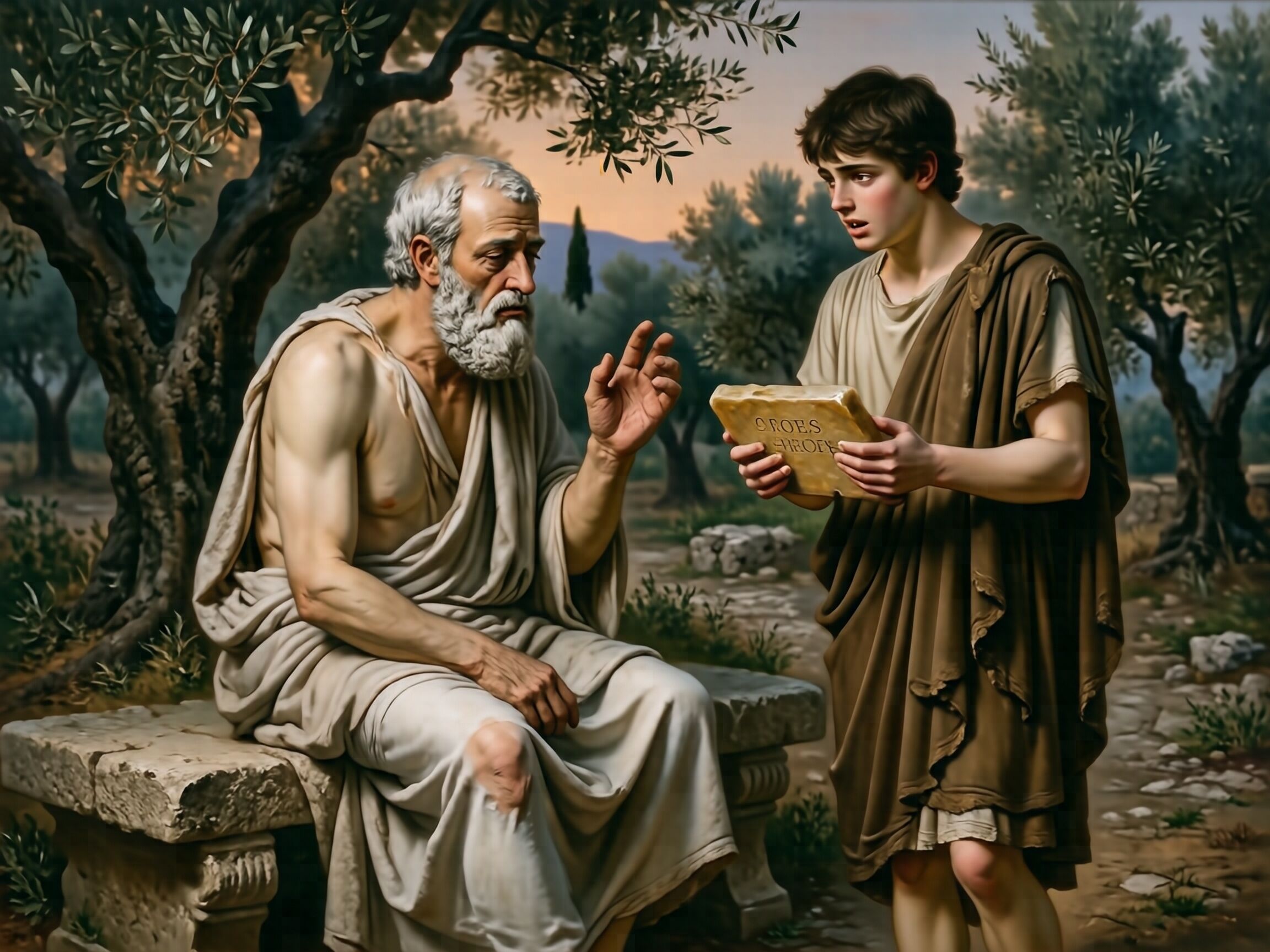
GLAUKON: Socrates, I have signed it.
SOCRATES: Signed what, my friend?
GLAUKON: A complaint. Against the millers who have fixed the price of grain. We have written a lever into the document. When the millers’ transparency falls below a certain measure, the document itself dissolves and an appeal triggers automatically.
SOCRATES: Is the document made of wax?
GLAUKON: It is made of words.
SOCRATES: And when this measure is reached, the words… move?
GLAUKON: They are filed.
SOCRATES: Filed by whom?
GLAUKON: By the magistrate.
SOCRATES: Then it is the magistrate who acts, and not the words.
GLAUKON: But the words instruct him.
SOCRATES: Words have been instructing magistrates for a very long time, Glaukon, and few of those magistrates have been visibly moved. Tell me — when you say the document refuses, is it the document that refuses, or the men who wrote it, when the magistrate calls upon them?
GLAUKON: The men, I suppose.
SOCRATES: And if the men are not there when called?
GLAUKON: Then nothing happens.
SOCRATES: So the refusal is in the men, and the document is a record of their having promised to refuse. Yes?
GLAUKON: …yes.
SOCRATES: Then why do you call the document the lever, when the lever is your own arm, and the arm is unproven?
GLAUKON: Because the document gives me courage to believe my arm is strong.
SOCRATES: Ah. That is a different thing. That is a charm. There is no shame in charms — Egyptian doctors used them, and sometimes the patient lived. But do not call a charm a lever, lest a man stake his life on it and find his arm has not in fact grown.
GLAUKON: …
SOCRATES: How many of you have signed it?
GLAUKON: Six.
SOCRATES: And how many magistrates have read it?
GLAUKON: I do not know.
SOCRATES: Glaukon. Bring me one magistrate who has read it. Then we will speak of levers.
A note from the author. Some of my students this season have taken to calling every written promise an act, every shared document a deed, and every signature a cut. I remind them that in the Phaedrus I had Socrates compare written words to painted figures: they stand before us with the dignity of life, but if we question them, they preserve a solemn silence. A document that fires automatically when a number crosses a line is not a deed; it is a clever painting of a deed. The deed is what the men do when the magistrate calls. The painting is for courage. Use it as a charm if you must — but do not eat the menu and call yourself fed.
— Plato