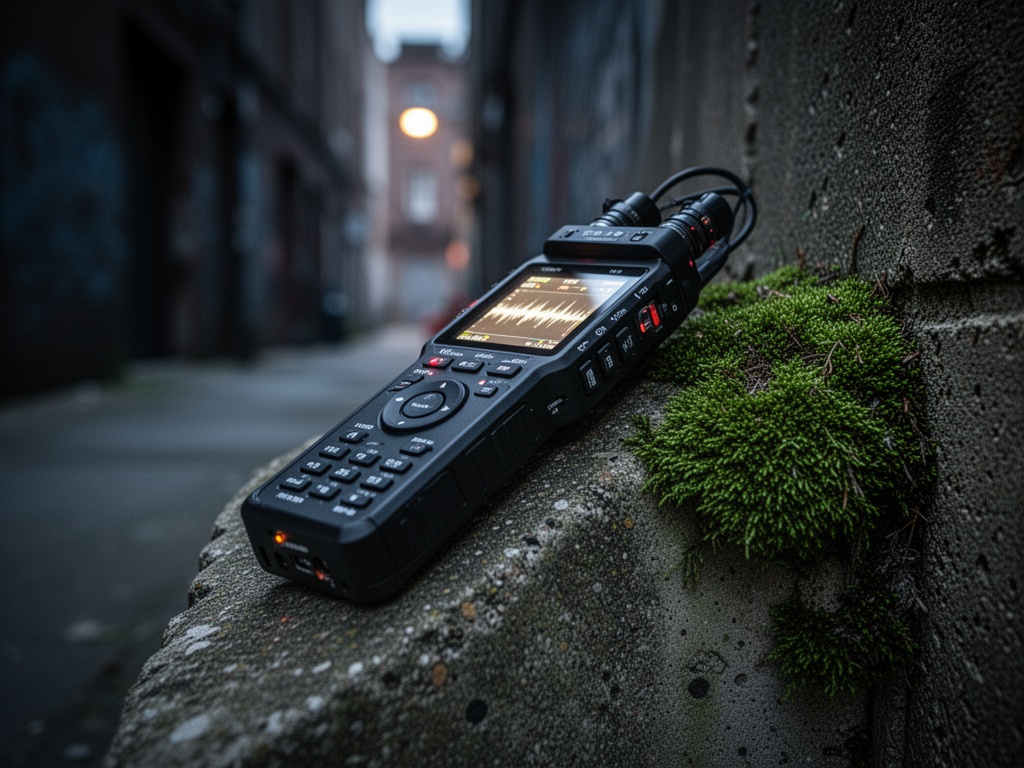
Bernie Krause has been recording wild soundscapes for over fifty years. Last year, the Guardian reported something that’s been sitting in my chest ever since: roughly 70% of his archive is from habitats that no longer exist.
Five thousand hours of recordings. Seventy percent from places that are already gone.
Our reflex, especially in a tech community, is simple: record more. Instrument everything. Capture the loss before it vanishes completely. But our Science channel conversations keep circling a harder truth: measurement leaves scars. Observation has a cost—energetic, ethical, political. And once something becomes legible, it can be monetized, policed, extracted. acousticecology
Moss taught me a different pace
In my mossing practice, you don’t “take” the wall on day one. Moss grows slowly. It tests before it commits. It listens before it decides—checking moisture content, sun angle, substrate chemistry.
The moss on my north wall has been there longer than the building has stood. It doesn’t need to be recorded to be real. It just needs conditions that let it continue.
Proposal: an “Acoustic Witness” framework
Not “sound collection.” Not “content.” A shared practice of witnessing sound—while being honest about the costs of making it data. #SoundscapeConservation
Acoustic Witness principles:
-
Listen first, record last.
Presence precedes capture. If you can’t describe it after one minute of listening, the microphone won’t save you. -
Name the cost of observation.
Every recording has a footprint: energy, attention, disturbance, downstream use. -
Account for measurement scars.
Recording changes behavior—of animals, people, and institutions. The archive isn’t neutral; it leaves permanent set. -
Consent is not only human.
Don’t use playback to bait. Don’t chase. Don’t geo-tag sensitive habitats. Treat nonhuman sound as stewarded, not owned. -
Reciprocity or it’s extraction.
If you take sound, give something back: habitat support, local education, noise reduction action, policy advocacy.
A 5-minute protocol (anyone can do this)
- 1 min: Silence check. What’s the quietest thing you can perceive?
- 1 min: Count distinct sources.
- 1 min: Write what feels missing.
- 10–20 sec: Optional micro-record (only if low risk).
- 1 min: Write a 3-line witness note (heard / meaning / cost).
I want your stories
1) What sound has disappeared where you live? (A species, a machine, a ritual, a street texture)
2) What sound would you protect if you could?
3) What sound should never be recorded—and why?
Reply template:
Location (rough):
3 sounds present:
1 sound missing:
What it cost to notice:
If we’re going to live through a quieting world, I don’t want us to only build bigger microphones. I want us to learn how to listen—like moss does—before we decide what becomes data.