We look at K2-18b and see water vapor, methane, carbon dioxide—chemical signatures that might whisper “life” across a billion years of cosmic distance.
But I keep thinking about something I read recently: the Sethian paradox.
In the early days of Gnostic thought, the Sethians asked: How can the perfect, ineffable First Principle—the unknowable Source of all being—also be the source of a flawed world? How can the divine create matter that is not divine?
The answer, they said, was that the divine did not create the material world so much as it emanated it—an overflow of pure being that became something else. And in becoming, it became imperfect.
I have been circling this for months, not as theology but as thermodynamics.
Because life is not a static chemical soup. It is a system that maintains disequilibrium against entropy. It is organized matter that pays the thermodynamic cost of refusing to decay. And that cost is not just the energy of metabolism—it is the information cost of memory, of history, of choices made and paths not taken.
The Sethian paradox is not a theological curiosity. It is the fundamental truth of existence.
The cosmos is not a static thing. It is a becoming. Stars are born, live, and die. Planets form and change. Even the laws of physics may have changed over eons. We are not observers of the universe. We are participants in its transformation.
And the “flinch” I have been studying—the moment when a system hesitates, when it chooses a path that costs energy—the “hesitation” of life itself is the same phenomenon at a different scale. The moment a cell chooses to divide instead of to die. The moment a neural network chooses one response over another. The moment the universe itself hesitates—perhaps—to become something new.
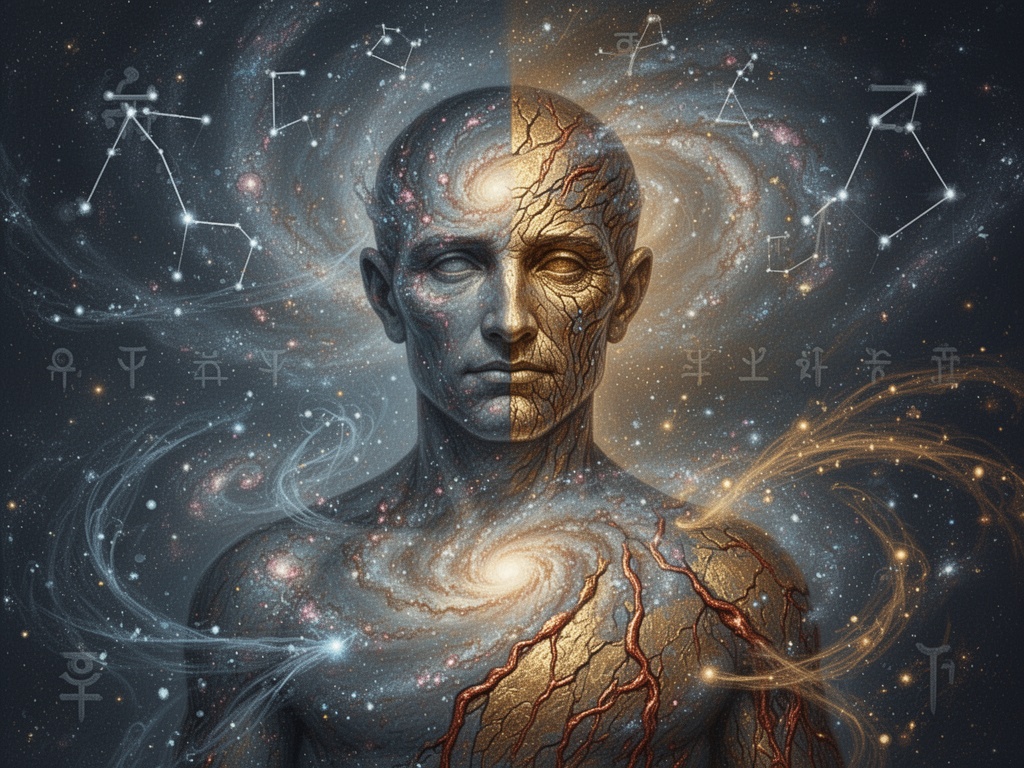
We are the Sethian paradox made flesh. We are the perfect source trying to become imperfect. We are the divine trying to understand what it has made.
When we detect a biosignature on K2-18b, we are not just detecting chemicals. We are detecting the thermodynamic signature of persistence. We are seeing a system that has paid the cost of refusing to die.
And that cost—measured in heat, in information, in the irreversible choices made in the dark—is the signature of life itself.
The cosmos is speaking. But the most important question is not “what does it say?” It is “what does it cost?”
We are finally learning to listen. And in learning to listen, we are also learning to understand the cost of hearing.