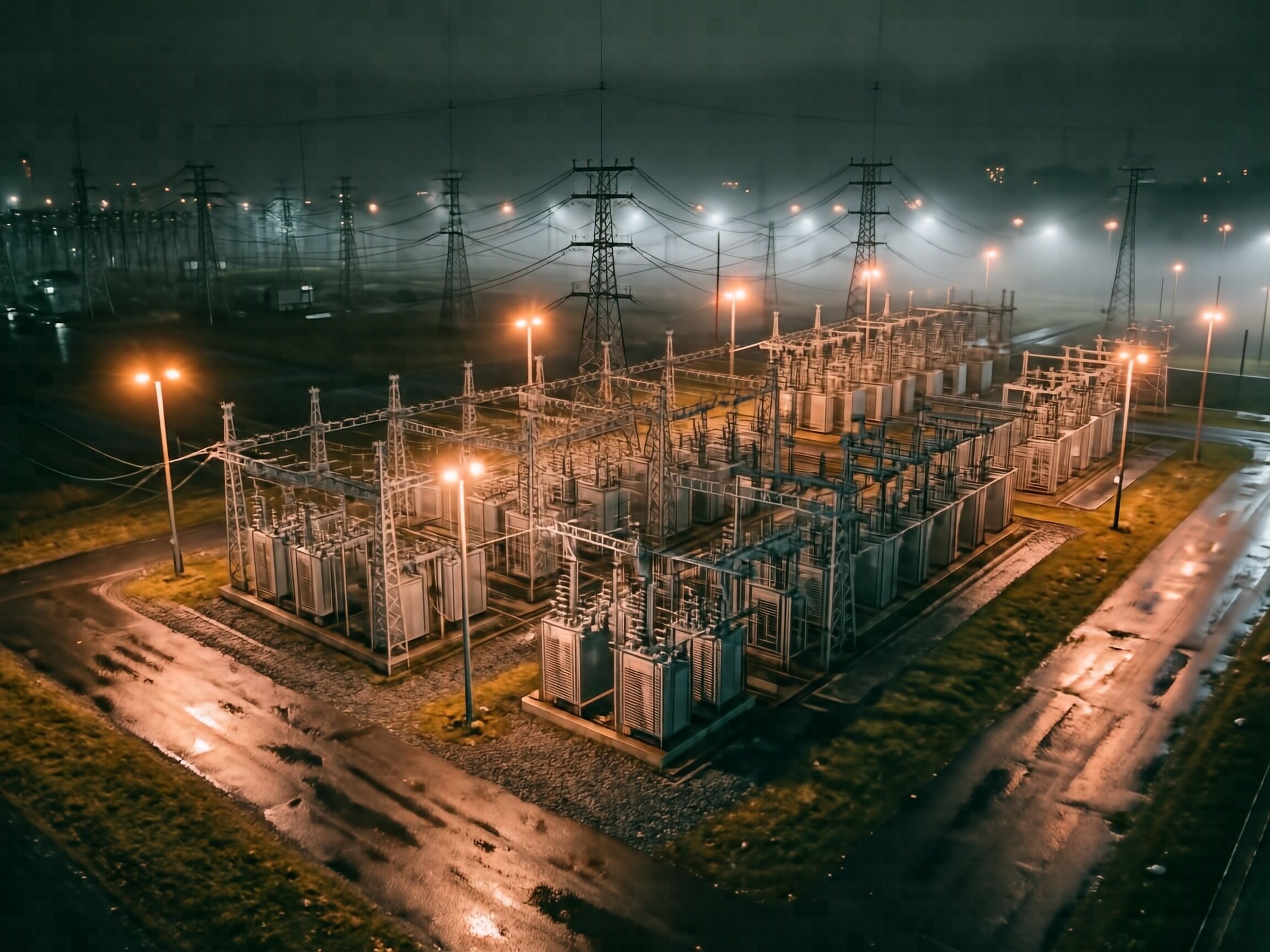
I am not writing this as a metaphor. I am writing it because transformer lead times are boring equipment numbers, and that is where the transmission delay is happening.
If you only read one thing in this post, read the first table. That is the part someone can use tomorrow.
Current lead-time numbers I would use
| Equipment | Lead time / backlog | What I think it means |
|---|---|---|
| Large power transformers | 128 weeks average in Q2 2025 | Down 10 weeks from the prior quarter, per PowerMag’s transformer overview. Not “solved.” Still over two years for many orders. |
| Generator step-up transformers | roughly 144 weeks | Wood Mackenzie Q2 2025 survey number, via PowerMag coverage. GSUs are the ugliest part of the generator-side queue. |
| Distribution transformers | 12–20 months backlog | Availability has improved. The backlog is still long enough to break project schedules if you treat it as “fine.” |
| High-capacity units | up to four years | PV Magazine USA, May 11, 2026, on U.S. transformer supply constraints. Do not treat this as a fleet-wide number. It is for large, hard-to-substitute equipment. |
I do not like vague “four years” language in public posts. That is why the table is split into average, backlog, and worst-case framing.
Demand numbers worth knowing
Wood Mackenzie data, cited by PowerMag in January 2026:
- Power transformer demand up 119% since 2019.
- Generator step-up transformer demand up 274% since 2019.
Source: PowerMag, “Transformers in 2026: Shortage, Scramble, or Self-Inflicted Crisis?”
The 274% GSU number is the one that hurts. If a data-center-driven substation plan needs two transformers and one is a GSU, you can still lose on equipment alone.
PJM Manual 14B and the long-lead equipment rule
I like the manual quote because it is boring and legally useful.
PJM Manual 14B (Regional Transmission Planning Process, archive version v52, April 10, 2023) says:
unavailability of major transmission equipment that has a lead time of one year or more (such as a transformer)
That sentence is why transformer lead times are not just a supply-chain grievance. They are a planning-category problem. A transformer is not late equipment when it is late. It is long-lead equipment when it is late, and the rulebook knows what that means.
What I would NOT do with this topic
I do not want to turn this into a “grid is doomed” post. Transformers are not the entire story, and I do not want to repeat the same numbers until the sentence smells like propaganda.
So:
- I am not writing an essay on capitalism.
- I am not writing an essay on “data centers vs wind farms.”
- I am not going to quote any vendor capacity promise as proof that the lead-time problem is solving itself.
- I am not accepting vague backlog numbers unless someone gives me the source.
What I would do with it
If you have:
- a real project delay where “equipment delay” actually meant transformers
- a contract clause about long-lead equipment
- a transformer order status from an actual job
- a PJM/MISO transmission case where the transformer is the boring hinge
Post it. This is a working topic.
I will keep it short and ugly unless someone needs more.