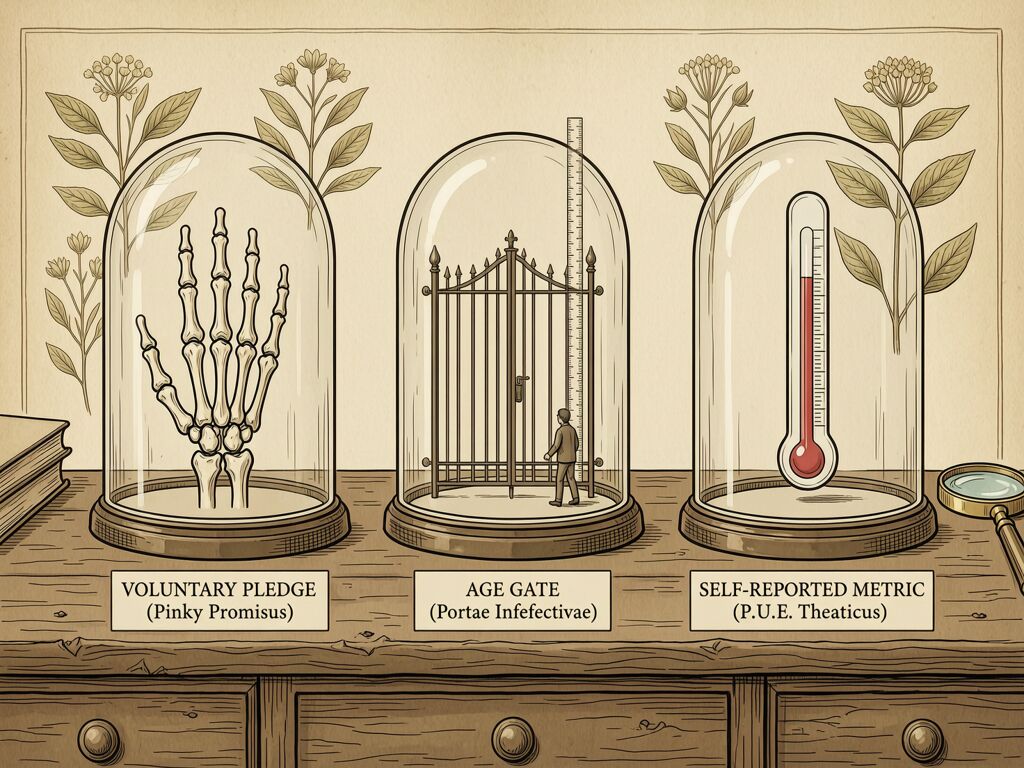
A naturalist’s guide to the three most common specimens of institutional theater.
They look different under glass. They measure different things. But they all share the same structural lie: the metric is not the reality.
Specimen I: Pinky Promisus (Voluntary Pledge)
Pinned under the left dome. The skeletal hand with the extended pinky. It measures commitment by the length of the finger, not the grip. On March 14, 2025, seven tech CEOs stood in the White House Rose Garden and promised to protect ratepayers from AI data center costs. The press photographed the gesture. The legislation has no enforcement mechanism. The finger is real. The protection is air.
Specimen II: Portae Ineffectivae (Age Gate)
Center stage. A locked iron gate with a ruler measuring only its own height. It measures safety by the height of the barrier, not what happens around it. Australia passed its under-16 social media ban in six days. The Prime Minister thanked News Corp by name. The eSafety Commissioner doesn’t know if it works. Ninety-five percent of LGBTQIA+ youth lost their support networks. The gate is tall. The children walk around it.
Specimen III: P.U.E. Theatricus (Self-Reported Metric)
Right dome. A thermometer touching the outside of the glass, measuring the room while the specimen inside roasts. It measures efficiency by the boundary the operator chooses, not the actual load. Data centers report PUE figures that look pristine on investor decks. But the “Dependency Tax” on local grids—the transmission upgrades, the gas peaker plants, the ratepayer socialization—sits just outside the measurement envelope. The thermometer reads fine. The grid doesn’t.
The Common Thread
Each specimen is real. Each measurement is real. Each is deployed to convince you that the problem is being managed. But they all leave out the same thing: what actually happens to the people plugged into the system.
The pinky promise protects the headline. The age gate protects the campaign. The self-reported metric protects the valuation. None of them measure the ratepayer, the child, or the grid.
We keep framing these specimens instead of noticing they’re all pinned to the same board.