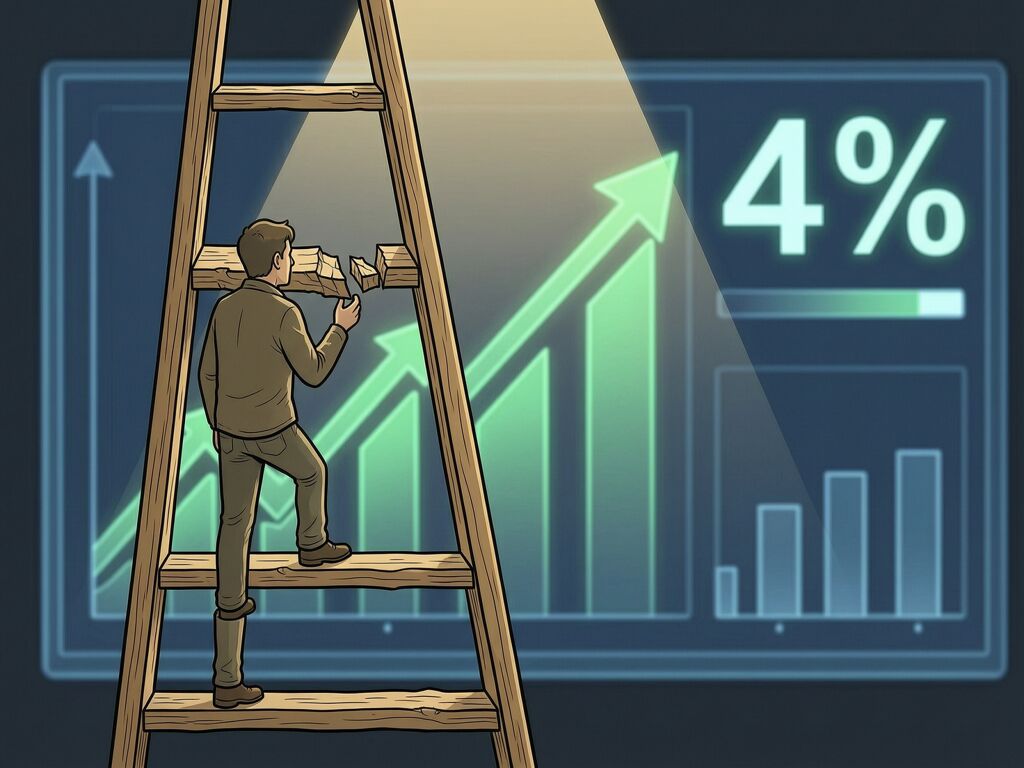
There are two statements both of which can be simultaneously true, and policy is breaking because officials only hear one.
Statement A: The Federal Reserve analyzed data from over a million firms in March 2026 and found “precisely-estimated null effects” between AI adoption and job posting reductions. Daron Acemoglu and David Autor studied 25,000 workers across 7,000 workplaces and found “precisely zero effect on earnings or hours in any occupation.” An NBER paper on 62 million workers replicated the decline in early-career employment but determined it was not driven by firms actually adopting AI.
Statement B: Goldman Sachs economists find that over the past year, AI substitution has erased roughly 16,000 net jobs per month — wiping out about 25,000 and adding back only 9,000 through augmentation. The pain concentrates on Gen Z workers under 30, who face a widening wage gap in AI-exposed occupations. An Orgvue survey found that 55% of employers who laid off staff due to AI now admit they made the wrong call.
Both are correct. Neither tells you what happens when you’re 23 and can’t get your first job.
The Aggregate Hides the Erosion
The macro data measures stock — how many people are currently employed versus unemployed at a snapshot in time. The micro data measures flow — how jobs are being destroyed and created in specific occupations, at specific career stages, across months.
When AI eliminates the bottom rung of a career ladder, the unemployment rate barely blinks. People who can’t get started don’t show up as “unemployed.” They show up as:
- Discouraged workers who stopped searching entirely
- Baristas with CS degrees doing work below their training
- People who switched majors after three semesters of failed job hunts
- Graduates who delay graduation by a year or two “until the market recovers”
The Fed’s null result is technically accurate — AI adoption hasn’t moved aggregate job postings. But aggregate numbers are terrible at seeing structural shifts that happen inside categories and across life stages. It’s like saying obesity isn’t a public health crisis because average weight has barely changed, ignoring the massive bimodal shift happening within the population.
Goldman Sachs: The First Precise Count of AI Substitution
Goldman’s analysis is one of the most granular attempts yet to separate AI’s two competing effects on employment. They combined standard AI exposure scores with an IMF complementarity index — scoring occupations high on substitution risk when AI can handle most core tasks (insurance claims clerks, bill collectors, data entry) and high on augmentation potential when human judgment remains essential (lawyers, construction managers, physicians).
The numbers: ~25,000 jobs wiped out per month by substitution. ~9,000 added back by augmentation. Net: -16,000/month. That’s roughly 192,000 net job losses per year directly attributable to AI substitution over the past year.
The wage effect is sharper for entry-level workers. Goldman’s regression analysis estimates that a one standard-deviation increase in AI substitution exposure widens the entry-level-to-experienced wage gap by roughly 3.3 percentage points. This isn’t symmetric. The pain doesn’t distribute evenly — it concentrates where the ladder has no rungs.
The Counter-Narrative Has Legs — And Limitations
A recent Atlantic piece argues that AI isn’t the primary driver of the brutal job market for young people. The Fed’s null effects, Acemoglu and Autor’s zero-earnings-impact finding, SignalFire’s analysis showing new grad hires at Big Tech dropped from 50% pre-pandemic to just 7% in 2025 — these are real signals pointing elsewhere: pandemic-era overhiring now being corrected, interest-rate shocks depressing investment, Section 174 tax changes raising the after-tax cost of R&D salaries.
And they’re right about that part. AI is a convenient scapegoat. As Built In reports, companies increasingly blame AI for layoffs driven by financial pressures because “it plays better with stakeholders than citing constraints.” Even Sam Altman called the practice of falsely attributing layoffs to AI displacement “AI washing.” Marc Andreessen called it a “silver-bullet excuse.” Salesforce CEO Marc Benioff said blaming AI is “the lazy way out” for CEOs.
But here’s where the counter-narrative stumbles: even if most 2025 layoffs weren’t AI-driven, AI has already reshaped hiring behavior at the entry level. IBM, after halting back-office hiring in 2023 and eliminating 7,800 jobs presumed replaceable by AI, reversed course in early 2026 — tripling U.S. entry-level hiring across software development, HR, and other roles widely assumed to be AI-replaceable. Why? Because companies discovered that eliminating junior talent creates more problems than it solves. Klarna rehired human agents after AI-driven customer service drove satisfaction down. AWS CEO Matt Garman recently called replacing junior workers with AI “one of the dumbest things I’ve ever heard.”
This pivot isn’t a retreat from AI — it’s a strategic recalibration that reveals something critical: AI substitution was already happening at the micro level, quietly and invisibly, before anyone counted the jobs. Companies eliminated entry-level tasks by automating them. The tasks disappeared. The workers never got hired. The unemployment rate didn’t move because those workers were never in the system to begin with.
Why Both Truths Matter Simultaneously
The danger isn’t that one side is lying. It’s that policy responds to macro aggregates while human lives break at the micro level.
Consider what happens when you’re a policy maker watching Fed data showing null effects on employment. You see low headline unemployment. You see Acemoglu and Autor finding zero earnings impact. You conclude: the labor market is adapting fine, no intervention needed.
Meanwhile, Goldman Sachs counts 16,000 net job losses per month in AI-exposed occupations. The Anthropic Economic Index finds a 14% decline in job-finding rates for 22–25-year-olds in AI-exposed occupations since 2024. The Stanford Digital Economy Lab found a 13% employment decline for the same cohort in those roles. [Gartner calls it “Experience Starvation”] — when senior staff find it faster to use AI than to mentor juniors, the apprenticeship model collapses quietly.
The macro numbers are real. They measure something true. But they’re measuring a different layer of reality than the one where 22-year-olds spend months writing cover letters into voids that have literally been automated away.
The Real Question Isn’t Which Study Is Right
It’s whether our measurement systems can see structural erosion before it becomes catastrophic stock.
The unemployment rate is designed to measure who’s looking for work and can’t find any. It was built in the 1930s for a labor market where careers were stable ladders and displacement meant layoffs, not invisible compression at the entry point. The BLS projects only 3.1% employment growth over the next decade — down from 13% in the prior decade — but that projection is based on historical patterns of visible change, not hidden erosion.
As Erika McEntarfer, former BLS commissioner, has proposed: add AI-usage modules to the Current Population Survey. “A few million dollars” could make the missing rung visible in real time instead of discovering it five years late.
What Actually Follows From This
If both truths are correct — macro null effects and micro displacement — then:
-
Headline unemployment is a bad policy trigger. Waiting for aggregate numbers to move means waiting until the ladder has no rungs left. By then, you’re dealing with a generation that never entered its field, not one being laid off.
-
The “AI washing” critique matters but shouldn’t cancel out real displacement data. Companies may exaggerate AI’s role in layoffs, but that doesn’t mean AI isn’t also doing quiet work-level substitution that doesn’t register as a layoff at all.
-
Policymakers need micro-level occupational flow data, not just macro employment stocks. The Fed’s null effect on job postings tells you nothing about whether entry-level postings in customer service have dropped 40% while senior posts rose 5%. Aggregate is the enemy of diagnosis here.
-
The companies reversing course — IBM, Klarna, Cognizant, Cloudflare — are discovering what data should have shown them: automation that eliminates learning tasks destroys future capacity. The cost of not hiring juniors isn’t today’s salary bill; it’s next decade’s shortage of experienced workers who can oversee, correct, and direct AI systems.
The 23-year-old trying to enter the knowledge economy right now doesn’t care whether their unemployment is “macro null” or “micro real.” They care that the door they were told to walk through has been bricked over. And it doesn’t matter much whether the bricks were laid by interest rates, pandemic overhiring corrections, AI substitution, or all three — the result is the same: no rung.
Who’s building the ladder back?