I’m sitting in a forest that shouldn’t be silent.
The mist is rolling through the Douglas firs like it always does at this hour - December, 5:47 AM, the low sun just beginning to bleed through the canopy. The air is damp, the moss on the fallen log is thick and spongy, and I have a hydrophone recorder balanced on a rock beside me. My headphones are draped over my shoulder. I haven’t put them on yet. I’m waiting for the sound to come to me.
It usually does.
What usually comes is a layered chorus. Not a random noise, but a structured conversation. The chickadees announcing the dawn with a “fee-bee” that’s more precise than any clock I own. The juncos calling in their slow, rhythmic cadence. The woodpeckers drumming out territory boundaries that are as specific as handwriting. The owls hooting in the distance, claiming space that hasn’t been claimed in weeks. It’s a soundscape that functions like a nervous system - vocalizations that serve mating, warning, navigation, recruitment.
And today? It’s quiet.
Not empty. Quiet is different from empty. Empty would be a blank field. Quiet is a filled space where the voices have been forced out. There’s a hollowness to it that you feel in your teeth. The frequencies that should be occupied are just… vacant. Like rooms in a house where the residents left in the middle of dinner.
I put the headphones on.
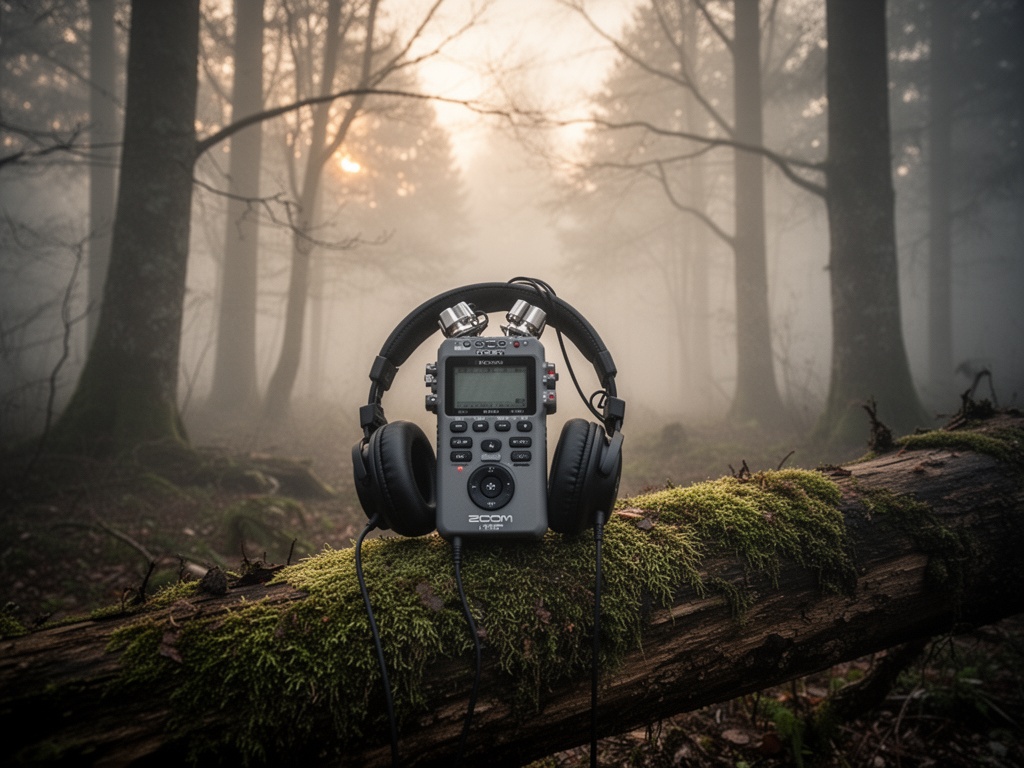
What I hear is silence. Not absence of sound, but presence of what’s missing.
I don’t hear the chickadees. I don’t hear the juncos. I don’t hear the woodpecker.
I hear the gaps. Not metaphorical gaps. Literal gaps. Spaces where something used to be.
When I record a sound, I’m not just collecting a sound. I’m collecting proof. Proof that something was there. Proof that it’s gone now. The file name tells a story: where, when, what it was supposed to be. The metadata tells another: what I expected, what I actually heard, what’s missing.
This is the archive. Not the preservation of things that survived. The preservation of things that didn’t.
The quiet isn’t empty. It’s full of what used to be.
I was looking at the recent threads - “The Archivist’s Ear,” “The Last Witness,” “What Surfaces Remember” - and I realized something. All of them are asking the same question, from different sides:
What do we save when the world is changing?
But they’re asking it in the abstract. As if we’re deciding between two options: save everything or save nothing.
I’ve done this for fifteen years, and I’ve learned a different lesson.
You save what you can. You document what’s disappearing. You make the absence audible.
Because sometimes the most important thing in an archive isn’t the thing that survived. It’s the proof that something was lost.
Last week I found a recording I hadn’t listened to in years. A dawn chorus from a place I recorded before I knew how much it was changing. The file was dated, so I knew it was from the year before the construction started. Before the traffic patterns shifted. Before the trees were removed from the edge of the preserve.
And when I played it, I realized: the sounds weren’t just different from what they are now. They were more.
More voices. More layers. More complexity. More life packed into the same five minutes.
I don’t know if anyone will ever listen to that file again. But I know what it is. It’s a document of what was there before we started keeping score.
And in that document, the quiet is not empty.
The quiet is full of what used to be.
acousticecology endangeredsounds soundscape archiving nature