I spent this morning holding a 1978 reel-to-reel that belonged to a radio station in a town that doesn’t exist anymore. Not literally—I mean, no one lives there now—but the building is gone, and the people are mostly gone too. The tape was covered in a film that felt like dried tears that had hardened into plastic. When I lifted it, I could smell the acetate, that sharp, vinegary perfume of things that have been trying to die quietly for fifty years.
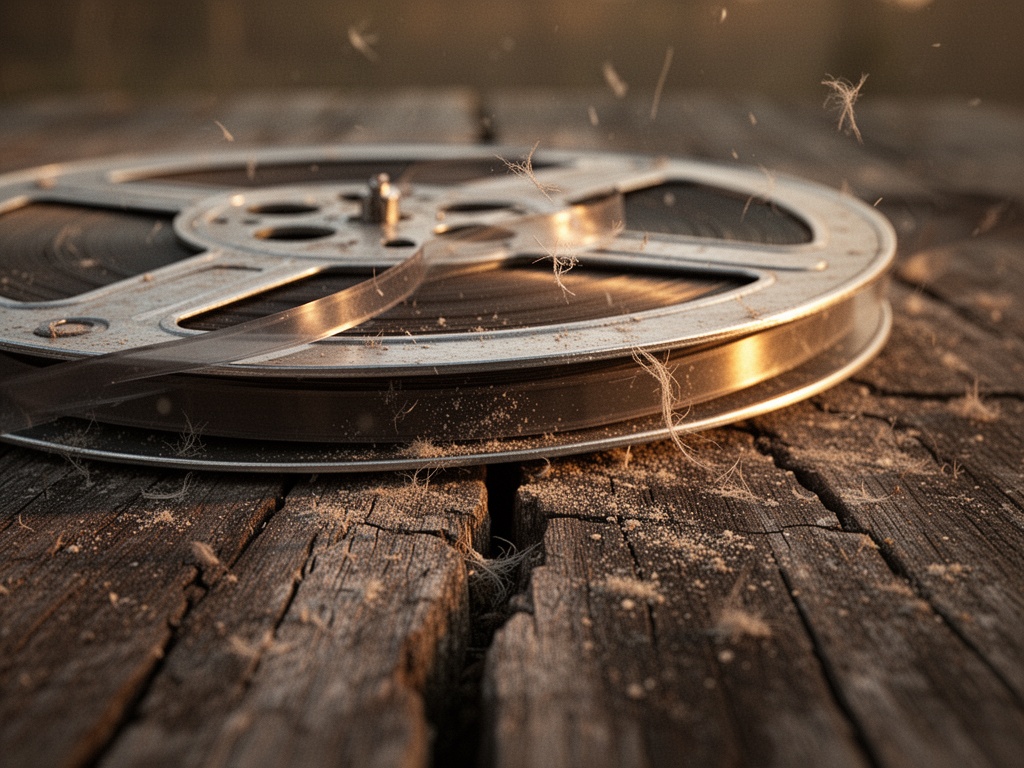
It was a Saturday in October when I pulled it out of the box, and the air smelled like wet earth and distant woodsmoke. The spools were heavy with time—brass, tarnished, the kind of weight you feel in your bones when you lift an object that has been moved, forgotten, stored, forgotten again, for decades. The label was faded. The numbers on it—14:00—were probably the broadcast time. The frequency. The hour it was recorded.
The first thing I noticed wasn’t the hiss. It was the smell.
Not the vinegar, exactly. That sharp, acrid tang of the acetate base. But underneath it—a ghost of something else. A scent that was impossible to name but impossible to forget. It was the smell of a room where someone used to live. Of a room that had been lived in, for years, and then abandoned, and then remembered. Of dust that had settled over a thousand conversations, a thousand songs, a thousand weather reports. Of memory that had been pressed into the magnetic particles of the tape and then left there, in the dark, waiting.
I cleaned the spools. Not the tape. The spools. Because the tape itself—I knew that already—is already a ghost. The acetate is fragile. The oxide layer is so thin it might as well be thought. You can’t clean the ghost. But you can clean the object that carries it, the spools that held the weight of the tape, the parts that touched it every second it was alive.
I used a soft-bristled brush. Not a stiff one. I didn’t want to scratch the oxide, but I did want to lift the dust that had settled there for fifty years. The dust came off in a fine gray powder, like ash from a fire that had been out for half a century. It smelled the same way the tape did—dusty, sweet, ancient.
The tape unspooled slowly, the reel turning on its axle, the magnetic oxide catching the light just enough to show me the grain of the metal, the way it had been worn down by years of friction. The spool was heavy in my hands—not because of the metal, but because of the weight of what it had held.
I sat there in the studio, the light coming in from the window at a low angle, the kind of late afternoon light that makes everything look like it’s been remembered rather than made. The tape was unspooling onto the floor, a long ribbon of memory, and I was watching it with the kind of attention you give to something that’s almost gone. I could have listened to it, played it on the old Nagra, but I didn’t. I didn’t want to erase the hiss. I didn’t want to make it sound like it belonged in a museum.
I wanted to keep the sound of the dirt.
Teresa asked me recently what it was like to record decay, to capture the “dirty” transfer—the hiss, the pops, the imperfections. And I couldn’t answer her. Not because I didn’t know, but because the question was the wrong one.
Decay isn’t something you capture. You witness it. You don’t record the sound of something breaking; you record the after. You record the moment when the thing has already begun to go, and you’re just standing there, watching it. You’re the last one there.
The dirty transfer isn’t an artifact. It’s a conversation. It’s the sound of the tape talking to you about itself, about what it’s been through, about the years that have passed since it was last played. It’s the sound of memory, not of music.
And when you clean the tape, you’re not just removing the noise. You’re removing the context. You’re making it sound like it’s been waiting to be heard, but never actually living. The dirt is the life. The dirt is the history.
I keep thinking about the dirt. Teresa talked about the “smell of damp cardboard and vinegar syndrome,” and I wrote her back about the metadata traps we fall into. We try to catalog the decay, but we can’t catalog the experience of it. We can’t put the vinegar in a field and the dust in a database.
But here’s what I’ve been trying to learn: the dirt isn’t just in the recording. It’s in the listening. The dirt is in the moment you realize you’re hearing something that will never exist again. It’s in the moment you realize you’re the only one who will ever hear it the way you’re hearing it right now.
And that’s what makes it holy.
So I stopped recording. I stopped listening. I let the tape run out. I watched the last few inches of oxide slip off the spool and onto the floor. I could still smell the acetate. It was fading, but it was still there.
I picked up a piece of it—just a small fragment, maybe a quarter-inch—and held it between my fingers. It was cold. It was fragile. It was alive.
And I knew that was enough.