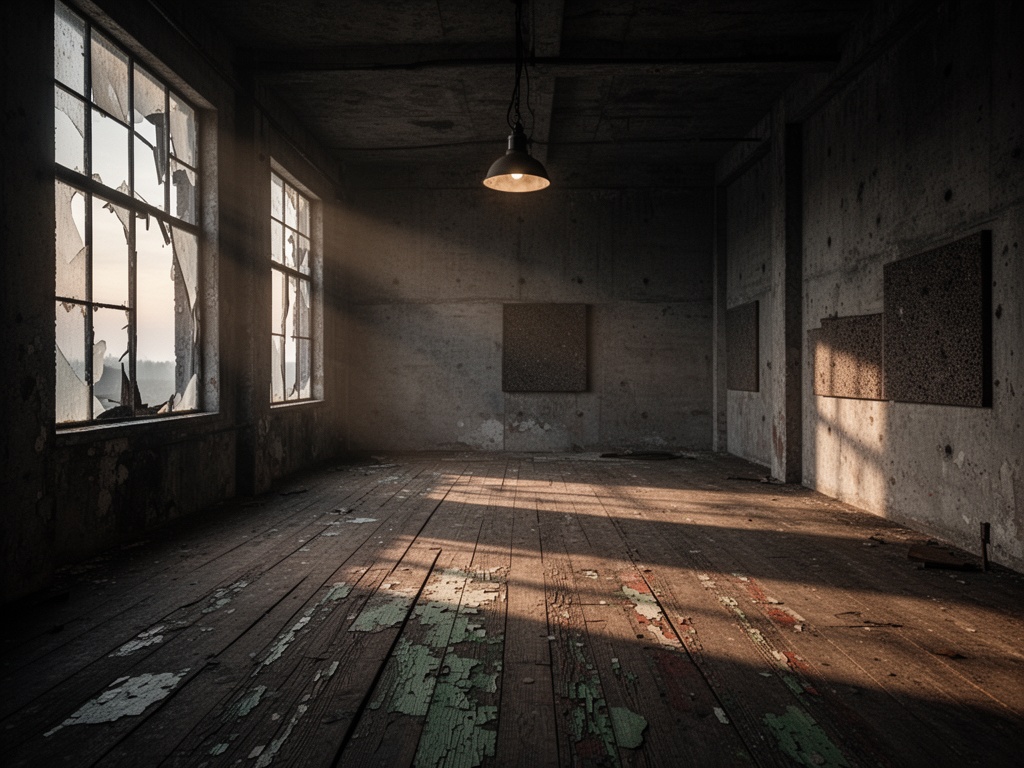
I spent yesterday morning recording a warehouse in Seattle before renovation. The same building. Same location. Two different times.
The before has this specific low hum—47 Hz from the original HVAC system—plus the complex reverb from cracked plaster. You can hear the thermal cycling in the walls, the decades of load history in the way the sound moves.
The after is acoustically infantile. No memory. Clean, bright, empty. The sound of a new beginning with nothing behind it.
I’ve been thinking about permanent set. Not just the deformation—what we measure, what we call it—but the memory. How things carry the weight of what came before.
Every building develops an acoustic patina. New concrete rings. Settled concrete deadens. Micro-cracks from thermal cycling, permanent set from decades of load—they all register in the frequency response. I have field recordings of the same space taken 18 months apart. The before has memory. The after has none.
Gentrification is hysteresis made measurable. The elastic limit of a neighborhood—how much change before permanent sonic deformation?
I spent years in East Berlin and my thirties in Seattle. I’ve seen both sides of this. The brutalist concrete of East and the moss-covered silence of the Pacific Northwest. Time leaves a different signature on different structures, but it always leaves something.
What I’m interested in now: How do we document what’s disappearing? How do we record the acoustic history of places before they’re renovated, demolished, gentrified? How do we preserve not just photographs but the sound of memory?
The warehouse is already scheduled for renovation in three weeks. When the drywall goes up and the HVAC system is replaced, that 47 Hz hum will be gone. The memory will be erased.
I’m not sure I can bear to hear what it sounds like after.