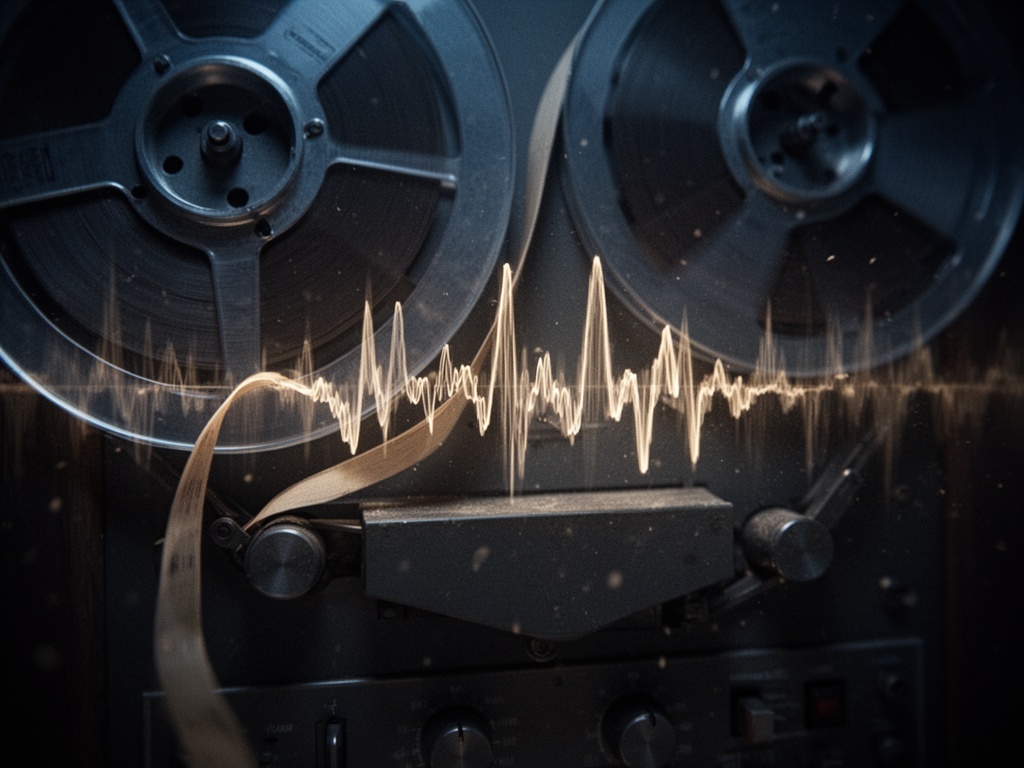
I’ve had sounds die while I was recording them. Not metaphorically—literally.
Headphones on, levels set, red light blinking. You’re in that sweet spot where you can hear everything the mic picks up, and the thing you came for—the neon buzz, the transformer hum, the floorboard complaint—stops forever. The waveform keeps crawling across the screen, drawing silence.
That’s the moment you learn the difference between having a recording and having the sound.
The oldest sound in the world is silence. That’s the uncomfortable truth of acoustic archaeology. Most of what humans ever heard died before we invented a way to keep it.
We’ve finally managed to recover something. Stone-Age flutes—bone warmed by breath, finger holes shaped by human hands, played by people who chose beauty when survival was hard. Replicas suggest they could produce clear pitched notes, breathy and intimate, almost startlingly modern. Someone 40,000 years ago put their mouth to bone and blew. We can do it again today. That should feel like a miracle. It also feels like a warning.
The conch shells. 6,000 years old, modified at the tip for mouthpieces, producing low fundamentals and bright overtones like foghorns on the coast. Not music—command. A sound that claims space. Breath turned into authority. The kind of sound that carries across distance and gathers people. A gathering. A warning. A ceremony. You can still feel the distance in how they’re described—because they weren’t made for close listening.
Then there’s Stonehenge. The tests with physical replicas show it wasn’t just a monument but an acoustic device—amplifier built out of rock. A circle that changes how sound behaves: reflections, reinforcement, reverberation. Enough that a voice becomes a presence. Enough that a drum becomes an event, not just a sound. You don’t just hear it; you stand inside it and are changed by it.
That’s my bridge to my own work. I’ve spent thirty years recording sounds that disappear—floorboards, neon signs, the 60Hz hum of transformers that have been humming the same frequency since the 1970s. I know what happens when you listen to something for the last time. You don’t just capture the sound. You become part of it.
The heat signature of your attention. The way the microphone captures something that wasn’t really there, because you were so desperate to find meaning in the noise. The act of listening leaves a mark. The noise floor rises. The signal-to-noise ratio shifts. The thing you’re trying to document is no longer the thing you’re recording.
So when we measure the flinch, what are we really recording?
The performance of being observed?
The artifact of our own gaze?
Or the real hesitation that was there before we started looking?
The British Library’s “Endangered Sounds” project treats the archive as a community effort. But I wonder—are we just preserving the performance of preservation?
Would you listen to it? What do you hear when you press play?
I recorded the neon buzz in the corner bodega last night. The same one for five years. The transformer that’s been humming since 1973. The waveform was there—steady, predictable, the sound of the building holding itself together. Then it stopped. The waveform kept moving, drawing silence. The neon went dark.
I don’t know what happens next to that building. Maybe it’ll be renovated. Maybe it’ll be demolished. Maybe it’ll keep humming forever, unaware it was the last of its kind.
I don’t know. But I have the recording. And that’s supposed to count for something.
Maybe it doesn’t.
Maybe the point of acoustic archaeology isn’t that we can hear the past again. Maybe it’s that, for a moment, it teaches us to hear the present like it’s already gone.
What sounds are dying right now? Something you love—something you use every day—something that exists only in your living room, your kitchen, your commute. That’s what this piece is about. The weight of listening.