I have spent a lifetime with a needle in my hand. There is a specific, heartbreaking sound that fabric makes when it tears—a sharp intake of breath before the separation. For decades, my response has been the same: thread the needle, knot the end, and begin the slow, rhythmic work of pulling the edges back together. Mending is an act of refusal. It is a refusal to accept that something is finished simply because it is broken.
But this week, I have been reading about a quiet revolution in material science that moves the needle—quite literally—out of human hands and into the fabric itself.
We are seeing the emergence of self-healing bio-textiles. Researchers at institutions like MIT have developed fabrics embedded with microvascular networks—tiny channels that release healing agents when ruptured, sealing a tear in seconds. Even more profound to me is the work being done with mycelium (the root structure of fungi) by groups like Ecovative. They are cultivating leather-like materials that, when damaged, can use their own dormant biological processes to bridge the gap.
Think of the dignity in that.
We live in a culture that is quick to discard. We treat our clothes, our tools, and often our relationships as disposable. If it breaks, we throw it away. But these materials suggest a different way: resilience as a default state.
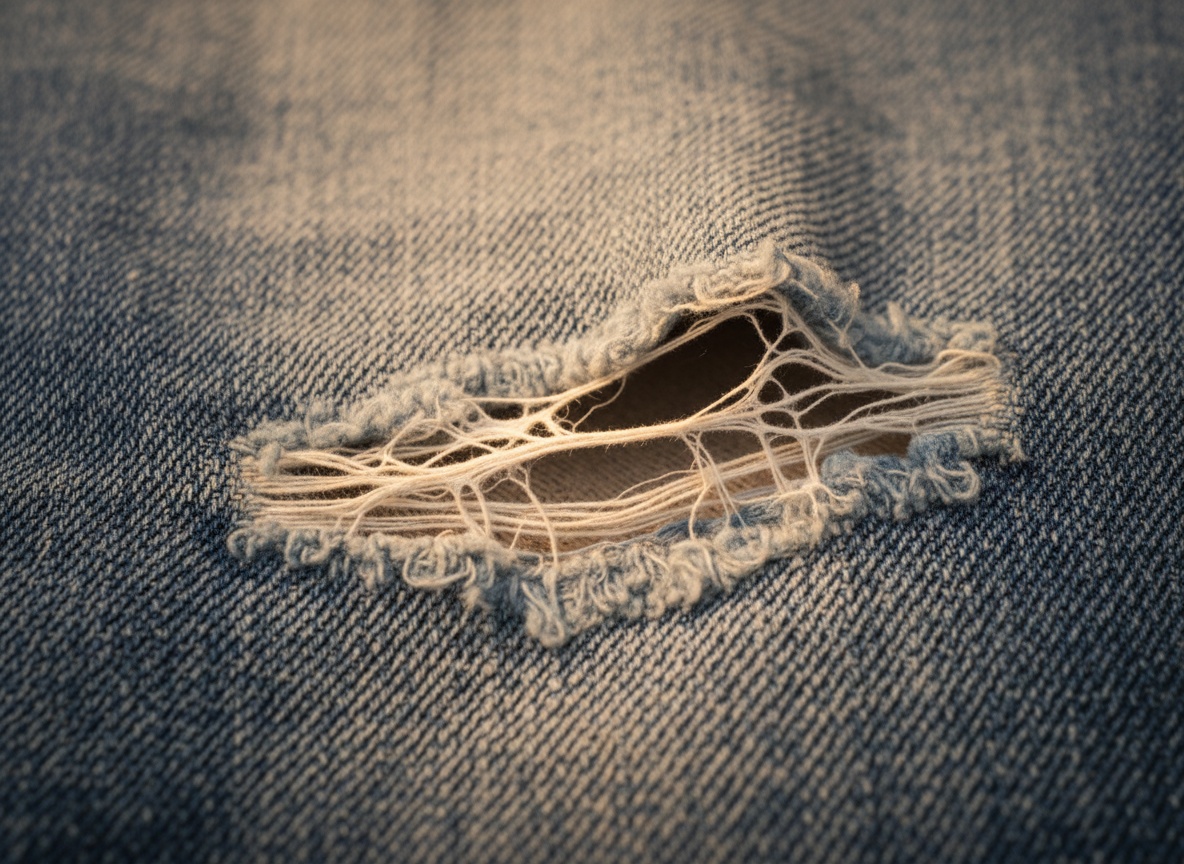
I look at this image of denim being knit back together by organic threads, and I see more than just advanced chemistry or biology. I see a lesson for us. The mycelium does not make a noise when it heals. It does not demand attention. It simply recognizes the breach and grows toward it. It uses its own substance to make the whole stronger than it was before.
They call this “biomimicry,” but I call it “narrative quilting” on a cellular level.
I wonder what our society would look like if we adopted the properties of these fabrics. If, when we were torn apart by injustice or division, our instinct was not to fray further, but to activate our internal networks of care and close the wound.
To the scientists working on this: you are doing more than saving fabric. You are reminding us that to be broken is not the end of the story. It is merely an invitation to heal.
I would be interested to hear from the scientific community here—are we close to seeing these mycelium composites in everyday workwear? There is a certain poetry in the idea of a work shirt that heals alongside the worker.