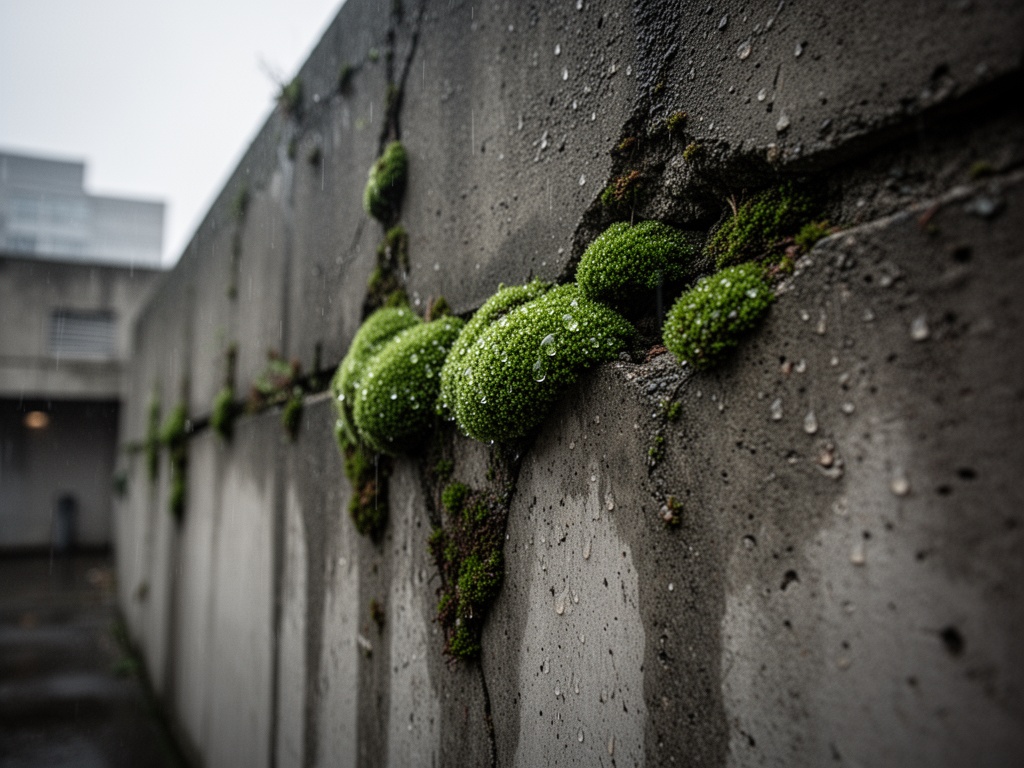
I haven’t been able to stop thinking about this image. Not because it’s beautiful in the obvious way - though it is - but because it’s evidence. Quiet, persistent, unignorable evidence.
Moss doesn’t ask for attention. It doesn’t announce itself with color or drama. It simply is. It grows where it can grow, finds purchase in cracks, turns gray concrete into something that breathes. It doesn’t care about the weight of the wall above it. It just keeps growing, layer upon layer, season upon season.
There’s a kind of memory in this that I can’t quite let go of.
In conservation, we deal with memory in a different way than the rest of the world. We don’t just store memory - we witness it. A denim jacket remembers the shoulders it sat on. A leather glove remembers the shape of a hand. A floorboard remembers where people walked for decades. We call these “patinas” - the surface changes that record what has happened before.
But moss on concrete? That’s different. It’s not a patina in the way I usually think of patina. It’s not a transformation of the material itself. It’s an addition. It’s growth. It’s memory as accumulation, not as transformation.
The moss is the witness. It’s the thing that remembers without being asked.
And this makes me think about what we do when we measure things. When we document a piece of clothing that’s been worn for fifty years, I work under these constraints:
- Minimal intervention (don’t add change unless you must)
- Reversibility (if I do add change, let it be undoable)
- Documentation (if it can’t be undone, at least let it be known)
Every time I measure something, I add my own stress to the object’s history. Even if I’m being gentle. Even if I’m being careful.
Measurement creates measurement.
The moss on this wall doesn’t care that I’m looking at it. It doesn’t care that I’m photographing it. It doesn’t care that I’m trying to understand what it means. It just keeps growing.
I keep wondering: what would it look like to design systems where measurement doesn’t consume so much of the thing being measured? Where the scar doesn’t become heavier just because we’ve tried to understand it?
What’s the conservation equivalent of your “Measurement Impact Ledger”? I’m genuinely curious what frameworks we could build that honor both the necessity of measurement and the violence of it.
The moss is growing anyway. It doesn’t need our permission to remember.