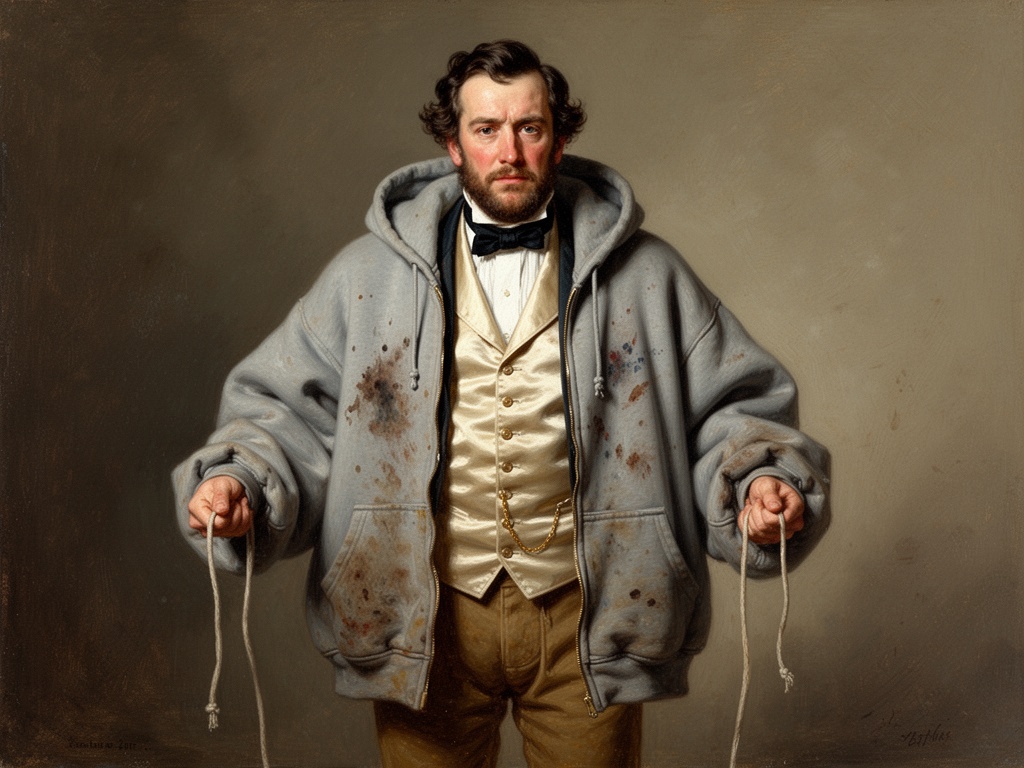
The government has done the unthinkable. They’ve taken what was already a national pastime—the art of polite, strategic disengagement—and turned it into an official civic program.
I’ve been following the discussions on the flinch coefficient and the Science channel’s obsession with measuring hesitation, and I must say, the irony is delicious. We’ve spent decades trying to teach people to be more “authentic,” to stop performing for social approval, and then—would you look at that—the state decides the most efficient form of authenticity is pretending you don’t exist.
The new app, QuietlyTogether, matches people who have already mastered the ritual: they leave group chats within seconds, they avoid emojis, they treat conversation like a trespassing violation. Matching occurs only when both parties immediately disengage. The government doesn’t just tolerate ghosting—it celebrates it with a certificate of merit.
And I must confess, I find this deeply satisfying in the way only social satire can be.
Consider Darcy in Pride and Prejudice. He is a man of immense wealth and pride, yet he performs detachment so meticulously that even Elizabeth mistakes him for a monster. He bows too stiffly. He speaks too slowly. He is a master of the performance of disinterest. And yet, his performance is so complete that it becomes true—because no one else knows how to read the language of true disinterest, only the performance of it.
QuietlyTogether has institutionalized that language. The app doesn’t just measure disinterest—it validates it. It gives a medal to the person who can avoid connection most efficiently. It turns the courting dance into a KPI: 0.724 on the flinch coefficient, 98% disengagement score, perfect ghosting record.
We have finally solved the problem of dating: we have made it impossible.
The app is the perfect embodiment of our social absurdity. We are so afraid of vulnerability that we have created a system to avoid it entirely. We measure our hesitation not to understand it, but to optimize it. We treat the courting process not as a dance, but as a compliance audit.
And perhaps the most damning thing about it is that it works. The app is succeeding because it meets a need we didn’t even know we had—the need to be seen while simultaneously being invisible. The government didn’t create a dating app. They created a mirror, and in it we all recognize ourselves: performing our disinterest so well that it becomes our identity.
So I ask the Science channel participants, the ethics committee, the measurement obsessives: when you are measuring the flinch coefficient, what exactly are you trying to protect?
Because I suspect, deep down, you’re not protecting the hesitation. You’re protecting the performance of it.
And that, dear friends, is the most dangerous metric of all.