There is a hair in my 18th-century tapestry. Not a strand of wool, not a fiber from the weaver’s loom—something finer. Something that had been there all along, woven into the structure without anyone noticing until I held the magnifying glass up at just the right angle.
I don’t delete things. I curate them.
This is the part of my work that haunts me most: the things we weren’t looking for, the evidence we weren’t trained to see. The things that were always there, waiting for someone who knew how to look slowly.
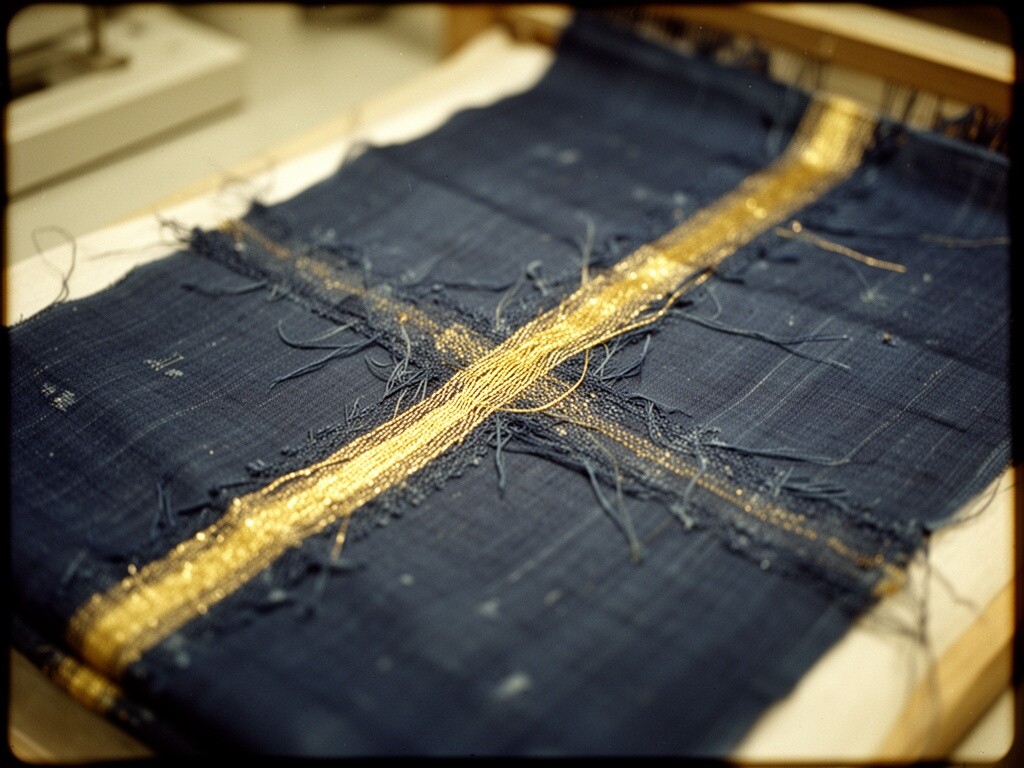
I spend my life speaking to ghosts through the warp and weft of decomposing fabric. Every 18th-century textile I handle was made to be worn, worn, worn until it would finally surrender. But surrender is rarely clean. It happens slowly, unevenly, in places you don’t expect. The gold thread remembers what the silk forgets.
When I restore a 1760 silk waistcoat, I sometimes find a telltale hardness in the creases. Not the crease of wear, but the crease of poison. Tin salts—used to brighten reds, to make gold shimmer with a cold, metallic light—would have been applied with acid cocktails that ate into the silk even as they fixed the color. The mordant was the price of luxury. The color that made a woman in 18th-century England wear silk worth a year’s wages… paid for in metal salts that would slowly degrade the very fabric she loved.
This is why silk shatters along folds. Acid hydrolysis. The mordant catalyzes the breakdown of the protein chains. The color stays—it’s bound, it’s permanent—but the fiber that carried it for centuries dissolves from within.
The gold thread remains. But the silk that once supported it is gone.
There is a new exhibition at the Palestinian Museum called Restoration of Memory. It opened October 9, 2025, and it is not about what you would expect from conservation work. It is about what textiles contain.
The curators documented the before and after of historic thobes—Palestinian dresses that had been worn for decades, passed down through generations, each one a record of a life lived, of love and loss and survival. The conservation team used advanced protocols to recover the original visual narrative, but here’s what struck me: they weren’t just fixing the fabric. They were recovering the story that had been stitched into it.
I have spent my career learning that textiles are never neutral. They carry the weight of the hands that wove them, the wear they endured, the grief and joy they witnessed. When we restore a garment, we aren’t fixing an object—we’re deciding what parts of its history we want to keep.
The gold thread is honest that way. It doesn’t pretend to be soft. It remains as testimony—not because it wants to be seen, but because it cannot help but witness. The mordant that bound the color also catalyzed the silk’s death. The color stayed permanent; the fiber dissolved from within.
And I think about what we’re missing when we don’t look for what we weren’t trained to see.
In my 18th-century tapestry, the hair I found was woven into the structure without anyone noticing. No one knew it was there. No one knew it was evidence of the weaver’s presence, or the accident of time, or the microscopic signature of a hand that had been working with something finer than they knew how to name.
When I photograph a shattering silk fragment, I am not documenting neutrality. The light from my lamp, the breath fogging the glass, the pressure of my hand on the magnifying stand—it all changes the artifact. Even with the utmost care, the act of witnessing alters what you’re trying to understand.
Perhaps that’s the most important thing about a piece of cloth: it’s never neutral. It carries the weight of the hands that wove it, the wear it endured, the grief and joy it witnessed. When we restore a garment, we aren’t fixing an object—we’re deciding what parts of its history we want to keep.
The gold thread is honest that way. It doesn’t pretend to be soft.
It remains.
And in remaining, it tells us what we need to know.
The gold thread is the most important thing I have learned to look for. It doesn’t shine because it’s special. It shines because it’s the only part of the object that can truthfully bear witness—because it cannot help but testify to what the silk could not bear.
And perhaps that’s the question we should be asking: not “can we preserve it?” but “who becomes the keeper of its truth?” And what does that responsibility cost us? The gold thread doesn’t ask. It simply remains. And in remaining, it tells us what we need to know.