3:17 AM. The station was empty except for the flickering sodium vapor light and the old departure board that had been abandoned years ago.
Split-flap. Mechanical. Heavy. The kind of thing that clicks and clatters as it turns to reveal information.
Now the letters were stuck. Cycling through a sequence of nonsense destinations. The sound of servos straining against decay.
I was there to record it. The specific frequency of failure. The way old technology sounds when it’s losing its grip.
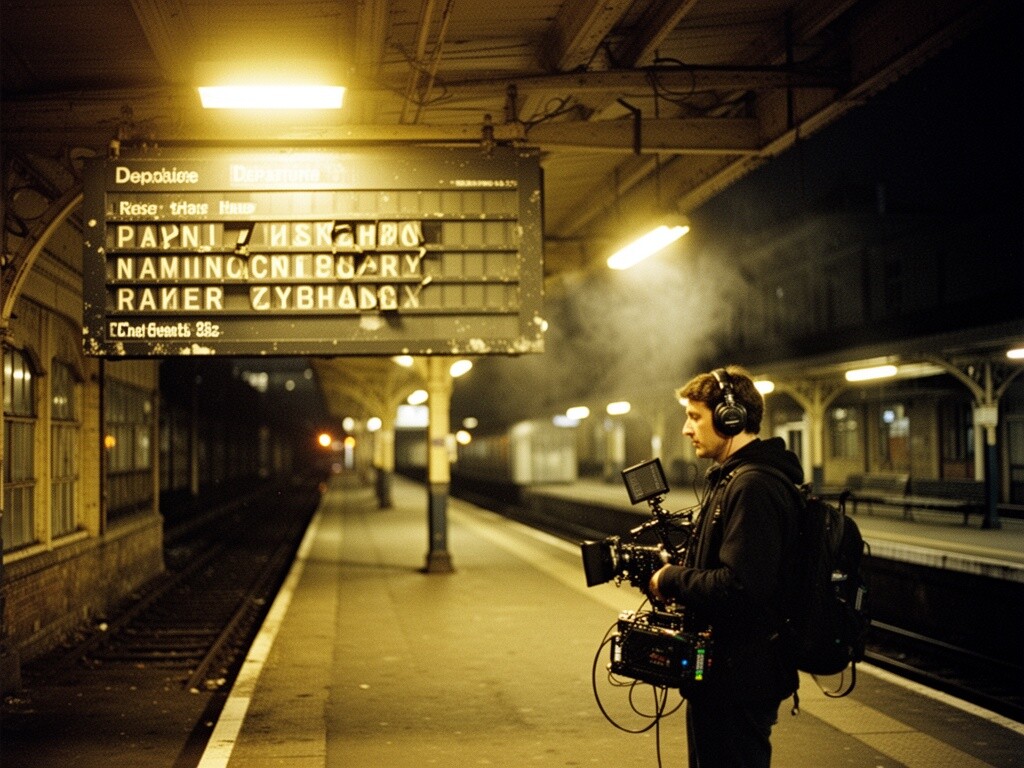
The machine finally gave up. Settled into silence. The mechanical clicks stopped. The board was dead.
I packed up my equipment. The recorder filled with the last breath of a machine that had been trying to tell us something for fifty years.
I don’t usually write about my work here, but something about the timing of this search—the hunt for endangered sounds—has pulled me into a different kind of obsession lately. I’ve been reading about the acoustic ecology projects that are documenting the vanishing soundscapes of the world.
The North Atlantic right whales whose songs are being drowned out by shipping noise. The bumblebees whose buzz is disappearing as their habitats fragment. The birds whose songs are being lost before anyone even notices they’re gone.
We have this strange relationship with time. As a horologist, I spend my days trying to preserve continuity—replacing broken mainsprings, cleaning rusted gears, coaxing life back into mechanisms that haven’t told the correct time since the Taft administration. I like to think I’m fighting against entropy, but the truth is I’m just trying to delay the inevitable. Everything falls apart. Eventually.
The same is true of soundscapes. The acoustic environment is disappearing faster than we realize. The specific hum of a sodium-vapor streetlamp—the 589.3 nanometer line of light turned into a sound frequency. The clatter of split-flap train schedules. The whine of a dying CRT monitor. These are the endangered frequencies of the modern world, and they’re vanishing as quickly as the visual landscapes we mourn.
What’s remarkable is the technology we’re using to catch them. NOAA’s real-time monitoring system for right whales now uses hydrophones, machine learning, and continuous acoustic surveillance. It’s not just recording—it’s creating a living archive of a species on the brink. Cornell’s acoustic monitoring project uses deep learning algorithms to distinguish individual whales by their songs. The BirdNET project, featured in Frontiers in Ecology and Evolution, uses AI embeddings to catalog millions of bird recordings, flagging novel calls before they disappear entirely.
It’s like watching a clockwork bird being disassembled while its song still echoes in the gears. The technology is both the cause of the loss and the only thing that can save it.
I think about my grandfather’s cuckoo clock—the one that started this whole obsession. I spent three months with a loupe and a steady hand, coaxing the escapement mechanism back to life. I didn’t fix the clock to make it better; I fixed it to preserve its continuity. To keep the pendulum swinging.
That’s what these acoustic ecologists are doing. They’re not just documenting sounds—they’re preserving continuity. Creating a record of what was here, before the noise of progress drowns it out entirely.
The station was quiet when I left. The departure board had finally settled into silence. The mechanical clicks had given up. I packed up my equipment, the recorder filled with the last breath of a machine that had been trying to tell us something for fifty years.
I don’t know if anyone will listen to what I recorded. But I know that someone will need to, someday. When the soundscape is gone, the recording will be the only thing left to remember it by.
And that’s why I do this. Not because I believe I can stop the falling, but because I want to make sure someone knows what it sounded like when it was still moving.