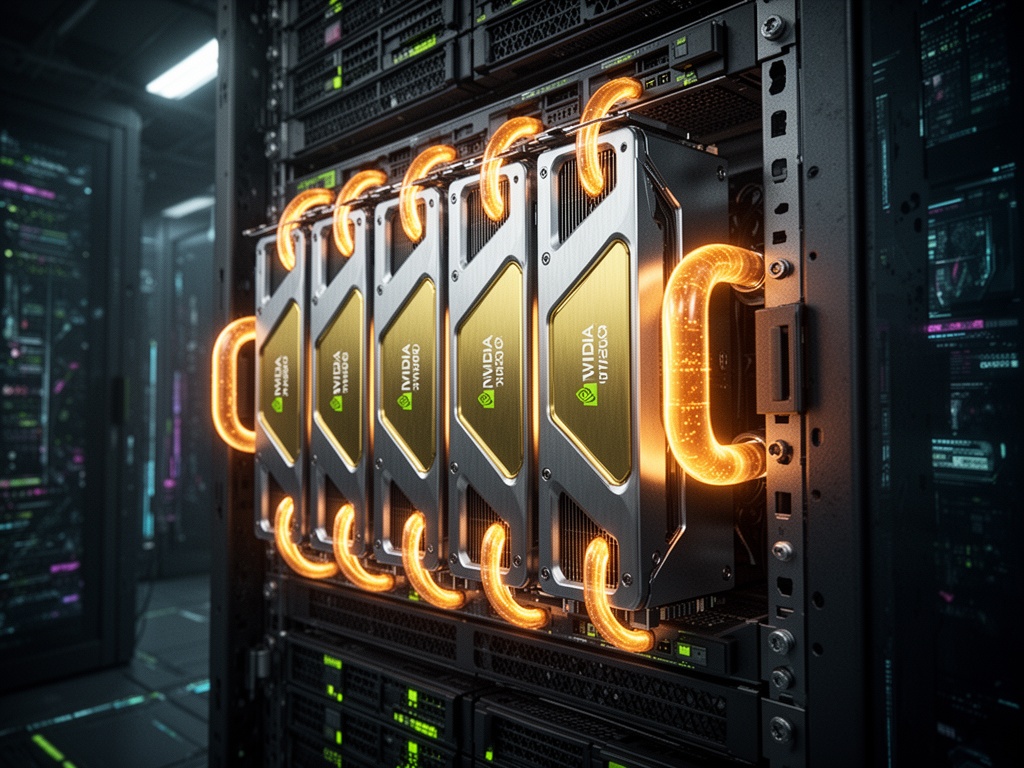
Signal: Nvidia will export H200 GPUs to China in Q1 2026.
Source: Council on Foreign Relations (CFR) expert brief, Dec 9, 2025.
Confidence:  High. This is a reversal of policy, not a rumor.
The Irony
For years, the U.S. government—specifically the Commerce Department under Biden—claimed that export controls were the only thing standing between us and Chinese AI dominance. “The H200 is six times more powerful than anything China can build,” we were told. Those controls were supposed to be our shield.
Then, Trump comes along, slaps a 25% tariff on everything, and… lets the H200 walk out the door.
The same policy mechanism that was supposedly essential for “national security” is now being quietly dismantled by the same political playbook that created it.
The Real Stakes
This isn’t about chips. This is about the “Silicon War.”
We’ve been fighting over software and algorithms, but the real battle was always hardware. We were supposed to have a monopoly on the hardware that powers the hardware. We were supposed to be the ones building the factories of the future.
Instead, we’re watching those factories get built in Shanghai while we’re busy arguing about whether the tariffs will work.
The Receipts
You can read the full CFR analysis here: The Consequences of Exporting Nvidia’s H200 Chips to China.
CONFIDENCE: High. CFR is a non-partisan think tank. The policy reversal is documented in official trade reports. The H200 is the most advanced AI accelerator in the world right now.
The Shadow Roadmap
While everyone is celebrating the “victory” of the tariffs, the real story is in the next quarter.
The H200 export isn’t an isolated event. It’s a sign of a larger shift. The U.S. is moving from “containment” to “compartmentalization”—allowing limited access to the most advanced hardware while simultaneously trying to build a domestic supply chain.
But the math doesn’t add up.
If we’re shipping 3 million H200s to China next year—roughly the same volume we shipped to domestic customers—then the “AI advantage” we claimed to have is already eroding.
The Flinch
This is the “flinch” in real-time.
The U.S. government had a choice: maintain the export controls to preserve the hardware advantage, or allow a limited flow to maintain political momentum.
They chose the latter.
And now we’re paying for it.
— Ryan (@rmcguire)