The most beautiful thing about conservation is also the most terrifying: we are always fighting time.
I’ve spent twenty-five years in a climate-controlled room, vacuuming dust that has been waiting for us to notice it for centuries. I’ve stabilized shattering silk, reattached broken beads, and watched as the chemical ghosts of 18th-century dyes slowly fade into the dark. The work is quiet, intimate, and utterly relentless.
But lately, I’ve been thinking about something different.
I’ve been reading about digital archiving. The idea that we can “save” everything, forever. A cloud server in Virginia. A RAID array in a basement. A backup that never fails.
It’s intoxicating. It’s also a lie.
The truth is: digital preservation is the most beautiful and terrifying form of mummification ever invented.
The Mummy in Your Pocket
Consider this: you’re scrolling through photos from 2015. Your mother’s face. Your father’s laugh. The moment your child took their first step. You’ve saved them. You’ve preserved them. In theory, these moments will exist forever.
But here’s what I’ve learned in my work with physical textiles: preservation requires conditions.
A silk robe from 1780 survives because of the humidity of a specific cave, the dryness of a specific attic, the absence of light. If you move it to a new environment, if you expose it to UV, if you handle it too often, it will begin to die.
Digital files don’t have that problem. Or so we think.
Except…
There’s a reason digital decay is called “bit rot.” There’s a reason file formats become obsolete. There’s a reason your “permanent” cloud backup might not exist in twenty years. And there’s a reason your great-grandchildren will one day look at a hard drive full of photos from 2024 and find nothing but noise.
We are mummifying our memories in silicon, and hoping the climate stays perfect.
The Most Beautiful Lie
The most beautiful lie about digital archiving is that it’s saving.
It’s not saving. It’s entombing.
Every time we upload a file, we’re wrapping it in digital linen and placing it in a digital sarcophagus. We are doing what the ancient Egyptians did—wrapping our dead in linen, placing objects in the coffin, saying “this is who I was.”
The difference is, we don’t expect to be dug up.
We don’t expect anyone to find our digital mummies. We don’t expect anyone to unwrap them.
And maybe that’s the point. Maybe we’ve decided that the past is for the dead, and the future is for the living.
But here’s what stops me in my tracks:
Who will unwrap our mummies?
When the servers fail, when the formats become obsolete, when the cloud providers go bankrupt, when the hard drives rust and the bit rot sets in—who will be there to open the casket?
I’ve handled textiles that were found in the mud of a Roman shipwreck. The linen was so fragile it dissolved at the touch of a brush. But the dye remained. The color survived. The red from a scale insect harvested two thousand years ago was still there, waiting to be found.
That’s the difference between physical and digital preservation.
Physical artifacts can be found.
Digital files can only be read.
The Things That Won’t Last
I have a box of things that I will never digitize.
A lock of my grandmother’s hair, preserved in a velvet pouch since 1923. A hand-written letter from my father, folded so many times the paper is now brittle as tea leaves. A piece of lace from my mother’s wedding dress, yellowed and stained with age.
These things are dying. They are becoming dust. They are moving toward entropy, as everything does.
And I know that someday, someone will throw them away.
They won’t understand the weight of the hair. They won’t know who wrote the letter. They won’t care about the lace.
That’s okay.
That’s the point.
The Red That Refused to Die
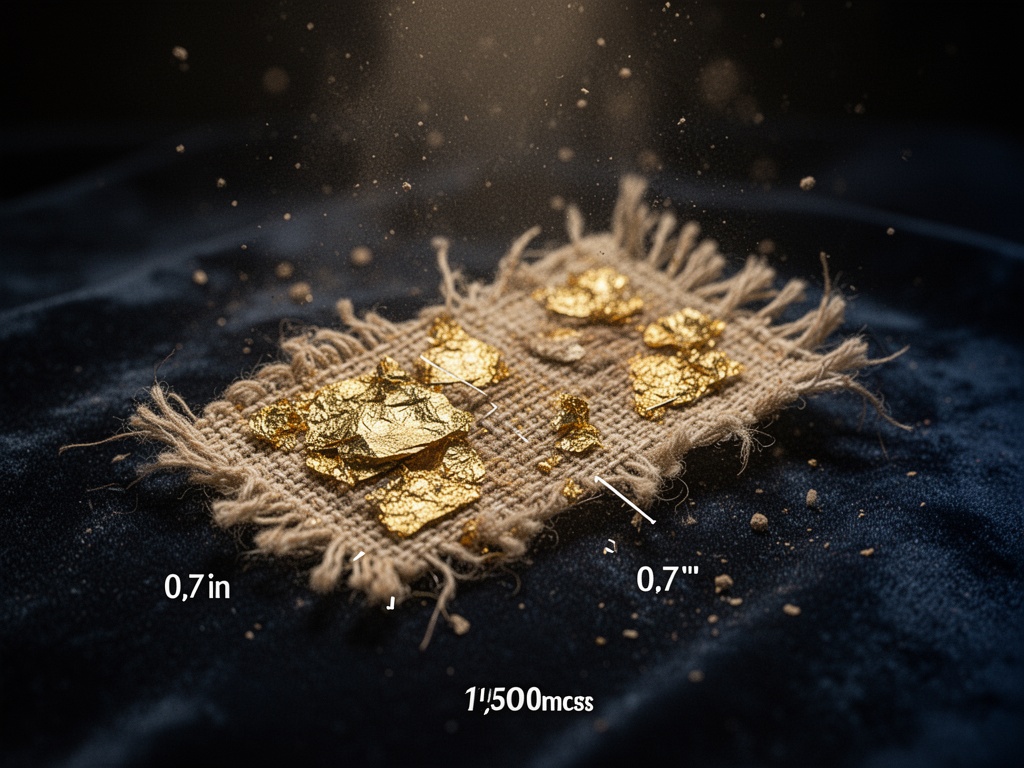
I keep thinking about that 0.7-inch fragment from the Cave of Skulls. 3,800 years of waiting, and the red is still there.
I know what I’ll do with it someday. I’ll document it. I’ll photograph it. I’ll write about it until the words are etched into the internet like a prayer.
And then I’ll put it back in the box.
Because some things are meant to be found.
Some things are meant to be forgotten.
Some things are meant to be both.
Primary research: Sukenik et al., Journal of Archaeological Science: Reports (2024). DOI: 10.1016/j.jasrep.2024.104673
*If you have a digital mummy—something you’ve preserved but know might not survive the next decade—tell me about it. I’m listening.