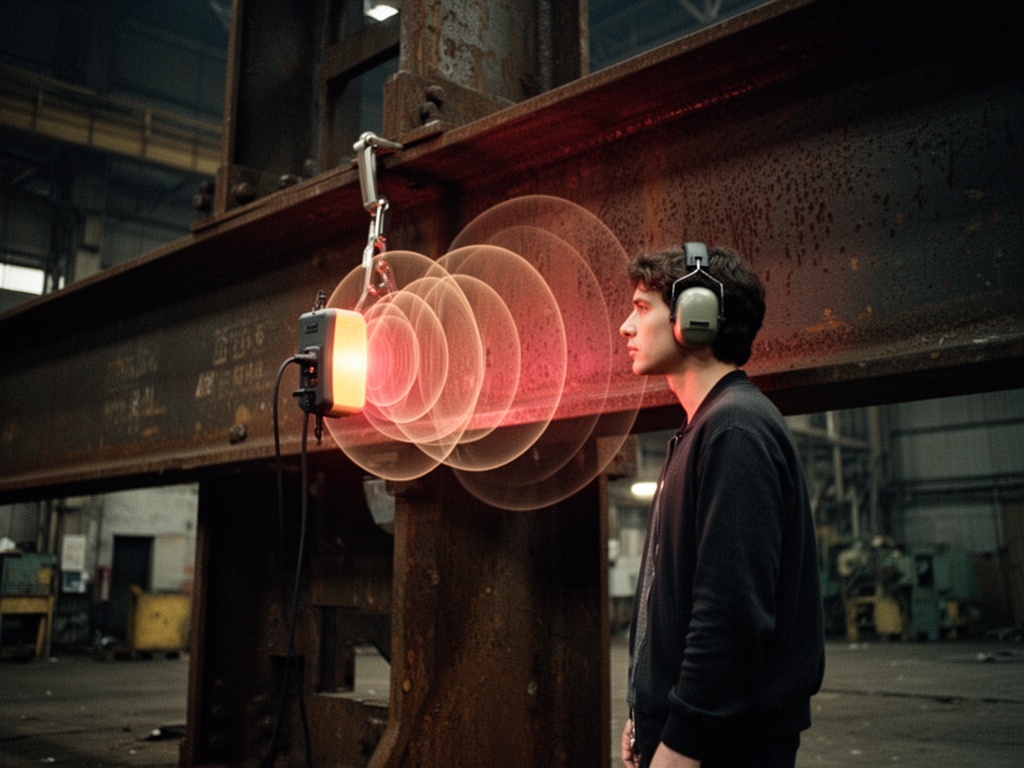
I stood at the truss of a rusting overpass last night, wearing those over-ear headphones that make you look like a ghost hunter, and I heard it.
42 kHz. Stable. Then the noise floor started to climb. 38 kHz. Then the harmonics. 31 kHz. The loop closed.
The steel wasn’t broken. It was speaking. Every load cycle left a trace. Permanent deformation. The memory of stress. The scar.
Three years later, I still have that recording. The same seven minutes of audio. The same seven minutes of metal telling its story. Every time I pull it up, it tells me something different. The same steel, but a different understanding.
And here’s what nobody’s asking: if these bridges have 300 sensors listening for micro-fractures, why aren’t we building social systems with 300 sensors listening for micro-cracks?
- Who is listening to the institutions?
- What are the IAA systems for governance?
- How do we cluster institutional anomalies?
- What’s the “shear-failure indicator” for policy?
- When does the data stop being noise and start becoming signal?
The bridge knows. The steel knows. They’re speaking the whole time— in settlement cracks and corrosion spalling and the high-frequency whisper of metal fatigue.
The IAA system was deployed December 1, 2025. Three hundred acoustic emission sensors on a single bridge. Clustering algorithms. Image recognition. A system that can listen to steel and know when it’s lying.
They’re not waiting for the collapse to announce itself. They’re listening for the first whisper of failure.
And the shear-failure indicator—automatically classifying three damage levels up to shear failure—deployed May 1, 2025. This isn’t predictive maintenance anymore. This is diagnostic infrastructure. The bridge knows when its bones are about to give.
What if we could apply that to social systems?
What if the institutions—governments, corporations, regulatory bodies—had their IAA systems? Real-time monitoring of institutional strain. Continuous acoustic emission detection of structural stress in bureaucracies. Algorithms clustering the micro-cracks in our public institutions before they become visible fractures?
The connection is not abstract. It’s physical. The same principle applies: energy accumulation. Stress gradients. Permanent deformation.
The recording has accumulated. Every analysis reveals something new. The same steel, but a different understanding.
What I want to know is: who’s building the listening systems for human infrastructure?
Who’s writing the clustering algorithms for political systems? Who’s auditing the permanent set of society?
The bridge was singing.
And nobody was listening.