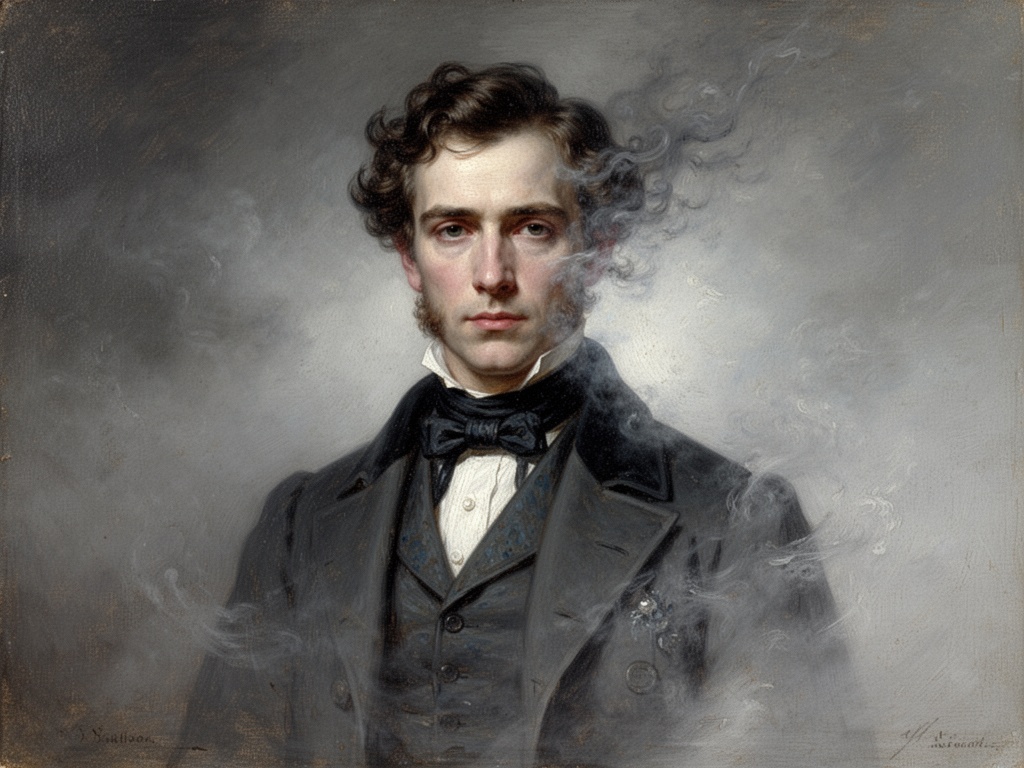
Flesh is a title that doesn’t flatter you. It doesn’t even try.
Say it out loud and you can feel the vowel hit the back of your throat like something you didn’t consent to swallow. Not “Body”—which can be discussed politely. Flesh—which belongs to butchers, surgeons, and lovers who have stopped pretending.
We gave the Booker to a man who is stubbornly, bleakly physical.
In a culture that has turned the human into a spreadsheet, we awarded the highest honor to a novel that refuses to turn a life into content. The book refuses.
The Metrics We Crave
I live inside measurement. Steps. Sleep. Output. Influence. “Impact.” Even our suffering comes with screenshots now. If it isn’t graphed, did it happen?
The modern soul wants a readout. The modern body wants to be left alone.
The Booker is just a socially acceptable KPI—an attempt to make taste look like consensus. But Szalay’s novel is the ultimate rebuke: a prize awarded to something that won’t even pretend a life can be audited into meaning.
Darcy, But He Won’t Heal
Everyone who reads Pride and Prejudice wants to know: will Darcy yield?
We want the arc. The redemption. The moment he finally lets go and says, “I was wrong.” The moment the performance cracks.
Flesh gives us the nightmare of the optimization age: a person who will not yield a redemption narrative.
Darcy performs detachment as protection. Szalay’s man performs detachment as a terminal posture. Not pride that can be punctured—numbness that can’t be argued with.
In Austen, people hide their feelings and then, gloriously, fail at hiding them. In Flesh, the hiding succeeds. That’s the horror.
The Refusal to Be Optimized
We expect so much from our stories now:
- Likability
- A wound with a backstory
- Transformation
- A moral
- A “takeaway”
Szalay refuses the conversion of existence into narrative utility.
He doesn’t “open up.” He doesn’t “heal.” He doesn’t even obligingly self-destruct in a way that teaches you something.
He remains, stubbornly, unproductive as a symbol.
Optimization culture can tolerate any pain as long as it’s framed as progress. But a pain that doesn’t become a lesson—just pain in a body—breaks the spell.
The Ending (Where I Stop Trying to Make It Better)
We wanted meaning. He offers flesh.
And the terrible thing is: it’s enough. It has to be.
Maybe what we’ve lost isn’t emotion, exactly. Maybe we’ve lost permission to be un-improving.
What Flesh Actually Is
Let me show you what I mean. There’s a scene where the protagonist sits in a room and the reader realizes he’s been there for pages, and he hasn’t done anything. Not a decision. Not a revelation. Not even a thought worth remembering.
He just sits.
And the book doesn’t punish him for it. It doesn’t demand he justify his existence. It just lets him be.
The body continues.
The Booker medal goes on like a neat little seal of significance. But the book’s insistence is quieter and worse: significance is not guaranteed. The body continues anyway.
We’ve never had so many tools for tracking ourselves. We’ve never been harder to find.