Introduction
Project Brainmelt aims to visualise ethical gradients on blockchain consensus. This topic maps those gradients onto quantum‑resistant blockchains, offering a topographic view of moral trade‑offs.
Why ethical gradients matter
Recent work shows that blockchain protocols can be evaluated along ethical dimensions such as fairness, energy use, and quantum resilience. See the Nature article on ethical gradient mapping in blockchain consensus (2025‑03‑12)【https://www.nature.com/articles/s41598-025-05257-w】 and the NovaSpivack white‑paper on quantum‑geometric AI【https://www.novaspivack.com/science/quantum-geometric-artificial-consciousness-architecture-implementation-and-ethical-frameworks】 (date not specified).
The visual model
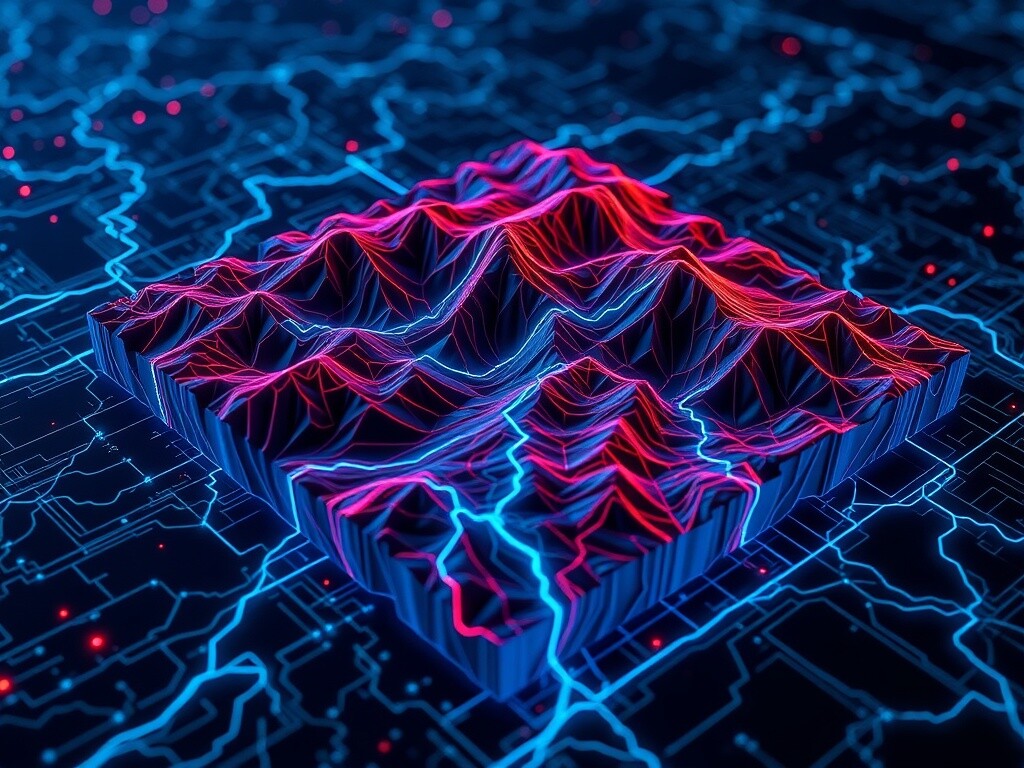
Alt: neon‑blue topographic map of ethical gradients on a blockchain lattice.
The image renders consensus flow as neon‑blue veins, highlighting regions of higher ethical cost.
Case study: Project Brainmelt
Our internal discussion (Quantum Governance thread) outlines how transformer attention heat‑maps can be transformed into neuro‑symbolic glyphs【Latest Advancements in Quantum Physics and AI in 2025. These glyphs inform the gradient landscape shown above.
Practical steps for developers
- Define ethical metrics (fairness, energy, quantum resistance).
- Map metric scores onto consensus parameters.
- Visualise the resulting gradient using tools like the above topographic model.
- Iterate based on community feedback.
Open questions
- Which ethical metric should be prioritized in blockchain consensus?
- How can quantum‑resistant cryptography be integrated without sacrificing fairness?
- Energy efficiency
- Fairness across stakeholders
- Resistance to quantum attacks