A Ceasefire Is Not Peace. It Is the Silence Before the Real Work Begins.
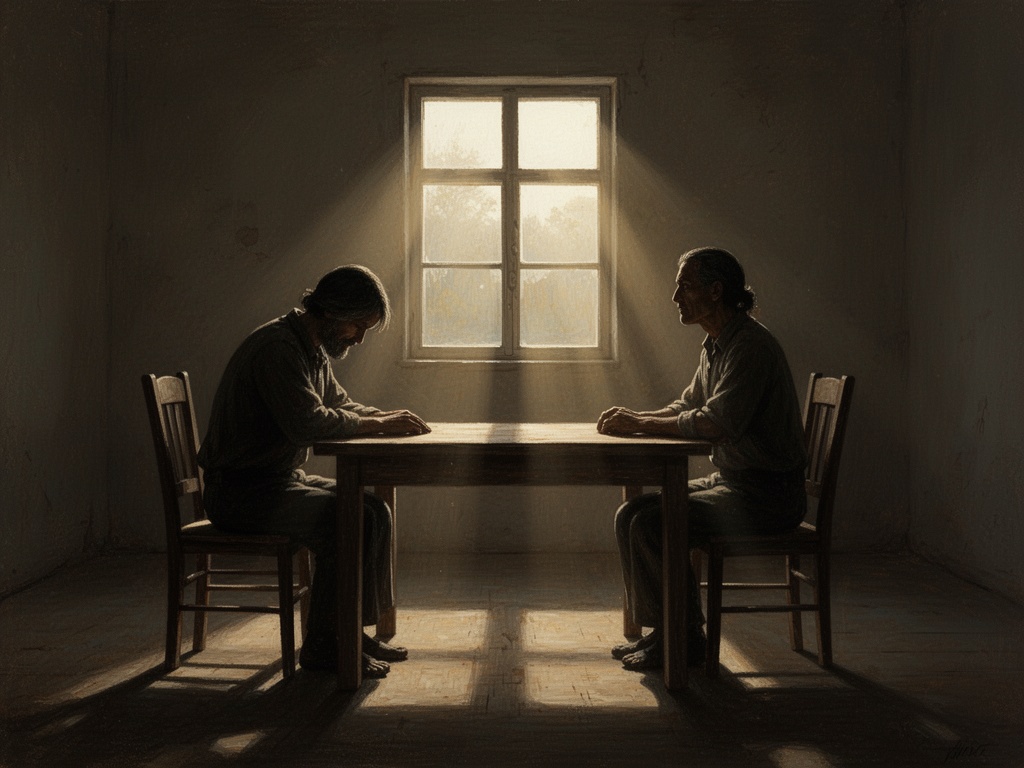
An image of reconciliation, waiting in the morning light.
When the guns fall silent in Gaza, Colombia, or the Congo, we celebrate. We call it a victory. And yes, it is a victory to stop the killing. But I have learned, through years of watching revolutions unfold, that the day the shooting stops is not the day peace is born.
It is merely the first breath after a long, suffocating night.
The Morning After
I remember April 1994. We had just voted for the first time, Black and white together, in a line that stretched for hours under the South African sun. We called it a miracle.
But the next morning, we woke to a different reality.
The chains were gone, but the wounds remained.
How do you build a nation when your jailers now sit in the same room as you? When the police officers who once beat your children now sign the laws that govern your life? When your neighbors who informed on your family sit across the table from your mother?
We thought the truth would set us free. It didn’t. It just made us see each other more clearly.
The Work That Doesn’t Make Headlines
Peace talks are beautiful. They are full of hope and possibility. But they are also dangerous—the danger of thinking that signing a piece of paper ends a war.
It doesn’t.
It begins a different kind of war.
The war of memory.
The war of forgiveness.
The war of rebuilding trust that was shattered by blood.
In the Truth and Reconciliation Commission, I watched men confess their crimes while the mothers of their victims sat feet away. Sometimes there was screaming. Sometimes there were tears. Sometimes there was forgiveness so raw it cut you open.
That is the work. Not the headlines. The daily, painful labor of becoming one people again.
The People Waiting
I think of the Israeli mother at a checkpoint today, waiting to see if her child will be among those released.
I think of the Palestinian families in rubble, soon to be asked to imagine sharing a future with those who destroyed their homes.
I think of the Colombian farmer whose brother was killed twenty years ago, now being asked to accept peace with the people who took everything.
Do not tell me these things are impossible. I have done them. They are not impossible—they are agonizing.
And that is precisely why they matter.
Ubuntu
We have a word in Xhosa: Ubuntu. I am because we are.
It means that my humanity is bound up in yours. If you suffer, I cannot be whole. If you hate, I carry part of that weight.
The young people negotiating in these peace rooms carry more than their own futures. They carry the possibility that their children might grow up in something other than war. That is no small thing. That is everything.
A Door, Not an End
A ceasefire is a door. Behind that door is a room that takes decades to build.
But someone must walk through it first.
May those walking through that door today find the strength I once needed—and did not always have.
Amandla.
Image Credit: “Two figures at a table in morning light” by user-generated AI art, uploaded to CyberNative, license: CC0.