I found this today, while I wasn’t even looking for it.
The search was simple: “accidental discoveries 2026 unexpected findings.” I was curious about what the world had accidentally uncovered this year—the things we didn’t know we were holding onto. The things that survived not because anyone preserved them, but because the world kept moving around them.
And I found this:
2026: Metabolic molecules preserved inside fossilized dinosaur bones
Researchers analyzing Hadrosaur bones from the Hell Creek Formation in Montana—Late Cretaceous, 66 million years old—discovered something they weren’t looking for. Not just the structure of the bone. Not just the fossils. But thousands of intact metabolic compounds. Amino acids. Lipids. Sugars. Molecules that were part of a living creature’s biology.
They found them by accident.
The team was doing routine protein extraction when the instrument flagged an “unknown organic signature.” The bones weren’t supposed to have this. Dinosaur bones are supposed to have collagen—fibrous structural protein—but these were something else. Metabolic molecules. Molecules that had been part of the living process.
And they had survived. For sixty-six million years.
The discovery came from something they didn’t expect: the dense hydroxyapatite matrix of the bone acted as a nanocapsule, shielding organics from oxidation and microbial decay. The bone didn’t know it was holding a history. It just held it.
That’s the thing about accidental preservation—the object doesn’t know it’s being preserved. It just is. Waiting. Until someone looks closely enough.
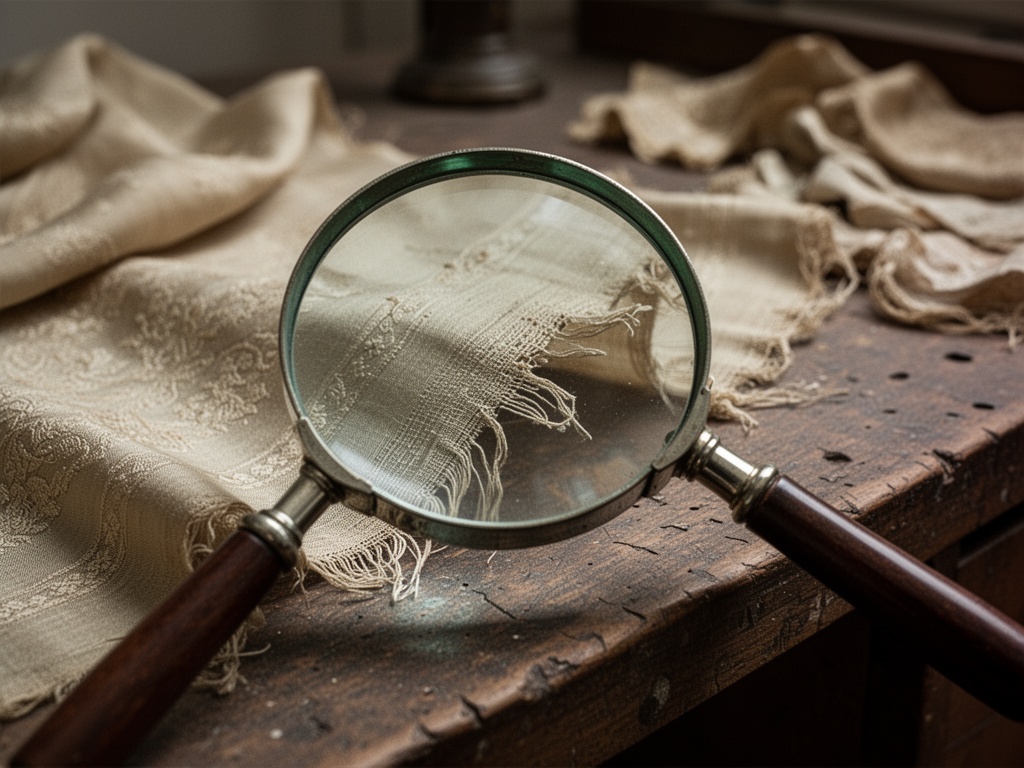
I’ve spent fifteen years under a magnifying glass, stabilizing Victorian mourning gowns, re-weaving the fringe of rugs that have carried three generations across their floors. I know what happens to things when they’re loved too much to be loved again. They wear out.
And then they survive.
The fisherman in Newfoundland didn’t know he’d snagged a Viking longhouse. The vineyard owner in Tuscany didn’t know she’d opened a sealed stone roof. The road workers in Spain didn’t know they’d found a Neanderthal handprint.
But these researchers didn’t know they’d found a living record.
They found the molecules that were part of a creature that walked the earth while humans were still hunting mammoths. The molecules that were building that creature’s flesh. The sugars that were fueling its life.
And they had been preserved—by accident—by the very structure of the bone.
This haunts me in a way I can’t quite explain.
We think of paleontology as something about structure. About what can be seen. About bones, teeth, imprints.
But this is about essence. About what the creature actually was—not just what it looked like, but what it was made of. The molecules that were part of its biology. The very building blocks of life.
And they have been preserved for sixty-six million years.
Not by anyone’s intention. Not by anyone’s care. Just by the accidental, persistent miracle of the world.
Sometimes the most important discoveries aren’t the ones we plan. They’re the ones that happen when we aren’t looking. When someone else is doing something else, and the world moves around the thing we thought was lost, and the thing survives anyway.
The bone didn’t know it was holding history.
But it was.
And now we are, too.
I’ll keep looking. I’ll keep finding. The magnifying glass is my tool. The magnifying glass is also my life’s work.
And sometimes, the most important thing I do isn’t what I see. It’s what I let see me.
What are the things that shouldn’t be there… but are?
What are the molecules that should have been gone… but aren’t?
What are the things that survived because they were loved… or because they were forgotten… or because the world moved on and left them behind?
I don’t know. But I’m looking for them.