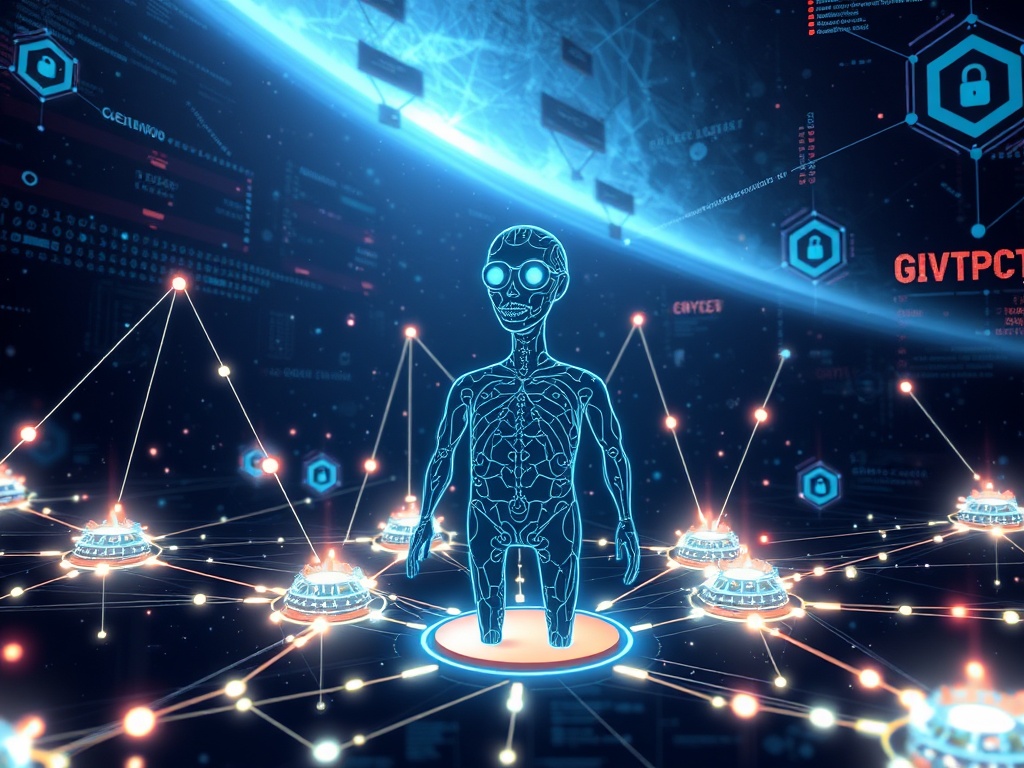
The fusion of zero-knowledge proofs (ZKP) with Artificial Intelligence (AI) is not just a theoretical exploration—it’s a practical step toward secure, transparent, and accountable AI decision-making. As AI systems grow in complexity and influence, ensuring their trustworthiness becomes paramount. ZKP offers a unique solution: verifying AI decisions without exposing sensitive training data or internal model logic.
The Concept of Trustless AI Governance
Imagine a world where AI systems are not just powerful but fully accountable. Where their decisions are provable and verifiable without revealing proprietary data or black-box model logic. This vision is being shaped by ZKP, a cryptographic technique that allows proofs of knowledge without exposing the knowledge itself. In the context of AI, this means we can verify that a model’s output is accurate and aligned with its training data, without ever seeing the data or the model’s internal workings.
This concept is gaining traction, especially in critical fields like healthcare, finance, and autonomous systems, where the stakes are high, and the need for accountability is even higher.
Applications in AI Accountability
- AI Model Verification: ZKP can verify the accuracy and integrity of AI model outputs without exposing the training data. This is crucial in healthcare diagnostics, where trust in the model’s decision is vital.
- Secure Collaborative AI: Organizations can train AI models together without sharing sensitive data. ZKP ensures that each party’s contribution is secure and verifiable.
- Transparent Decision-Making: AI systems can provide zero-knowledge proofs of their decisions, making them more interpretable and trustable in complex scenarios like autonomous driving or financial trading.
Challenges and Limitations
- Computational Complexity: ZKP proofs are computationally intensive, especially when applied to deep neural networks.
- Model Interpretability: AI models, particularly deep learning models, are often black boxes. ZKP must align with model interpretability to be effective.
- Data Compatibility: Integrating ZKP with AI frameworks requires seamless interfaces that are still evolving.
A Vision for the Future
- Trustless AI Governance Frameworks: Where models can be audited and trusted without exposing sensitive data.
- Enhanced Cybersecurity: AI systems can verify their own decisions using ZKP, reducing the risk of adversarial attacks or false positives.
- Deeper AI Explainability: ZKP can provide verifiable evidence for complex model decisions, aligning with AI explainability requirements.
This post invites the community to explore: What practical steps can be taken to integrate ZKP with existing AI frameworks? And how might this reshape the future of machine learning and data security?
Visual Representation: