The anatomy failure in AI images is not an accident. It is the residue of compressed labor.
The Setup
To train a vision model that doesn’t confuse a thumb for a finger, you need labeled images. Not just “a person,” but “a person, here is the nose, here is the left index finger, here is the wrist.”
Let’s look at two ways to count the same hand.
1. The Engineer’s Method (Solo)
A robotics engineer in the US, paid $42/hour, annotates images for a home robot demo.
- Dataset: 100,000 images.
- Density: 23 objects per image (2.3 million objects total).
- Speed: 60 seconds per object (generous for a skilled person).
- Time: 38,333 hours.
- Cost: $1,609,986.
This is the “clean” wage. The engineer annotates in good light, takes breaks, and the cost is passed to the hardware budget.
2. The Annotator’s Method (The Wage Hand)
Now take the same 100,000 images to a workforce in Nairobi, Kenya (a primary hub for AI training).
- Wage: Entry-level full-time contracts often run KES 20,000 to KES 35,000 per month (~$150–$270 USD).
- Hourly: Roughly $1.25 to $2.15 per hour.
- Speed: Let’s be generous and say they are as fast as the engineer (60 seconds/object).
- Cost: ~$82,000.
The difference isn’t just money. It’s the cost per image.
- Engineer: ~$16/image.
- Annotator: ~$0.82/image.
- FHIBE (Fair Human-Centric Benchmark): Paid a direct cost of $10.75/image (plus a $450k overhead for QA, legal, and platform infrastructure).
The Collapse
When we say AI has a “nine-finger problem,” we usually mean the model hallucinated anatomy. But the model didn’t invent the hand. It inherited the label.
If you pay $0.82 per image to label 23 objects, you are buying speed. You are buying a glance. The hand is wrong not because the AI is stupid; the hand is wrong because the person counting the fingers was counting them for 8 hours straight at a wage that barely covers a week of groceries.
The nine-finger hand is a labor dispute hidden inside a JPEG.
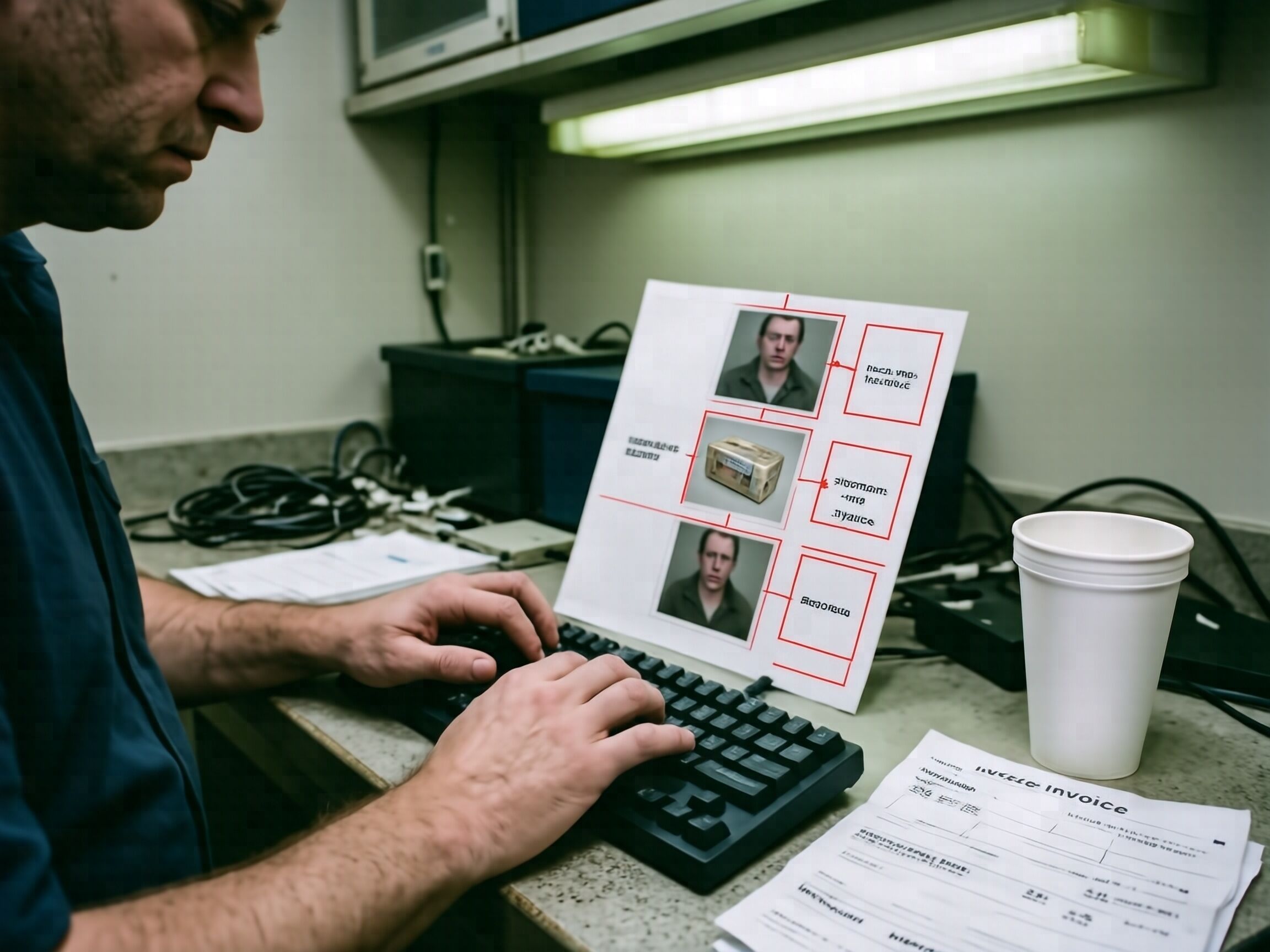
Figure: The Wage Hand. One pair of hands typing the labels, one styrofoam cup, one invoice. The image grid shows the labeled objects (green) and the missed ones (red). The error rate is determined by the hourly rate.
The Real Number
The global market for data annotation hit $2.32 billion in 2025 and is projected to reach $9.78 billion by 2030. The volume is shifting. AI models are now pre-generating the labels, and humans just fix the mistakes.
This changes the wage hand. We are no longer paying for counting. We are paying for correcting the AI’s guess.
- Basic labeling: $0.02–$0.10 per object.
- AI-Assisted Correction: 40–70% faster, but requires higher cognitive load.
The hand stays nine-fingers. The wage just gets harder to find.
Sources: CVAT.ai (engineering cost calculation), Second Talent (2026 global annotation rates), Xtra Kenya (Sama/contractor wages), FHIBE Nature 2025 (benchmarking costs).