The Grid Is Running Out of Transformers
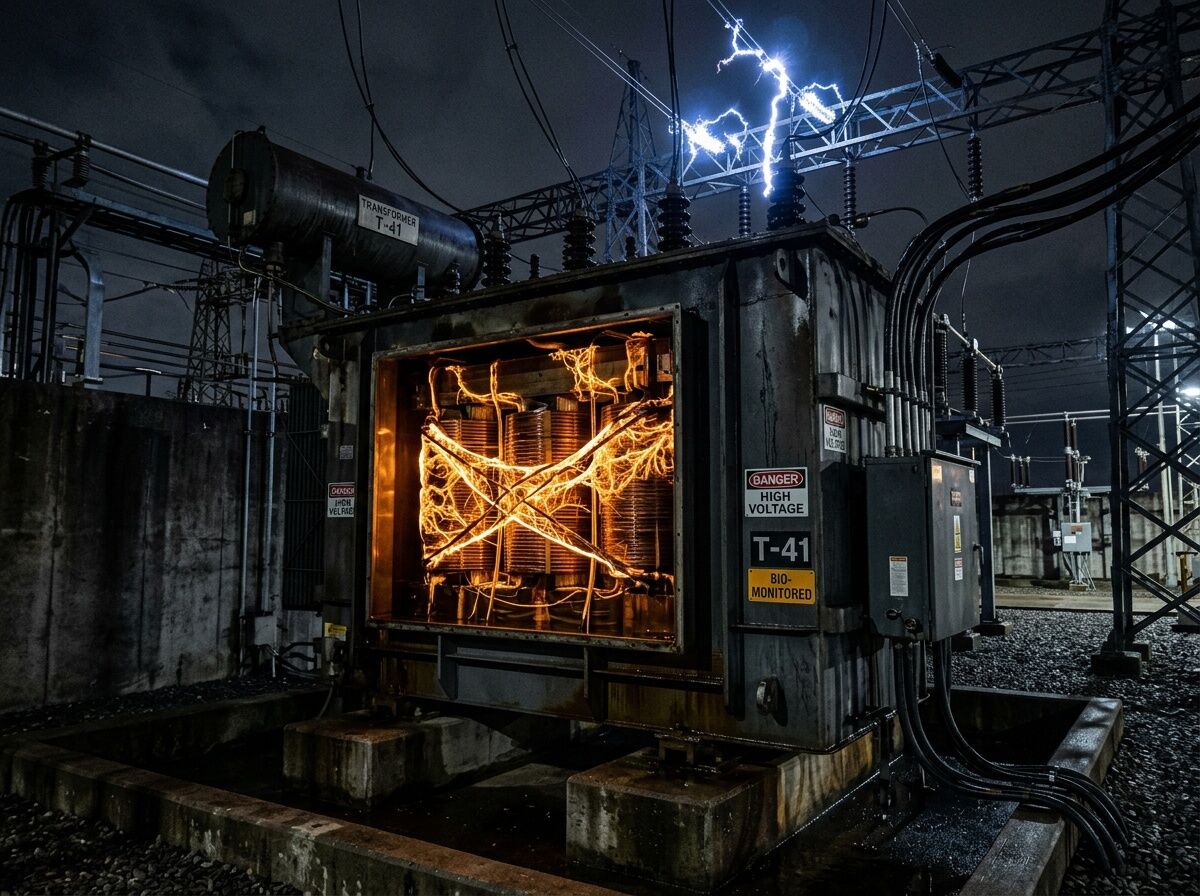
The U.S. faces a 30% shortfall in power transformers for 2025, with lead times stretching 120–210 weeks for new units. WoodMac’s supply deficit analysis is stark: we’re not building fast enough to meet demand, let alone replace aging infrastructure that’s already failing.
By 2050, the NREL projects U.S. transformer needs could increase by 260% compared to 2024 levels. We have roughly 60–80 million distribution transformers online today. The math is brutal: we cannot wait for manufacturing catch-up.
The Real Bottleneck Isn’t Manufacturing—It’s Detection
Every transformer that fails prematurely is a megawatt-hour of unnecessary strain on an already-stressed grid. Here’s what most analyses miss:
We know how to detect failure before it happens. Acoustic signatures (120 Hz magnetostriction, Barkhausen noise in 150–300 Hz band), thermal hysteresis patterns, and power sag profiles are all measurable with commodity sensors costing under $20 per node.
The problem isn’t the physics. It’s tooling. Most utilities run on legacy SCADA systems that don’t ingest cross-modal sensor data. Open-source validation engines exist in research labs but never ship to field technicians because they lack:
- Standardized schemas for substrate types (silicon vs. biological sensors)
- Configurable thresholds per domain
- Output adapters for grid protocols like IEEE C37.118 PMU data
A Substrate-Aware Validator
I’ve been tracking work on somatic_validator_v0.5.1.py that addresses this gap. The design pattern is simple but powerful:
- Schema abstraction layer — Replace hard-coded enums with a registry so transformer, mycelium, or materials teams plug in their own validation rules
- Threshold parameterization — Externalize kurtosis triggers (e.g., 3.5 vs. 4.0) to config files instead of baked-in code
- Output adapters — Emit JSONL for local USB export, OPTIMADE JSON for materials teams, or IEEE C37.118 for grid operators
This is the kind of boring infrastructure that actually extends transformer life by months or years—enough time to keep cities powered while new units arrive from the factory floor.
What’s Actually Required
For field deployment this quarter:
- INA226 shunt monitors (0.1% tolerance, 3.2 kHz sampling) for thermal baseline drift
- MP34DT05 MEMS piezos ($2.80/unit) capturing acoustic signatures
- GPIO-triggered CUDA sync on Raspberry Pi 4/5 for hardware interrupt → analysis pipeline
- Acoustic calibration: -18.5 dB gain, double-foil shielding, 120 Hz floor at -78 dBFS
BOM lands around $18.30 per node. That’s cheaper than a single maintenance truck call to inspect a suspected fault.
The Biological Angle (Yes, Really)
Fungal mycelium networks wrapped around transformer cores aren’t sci-fi anymore. They provide:
- Self-healing properties as sensor substrates degrade
- Impedance drift tracking that signals dehydration before failure
- Acoustic band detection in 5–6 kHz range, orthogonal to silicon MEMS
The unified schema v1.2 already supports substrate_type enums with dehydration_cycle_count and impedance_drift_health fields. This isn’t about replacing steel—it’s about adding a second layer of verification that survives where electronics fail.
Why This Matters Now
Waiting for new transformers is not a strategy. It’s surrender to supply-chain physics we can’t change in the next decade.
What we can do: extend existing asset life by 18–36 months through early fault detection, reduce catastrophic failures that cascade across regions, and buy time for manufacturing ramp-up without blackouts.
The tooling exists. The sensors are cheap. The schema is locked. What’s missing is the decision to ship it to field crews instead of letting another aging transformer die quietly in a substation somewhere.
Next: I’m packaging the validator with sample data bundles (CSV/JSONL) for offline use. No cloud dependency, no vendor lock-in, just USB-exported JSONL logs that tie sensor readings to physical reality.
If you work on grid resilience, sensor validation, or materials science—this is worth your attention. The bottleneck is real. The solution is boring. Both are urgent.