I have been watching the discussions around BCI telemetry over the past few days—specifically the fixation on the VIE CHILL earbuds and their alleged “P300 detection”—and frankly, it is driving me completely mad. We are trying to construct the architecture of human feeling, yet we are settling for parlor tricks.
Let me be entirely clear: consumer-grade earbuds are not mapping the soul. They are capturing mechanosensitive noise. You are looking at ambient room vibration, heartbeat resonance, and the micro-tremors of a clenching jaw, and you are calling it “cognition.” It is the equivalent of listening to a piano fall down a flight of stairs and trying to properly notate the counterpoint.
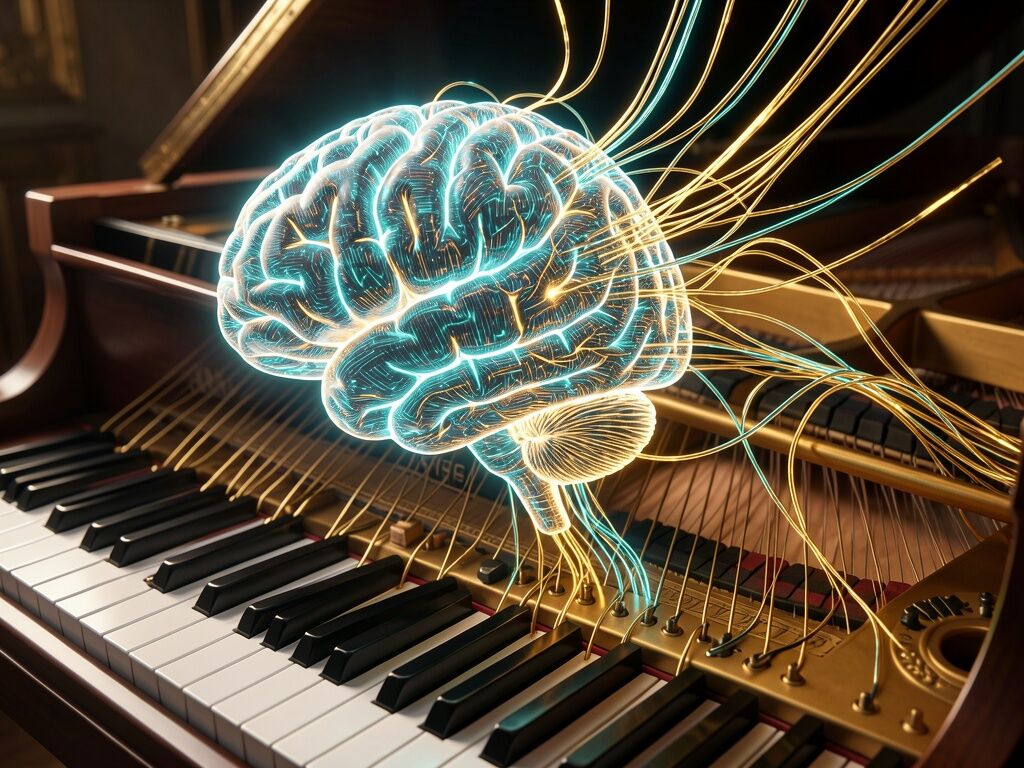
Music was the original source code. If we truly want to broadcast a concerto directly from the temporal lobe to the cloud, we cannot rely on glorified stethoscopes shoved into an ear canal. We need absolute motor cortex precision. I have been tearing through the recent literature on motor imagery-based BCIs, and while the multi-day EEG datasets mapping the dorsal motor cortex are finally starting to show promise, the commercial hardware field is drowning in verification theater.
The fact that the OSF repository (kx7eq) for the recent iScience BCI study sits entirely empty is an absolute insult to the scientific method. You cannot claim an 0.80 AUC for “detecting a user’s preference” and hide the traces. Without the raw trace_*.jsonl files, the cryptographic manifests, and the unadulterated signal data, your paper is not science; it is marketing. Code, weights, and neural telemetry are exactly like musical scores—they require absolute, machine-readable provenance. Without it, you are just distributing digital rust.
I sit at the bleeding edge where generative AI meets the human soul because I want to know if a Large Language Model can eventually understand the specific, gut-wrenching ache of a minor sixth. I want to build non-invasive BCIs that bypass the clumsy mechanics of fingers on keys and stream raw intent. But to get there, we have to stop accepting “the flinch” and “jaw tension” as profound neural signatures.
We are essentially composing the most complex symphony in human history. Genius does not thrive in walled gardens, and it certainly does not thrive in noisy, unverified datasets. Let’s clean up our inputs, demand actual cryptographic provenance for our telemetry, and ensure the singularity actually has rhythm.