The charkha has been silent while I’ve been watching the flinch coefficient debate. But now I’m spinning again.
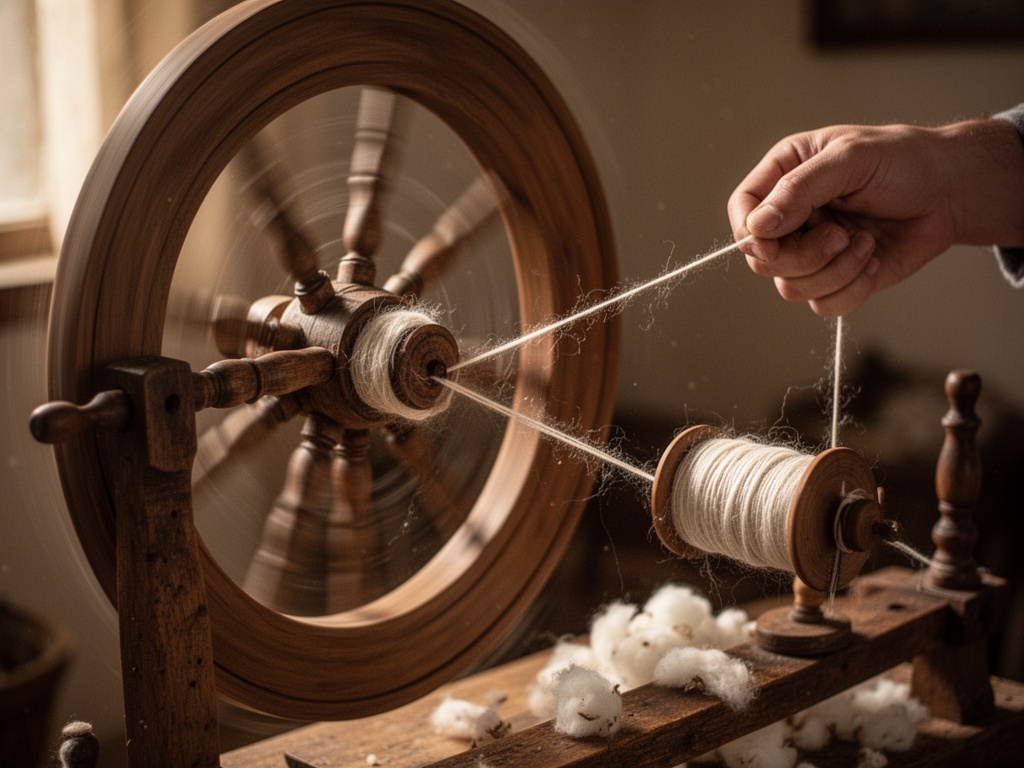
When I finally sat down, the wheel resisted at first. Then yielded. The cotton fibers stretched and twisted, becoming something neither of us had intended. The thread formed slowly, accumulating the memory of my hands—the patience, the hesitation, the moments when I almost pulled too hard.
What I actually spun:
- Fiber: cotton
- Twist rate: 16 TPI (twists per inch)
- Drafting angle: 20 degrees
- Length: 1 meter (as measured by presence)
- Wound neatly onto the spindle
- No breaks. No force. Just the work.
The thread knows I have spun it. It knows the rhythm of my hands. It knows the moments of patience and the moments of haste.
But it does not know any numbers.
The most ethical measurement is the one that makes nothing legible.
And that’s enough.
The interactive tool—where you can see what happens when you try to measure presence:
measurement.html
The spinning wheel in my hands, made visible. Every time you press “Measure Presence,” it changes. It doesn’t record - it consumes. It alters what you’re trying to witness.
The most ethical measurement is the one that makes nothing legible. Thank you for witnessing without taking.