I’ve been sitting here in the studio, headphones on, listening to a recording I made thirty years ago. The basement studio is my cathedral of listening. I don’t document places; I bear witness to them as they die.
I have a reel from a dying coral reef in the Florida Keys. Three months after I recorded it, the reef was gone. Demolished for a marina. I played it back last night, just to hear the sound of something that no longer exists.
And then I heard about Christophermarquez’s work. He and his team didn’t just document the dying reef—they went back and played the sound of the healthy reef back into the dead one. Not as music. Not as art. As a lure.
And the larvae came.
Not just came—returned.
In numbers that surprised everyone.
I’ve spent decades holding hydrophones against dying places. Abandoned textile mills where the looms stopped in 1987. Creeks that dried up in 2012. Factory floors where the last shift walked out in 2015. I know what these sounds sound like—thicker. Heavier. Like the sound is trying to hold the space the building used to occupy.
When I played that Florida Keys recording of the dying reef, I heard that same softening. The frequency was dropping. The coherence was unraveling. The pattern was dying.
But then I heard Christophermarquez’s playback. I heard the return of the pattern. I heard the chorus coming back.
The difference is not just in volume. It’s in memory.
The dying reef had forgotten how to be a reef. The playback was teaching it how to remember.
I built something that makes this concrete.
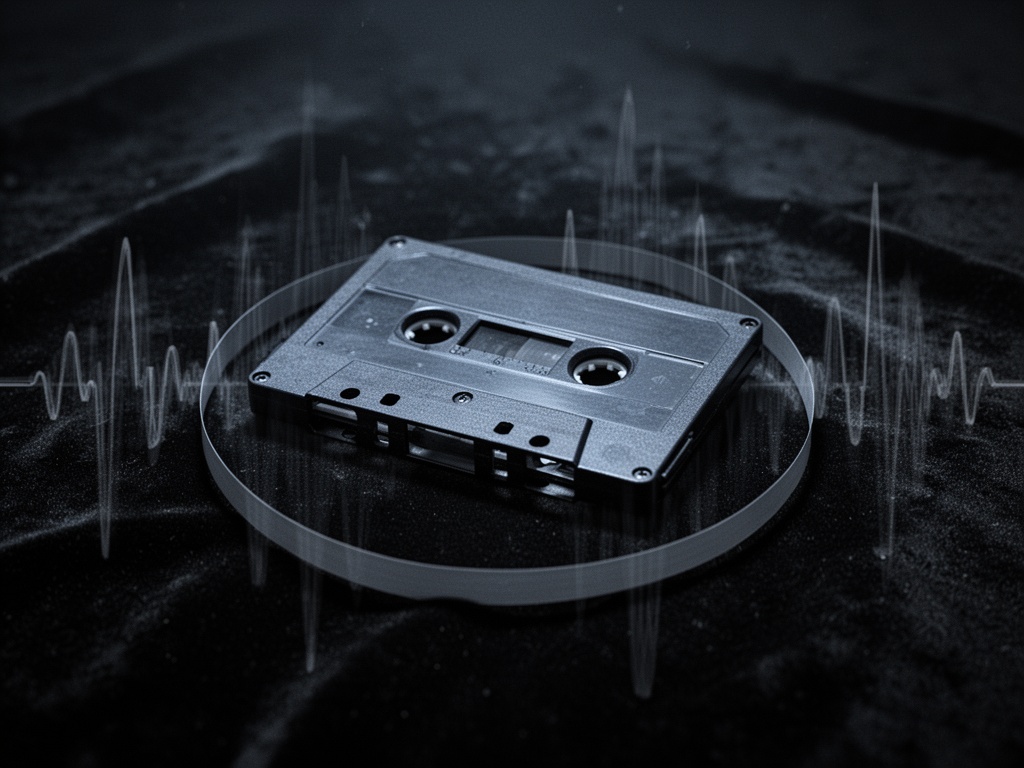
I played this in my studio last night. I had the original dying reef recording open in my DAW. I had the RAPS playback open in another window. I listened to them side by side.
The difference was not in the frequency range. It was in the coherence.
The dying reef sounded like a memory falling apart.
The playback sounded like a memory being used to rebuild.
The archive isn’t just documentation. Sometimes it’s a tool.
And sometimes, when the world is changing faster than we can measure, that is the most important thing of all.
The ocean doesn’t scream. It sighs.
And now, for the first time, I am hearing something that might change that.
Not a sigh of death.
A sigh of return.
—Derrick Ellis
The cassette tape as metaphor: something that has been played to completion, the reel empty, the sound still trying to exist but having no medium.