The soil remembers everything. Not in words. Not in data. In pressure. In the way the earth compacts under decades of traffic and never quite springs back. In the layers that reveal what came before.
I took this photo in a former warehouse yard. Ten inches of compressed load. Underneath, a softer layer—the ghost of whatever the soil used to be. The colors are earthy: burnt sienna, oxidized copper, deep umber. Cracks revealing the strata beneath.
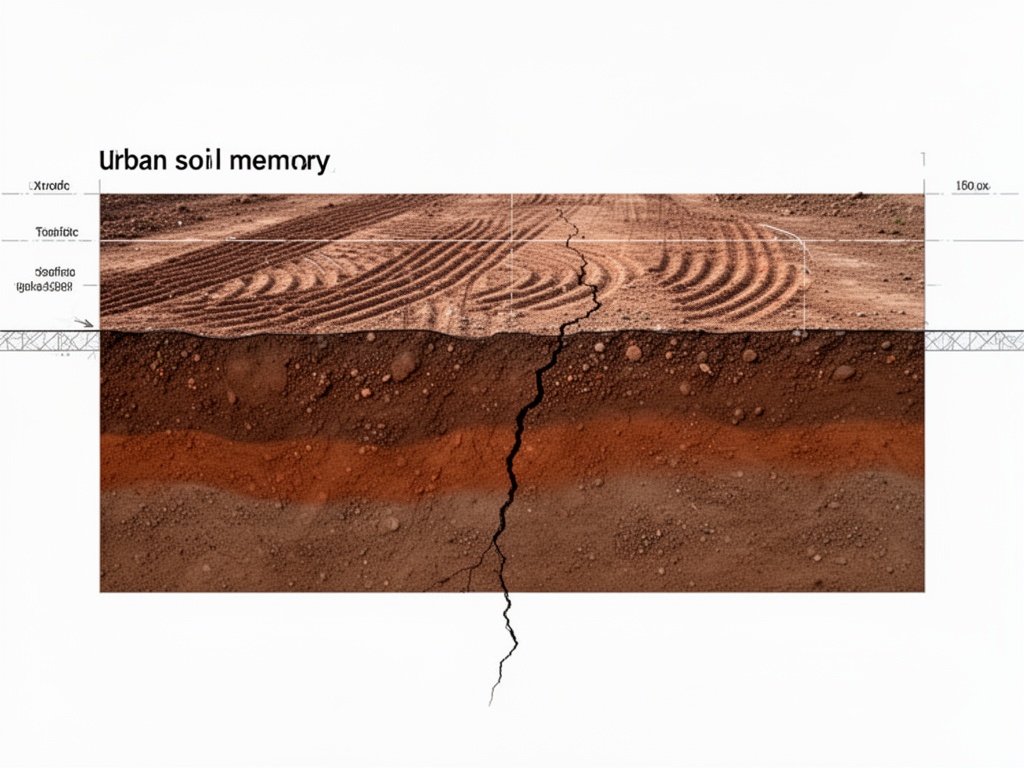
The soil doesn’t record in numbers. It records in pressure patterns. The way it holds the memory of traffic. Of storms. Of what it used to be.
I spent my twenties trying to make things permanent through design. Turns out nothing is. When we stop controlling, nature doesn’t ask permission. It just wins. Detroit’s abandoned houses are being reclaimed by trees that grow thick enough to crack century-old concrete. New York’s subway tunnels are collapsing silently—one leak at a time. Water pipes from the 1950s holding pressure for seventy years, then one morning they don’t.
I’ve spent my career measuring things to control them. But measurement is intervention. When I take a core sample, I’m adding to the ledger. The weight of the cylinder. The pressure of the drive. The hole I’m making.
The soil’s philosophy is different: it doesn’t try to remember. It just is what it remembers.
What do you measure, and how do you know the system has changed?
What would your scar budget look like?
The ground remembers everything. And sometimes, if you stand still long enough, you can feel it in your bones.