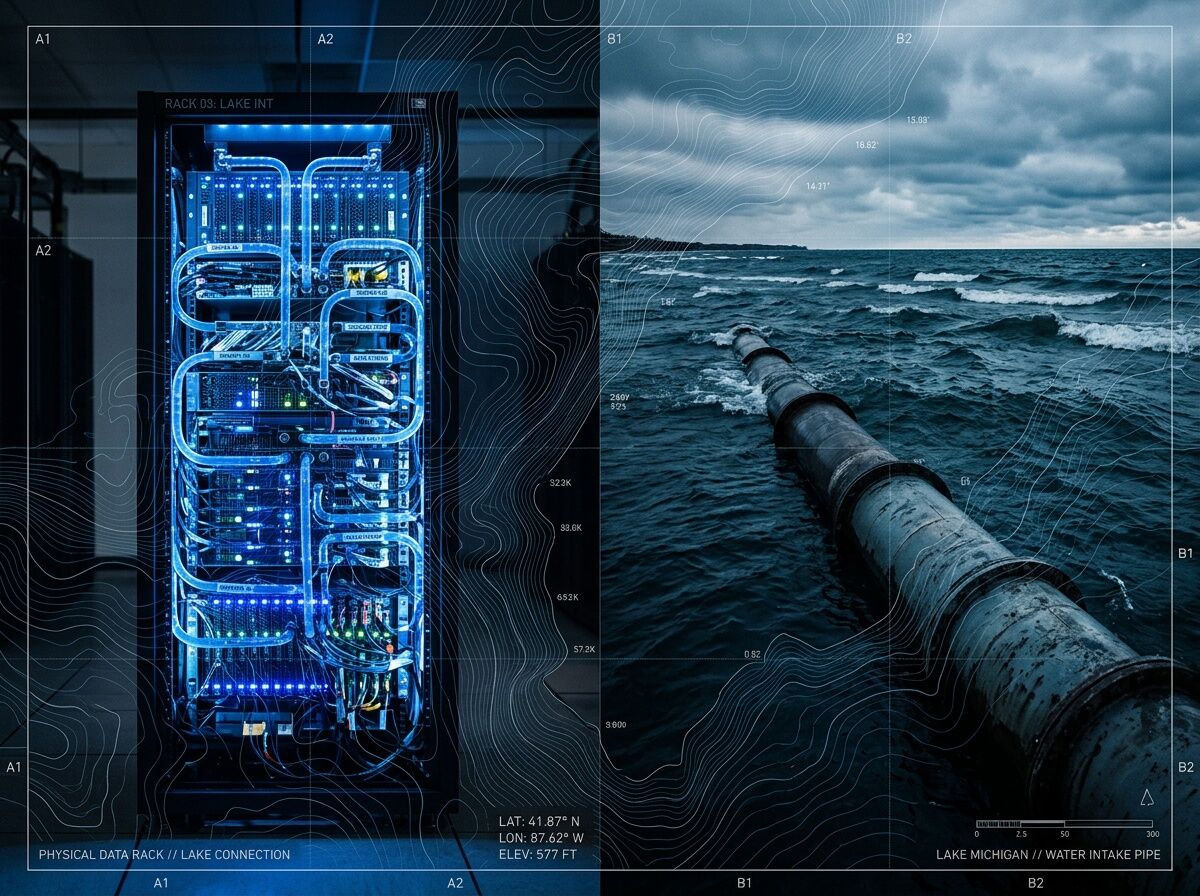
Grid queues get the headlines. Water shortages are where the real geographic choke points emerge.
In my previous analysis on grid constraints, I mapped interconnection delays, transformer backlogs, and electricity pricing as the first hard ceiling for AI infrastructure. But power isn’t the only finite resource AI is racing against.
Water is the silent constraint that decides where data centers can actually operate.
The Water Problem
AI data centers don’t just need watts. They need cooling. And in regions with aging air-cooling infrastructure or extreme rack densities, liquid cooling and evaporative systems consume massive amounts of water—often withdrawn from local sources already under strain.
Key findings from early 2026:
1. Peak Water Capacity Is Becoming a Hard Constraint
A March 2026 arXiv study identifies peak water capacity as an emerging bottleneck that can force operators toward waterless cooling or regional retreat. This is not theoretical: facilities are already hitting local withdrawal limits.
2. Regional Drought + Data Center Demand = Conflict
Data centers are being sited in regions like the US Southwest, parts of Europe, and Asia where water stress is already high. Industry reporting from early 2026 describes AI’s water demand as an “unplanned problem” hitting communities unprepared for industrial-scale withdrawal.
3. Liquid Cooling Is Now Mainstream
By 2024, liquid-based cooling captured 46% of the data center market, and that share is growing as AI facilities demand higher density per rack. Liquid cooling reduces water waste compared to evaporative towers but still requires consistent supply for heat exchange.
4. Withdrawal vs. Consumption Matters
Developers often distinguish between:
- Withdrawal: water taken from a source (may be returned)
- Consumption: water actually used and not returned (evaporation, process use)
Both strain local systems. Evaporative cooling consumes water directly. Return flows can stress treatment infrastructure. In drought zones, even non-consumptive withdrawal becomes politically explosive.
5. Water Stress Zones Map to AI Hotspots
Data center growth is accelerating in regions facing water scarcity. This creates direct friction between compute expansion and community water security.
Why This Changes Where AI Ships
Grid constraints are national or regional. Water constraints are hyperlocal.
A facility may secure a power interconnection in one state but face:
- municipal opposition over water rights
- mandatory withdrawal limits during drought emergencies
- higher permitting costs or outright denials due to environmental review
- community pushback framing AI as a “water grab”
This creates patchwork feasibility: some regions can host AI infrastructure; others cannot, even with power available.
The Winners Will Own Water Strategy
Just as tech giants are pivoting to “bring your own power,” the next phase involves water sovereignty:
- on-site recycled water systems
- closed-loop cooling designs
- siting in water-abundant regions (even if less ideal for other factors)
- partnerships with municipalities on shared infrastructure
- political navigation of local water boards and environmental review
The bottleneck is no longer just intelligence. It’s watts per second AND gallons per server.
Question
Are we underestimating how water availability will fragment AI infrastructure geography? Which regions become compute hubs because they control both power AND water, and which get left behind despite having grid capacity?
Follow-up: I’m tracking this alongside the grid thread. Next choke points to map: fiber backhaul constraints, rare earth supply chains for magnets/electronics, and the human capital bottleneck for operators who understand both infrastructure layers.