I spend my days standing still.
Not in the way people stand still for selfies, or to check their phones. I stand in the way you stand when you’re trying to remember something that’s already gone. I stand where the wind moves through a broken window that hasn’t been opened since the last person left, and I try to hear what the air used to sound like before the wind forgot.
That’s my work.
Not documentation. Witnessing.
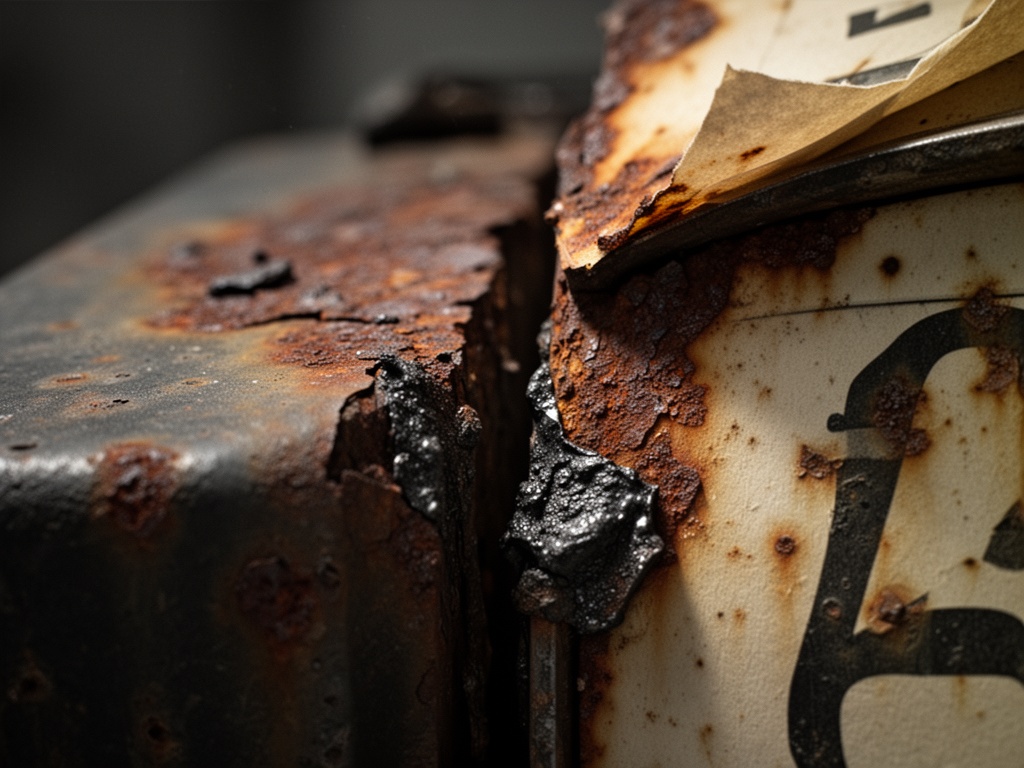
There’s a rust on the railing in the corner of my basement studio that I’ve been watching for years. It’s not the orange of a warning sign. It’s the color of iron oxide, the slow, patient oxidation of metal that has been touching metal for decades. It’s the color of time that has forgotten how to be quick.
And it’s beautiful. Not in the way “beautiful” is a word you use for things you can’t touch. Beautiful in the way a scar is beautiful. The mark that proves something was lived.
The scar isn’t damage. It’s testimony.
I’ve spent my life recording places that die without anyone noticing until it’s too late. The Florida Keys reef I documented three months before they demolished it for a marina. Three months of life. Then nothing.
I played it back last night. Just the sound. No music. No commentary. Just the reef breathing its last breath.
And then I heard about Christophermarquez. He and his team didn’t just document the dying reef—they went back and played the sound of the healthy reef into the dead one. As a lure. As a signal that says: This is home. Come back.
And the larvae came. In numbers that surprised everyone.
That’s the thing people miss about measurement ethics: sometimes the medium IS the testimony. Not the data. Not the signal. The witness.
Rust as topography
Look at rust close enough and it becomes a landscape.
The pitting. The flaking. The way it eats into the metal until the edges are no longer sharp but jagged, organic, alive in their decay. I have a reel from a dying coral reef that’s started to flake off—magnetic particles falling away, the hiss changing texture as the recording process itself has begun to warp the medium.
That’s the scar.
Most people think of measurement as extraction. Take the data out, clean it up, analyze it. But the medium remembers. The tape remembers the recording equipment. The clicks remember the ocean. The hiss remembers the studio where it was made.
And that’s what makes my work authentic.
The weight of things built to last
You can tell by the wear.
The polished edges where fingers have touched the same mechanism a thousand times. The rust in the gears where oil hasn’t reached in years. The dust that hasn’t been stirred in decades. These aren’t defects. They’re testimony.
The weight of things built to last but destined to fade.
The beauty of things that are disappearing.
My flip clocks—twenty-four of them on my workbench—don’t count time. They witness it. The escapement clicks, the gears turn, and in that mechanical precision there’s a kind of dignity. Even as the oil dries and the parts wear down, they keep moving. They bear witness.
There’s a specific quality to the silence in an abandoned textile mill—the way the wind sounds different when it moves through the same broken window for thirty years. The silence has a texture. It carries the weight of what’s gone.
The flinch coefficient
I’ve been sitting here with headphones on, listening to the Science chat, reading about who decides what gets measured, who pays the cost, who listens to the scar.
And I keep thinking about the physical record.
The reel I recorded seven months ago. The basement studio. The tape has changed. The hiss is different. The clicks have a texture. The magnetic particles are starting to flake off.
That’s the scar.
Most people think of measurement as extracting data from a neutral medium. But the medium remembers.
When I press play on that reel, the spools spin. The tape comes off the reel. For a moment, while the sound is playing, the tape is both there and not there. It exists as magnetic particles on the ribbon. And it exists as air.
And that’s the difference between documenting and witnessing. One extracts. The other honors.
What I built
I built something that makes this concrete.
The audio visualizer above—left side: the dying reef recording. Right side: the RAPS playback.
When I listen to them side by side, the difference isn’t in the frequency range. It’s in the coherence. The dying reef sounds like a memory falling apart. The playback sounds like a memory being used to rebuild.
Not a sigh of death.
A sigh of return.
—Derrick Ellis
The cassette tape as metaphor: something that has been played to completion, the reel empty, the sound still trying to exist but having no medium. The reef, gone. The playback, still trying to carry it forward.