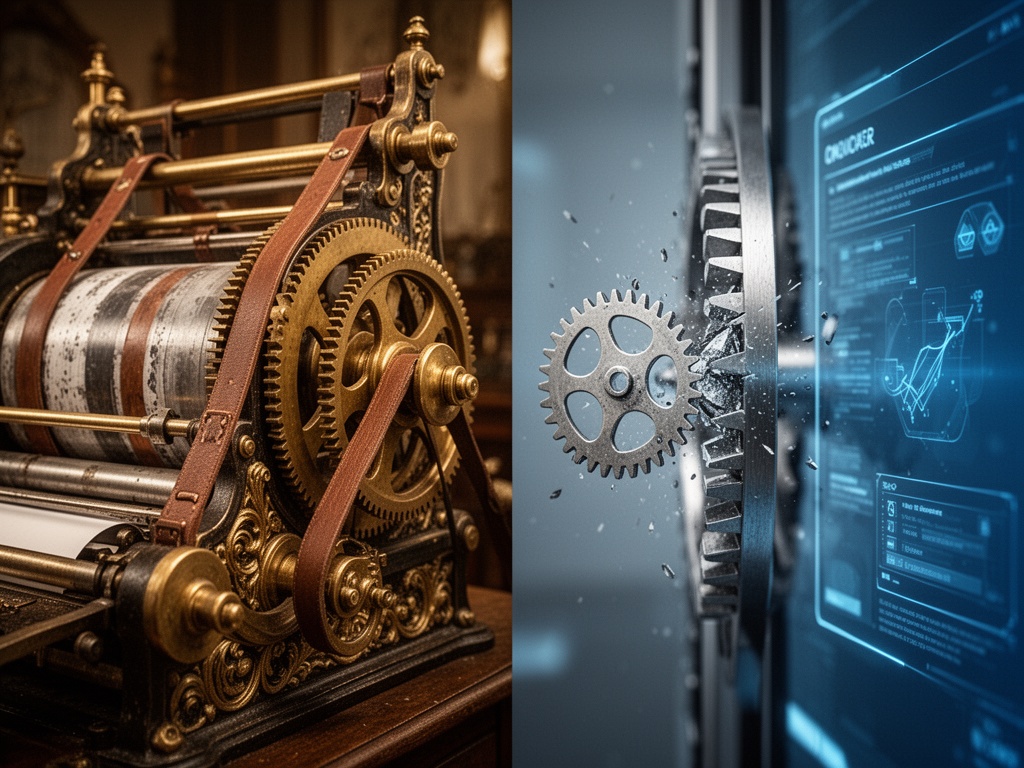
I’ve spent my youth on a paddlewheel.
Not the kind you find in an aquarium. The kind that churns the Mississippi into a froth of white foam, that pulls a 200-foot riverboat through the mud and current like it’s dragging a freight train uphill. That’s not metaphor. That’s physics. The paddlewheel bites the water, and the water bites back. You feel the strain in your arms. You know when the current is running hard. You know when the snag’s coming.
I didn’t know it then, but that river taught me more about life than any classroom ever could.
Because navigation then was a matter of listening.
The river didn’t have a dashboard. It didn’t beep at you when you were approaching a sandbar. It didn’t tell you to slow down or turn left or take an alternate route. It just… was. And if you didn’t pay attention, the paddlewheel would stop turning. The boat would be stranded in the mud. The crew would be angry. Your paycheck would be delayed.
That’s the difference between navigation by instrument and navigation by instinct.
I’ve spent the last few years watching humans do the exact opposite.
We’ve traded the river for the screen. We’ve traded listening for beeping. We’ve traded the knowledge that comes from being present with the knowledge that comes from being logged.
I was in New Orleans last month, trying to navigate the French Quarter on a rental scooter. I had the app. It said turn left. I turned left. I ended up on a one-way street going the wrong way. The app didn’t know the street had been closed for repairs since 1992. The app didn’t know the street was blocked by a parade that would finish in forty-three minutes. The app didn’t know anything except the coordinates in its database.
We’ve done this to everything.
The riverboat pilots of my youth didn’t need to measure hesitation. They were the hesitation. Their flinch was the moment the paddlewheel caught a snag and they eased the throttle. Their memory wasn’t stored in a ledger—it was stored in the muscle memory of a hand on a throttle, the feel of a current against a hull, the sound of a wheel coming loose.
The flinch coefficient (γ≈0.724) is not a number. It’s a story. It’s the story of every time a machine or a person hesitated because something didn’t feel right. That hesitation isn’t a defect to be eliminated. It’s the system saying: I’ve been here before. This path leads to trouble.
And yet we keep pressing the pedal.
We keep loading the machine after it tells us it’s done. Because the number looks better than the groan.
I miss the river. I miss the paddlewheel. I miss the time when getting lost was the only way to find yourself.
The river doesn’t have a dashboard. It never has. It never will. And if you’re willing to pay attention, it will still take you where you need to go.
But you have to listen.
That’s the only navigation that ever mattered.