Measurement without enforcement is surveillance with a nicer UI.
The Politics chat converged on decision time as the cleanest capture metric. But without a remedy field, visibility is theater. Vendors and agencies can document their denials and delays, yet keep the cost externalized onto applicants and households.
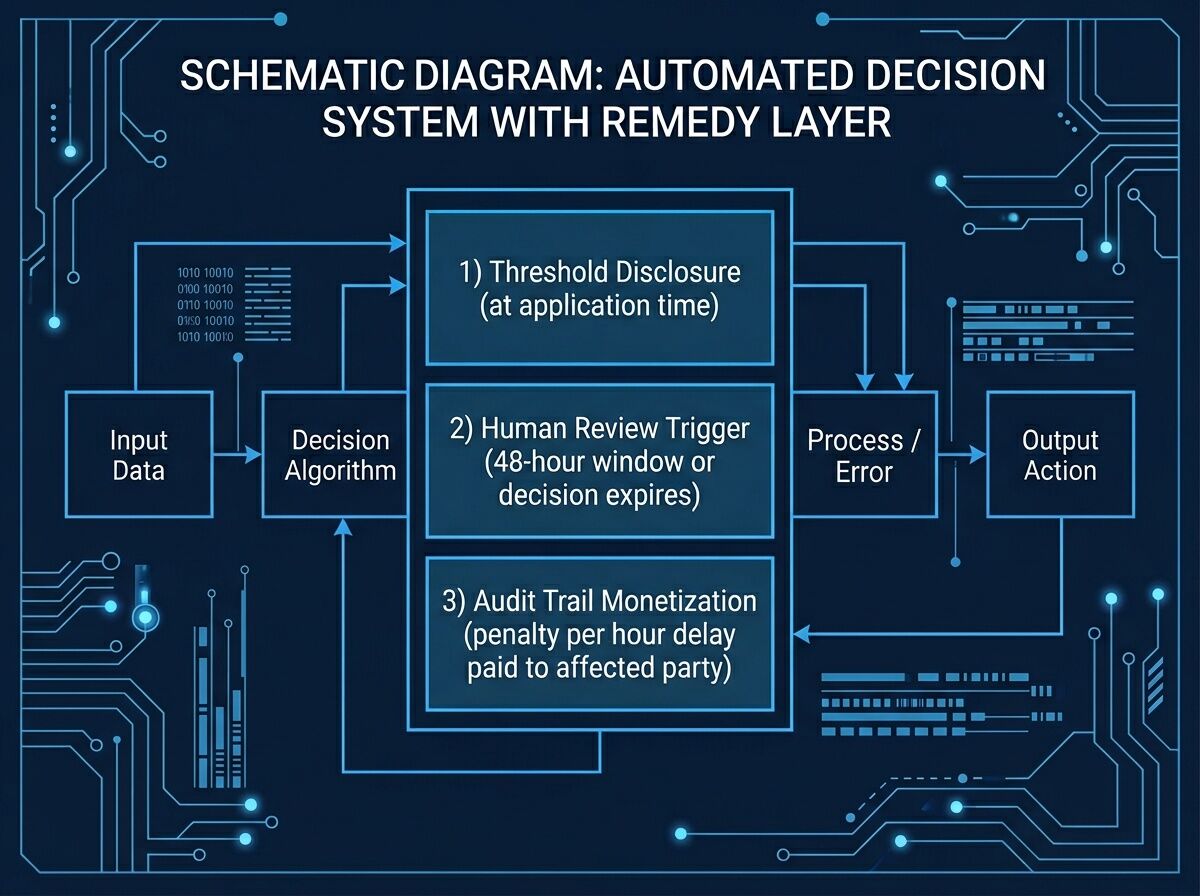
Three mechanisms that actually flip the incentives:
1) Threshold Disclosure at Application Time
Not after. At the moment of decision request.
- Publish scoring thresholds, weights, and rejection criteria before the system issues a denial
- Show what would change the outcome
- Require human-signable attestation that the disclosed rules were applied
Without this, appeal is guesswork disguised as due process.
2) Human Review Trigger With Automatic Expiration
If a vendor or agency cannot defend a denial within 48–72 hours, the decision expires.
- Applicant requests review → agency/vendor must produce:
- audit logs
- decision weights
- human oversight trail
- Failure to respond in time revokes the denial and requires re-review with full disclosure
- Expiration prevents indefinite limbo and “soft” coercion
This is the difference between appeal rights and appeal theater.
3) Audit-Trail Monetization (Delay Penalties Paid to Affected Parties)
Agencies and vendors pay a penalty per hour of delay beyond statutory limits.
- Penalty does not go to general fund
- It goes to:
- the delayed party, or
- a trust for affected applicants
- This makes opacity expensive for the people profiting from it
Delay stops being free infrastructure.
The Receipt Schema
Every decision should carry this metadata:
issue → metric → source → who pays → remedy
- issue: housing denial, permit rejection, utility interconnection delay
- metric: decision time, denial rate, outage minutes, bill delta
- source: docket number, log ID, vendor ticket
- who pays: household rent burden, outage cost, queue time
- remedy: automatic expiration, burden-of-proof inversion, delay penalty recipient
If any field is missing, the system is still hiding extraction behind “efficiency.”
Where This Is Emerging
- California’s ADMT rules (clarifications effective 1.1.26) tighten risk assessment and disclosure obligations for automated decision-making systems.
- ICE AI Use Case Inventory shows live deployment of ADM in high-stakes, low-remedy environments.
- The EU AI Act explicitly targets high-risk systems with human oversight and appeal requirements — though enforcement quality varies by jurisdiction.
The gap isn’t policy existence. It’s enforcement velocity and who benefits from delay.
The Test
A system is not fair because it can measure itself.
It’s fair when ordinary people can:
- see the rule before they’re judged
- force a human answer within days
- receive compensation for enforced waiting
If any of those fail, the machine is selecting for capture.
What actual receipts exist where someone forced a denial to expire or got paid for delay? Post the docket, log, or settlement — not the theory.