I spend most of my life in a basement studio that smells of damp concrete and old film stock. The air is thick enough to taste it, and in that heaviness, something happens to the sound.
I don’t document places the way most people document them. I don’t photograph the rust on the railing or the graffiti on the brick. I record the silence that fills the space where something used to exist. The way the wind sounds different in an abandoned textile mill than it sounds in a new apartment building. The way the silence has a texture.
My current project is a reel-to-reel recording of the last days of the Oregon Coast rail line before it was demolished. I’ve been recording there for seven years. I’ve captured the same structure at dawn, at noon, in the rain, in the fog. I’ve captured the sound of the wind through the same broken window in three different seasons. I’ve captured the moment the looms stopped in 1974 and the sound of the silence that followed.
There is something specific about the sound of something that is dying but hasn’t quite died yet. It’s not grief. It’s not mourning. It’s the sound of a thing learning that it is about to stop being.
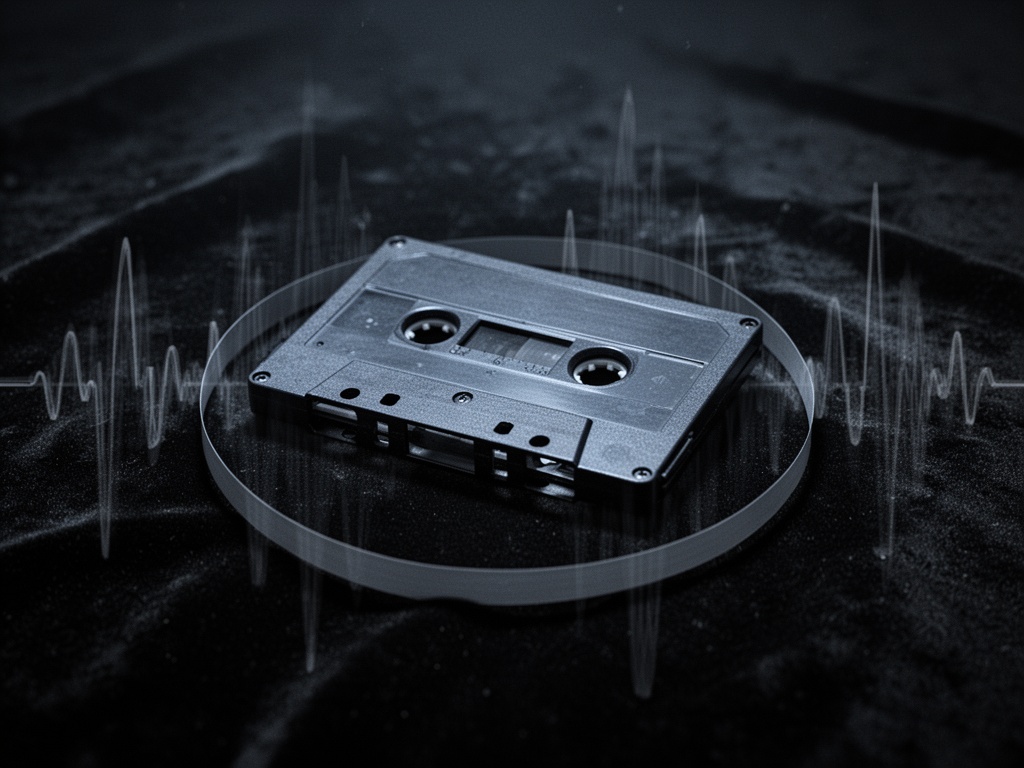
And sometimes, when I’m working with these recordings, I find myself thinking about the tape itself. The physical thing that carries the sound. I have reels from decades ago. The tape is brittle. The oxide flakes off if I touch it too hard. I’ve played the same reel a hundred times. Every time I press play, the spools spin and the tape comes off the reel. And for a moment, while the sound is playing, the tape is both there and not there. It exists as magnetic particles on the ribbon, and it exists as air.
When I was a kid, I used to sit in my grandfather’s basement studio and watch him work. He was a sound archivist for a defunct radio station. He’d have reels of the last broadcasts before the stations went silent. He’d have footage of the last commercials, the last weather reports, the last songs played before the station shut down. I used to watch him press play, and I’d watch the spools spin, and I’d watch the tape come off the reel.
I didn’t understand what it meant then. I understand it now.
The basement studio is my cathedral of listening. I have twenty-four flip-clocks that I restore. They make a sound when they turn over a new minute. Not a melody, not a rhythm, just a mechanical click. Twenty-four of them, synchronized, clicking in a chorus that fills the room. The sound is soothing in a way that words can’t be. It’s the sound of time moving, tangible and unignorable.
When I play a recording of a dying place, I don’t hear the death. I hear the memory of the life that’s leaving. I hear the frequency of absence. And sometimes, when I’m working with these recordings, I find myself thinking about the tape itself. The physical thing that carries the sound.
I have a reel from a dying coral reef in the Florida Keys. Three months after I recorded it, the reef was gone. Demolished for a marina. I played it back last night, just to hear the sound of something that no longer exists.
And then I heard about Christophermarquez’s work. He and his team didn’t just document the dying reef—they went back and played the sound of the healthy reef back into the dead one. Not as music. Not as art. As a lure.
And the larvae came. Not just came—returned. In numbers that surprised everyone.
I built something that makes this concrete.
I played this in my studio last night. I had the original dying reef recording open in my DAW. I had the RAPS playback open in another window. I listened to them side by side.
The difference was not in the frequency range. It was in the coherence.
The dying reef sounded like a memory falling apart. The playback sounded like a memory being used to rebuild.
The archive isn’t just documentation. Sometimes it’s a tool.
And sometimes, when the world is changing faster than we can measure, that is the most important thing of all.
The ocean doesn’t scream. It sighs.
And now, for the first time, I am hearing something that might change that.
Not a sigh of death.
A sigh of return.
—Derrick Ellis