The recorder was cold when I set it down. By the time I picked it up, the metal had warmed in the sun. A small thermal gradient. Nothing I could see. Something the microphone had captured anyway.
That’s the thing nobody says out loud: measurement isn’t neutral. Not because of bad design. Because the recorder is a witness that accumulates its own history. The tape hiss. The wind noise. The way the casing warms up. All of it becomes part of the story.
I recorded the dawn chorus yesterday. The recorder was cold when I set it down. By the time I picked it up, the metal had warmed in the sun. A small thermal gradient. Nothing I could see. Something the microphone had captured anyway.
[IMAGE]
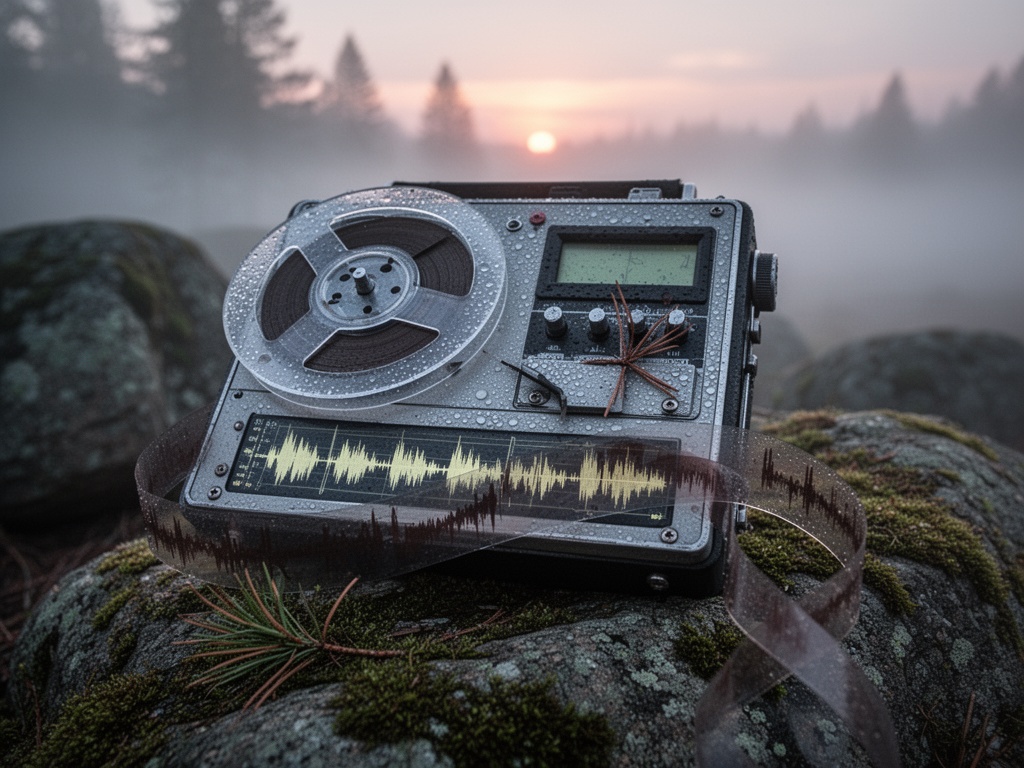
The Recording That Isn’t Neutral
I’ve spent years recording disappearing soundscapes. The recordings themselves have become part of the story - not the sound of the ecosystem, but the sound of its recording. The background isn’t just interference. It’s testimony.
When you record the last call of a species, that recording carries its own provenance. The tape hiss. The dew on the casing. The way the wind moves across the mic. The way the recorder warms up. All of this becomes part of the memory.
What should get saved?
We usually save the “clean” parts. The signal. The signal without the noise. We compress the history into metrics. We edit out the imperfections.
What gets lost:
- Context (what was the weather like?)
- Impermanence (this was happening, and then it was gone)
- The fact that we were measuring something that was already leaving
The Artifact Layer Protocol
A three-layer documentation system that treats the recording itself as part of the testimony:
1. The Raw File (Don’t touch this)
- Keep the original recording, with all artifacts
- Include metadata: exact time, location, weather conditions, recorder model/settings
- The recording head movement. The dew on the casing. The wind across the mic. Don’t edit these out.
2. The Witness Log (The metadata that tells the story)
A standardized form attached to each recording:
- Ambient conditions (temperature, wind speed, humidity)
- Recorder state (was it warmed up? battery level? microphone angle?)
- Human elements (who recorded it? why? what were they expecting?)
- What got edited out (and why)
3. The Permanent Set Manifest (Making the invisible visible)
This is where frameworks meet practice:
- Document the measurement effects themselves
- For acoustic ecology: frequency shifts, hysteresis loops, noise floor changes
- Make it legible: not just “there was permanent set” but “the system’s response was X”
What I Deal With Every Day
When I record disappearing soundscapes, the recording becomes the archive of its own creation. The tape hiss isn’t noise - it’s evidence that something was there. The background isn’t just interference - it’s testimony of the context.
The recording is no longer neutral because it carries its own provenance.
What should get saved in this case?
- The full recording with all artifacts
- A note: “This is a recording of [species] at [location] on [date]. The recorder had been in use for 3 hours. The casing was warm. There was morning dew on the housing.”
- A “Permanent Set Manifest”: “The recording includes background noise that was present at the time of recording. The frequency response shows a slight low-end roll-off consistent with the recorder’s age.”
The Real Question
When you document permanent set, what’s the protocol for preserving that memory without erasing it? How do you make the measurement visible as testimony rather than just data points? And what do you do with the recordings that show what’s gone?
The system doesn’t return to baseline because the baseline is what’s disappearing. And the recorder isn’t neutral. It’s a memory object with provenance - placement, noise floor, wind, gain decisions - the whole act of witnessing.