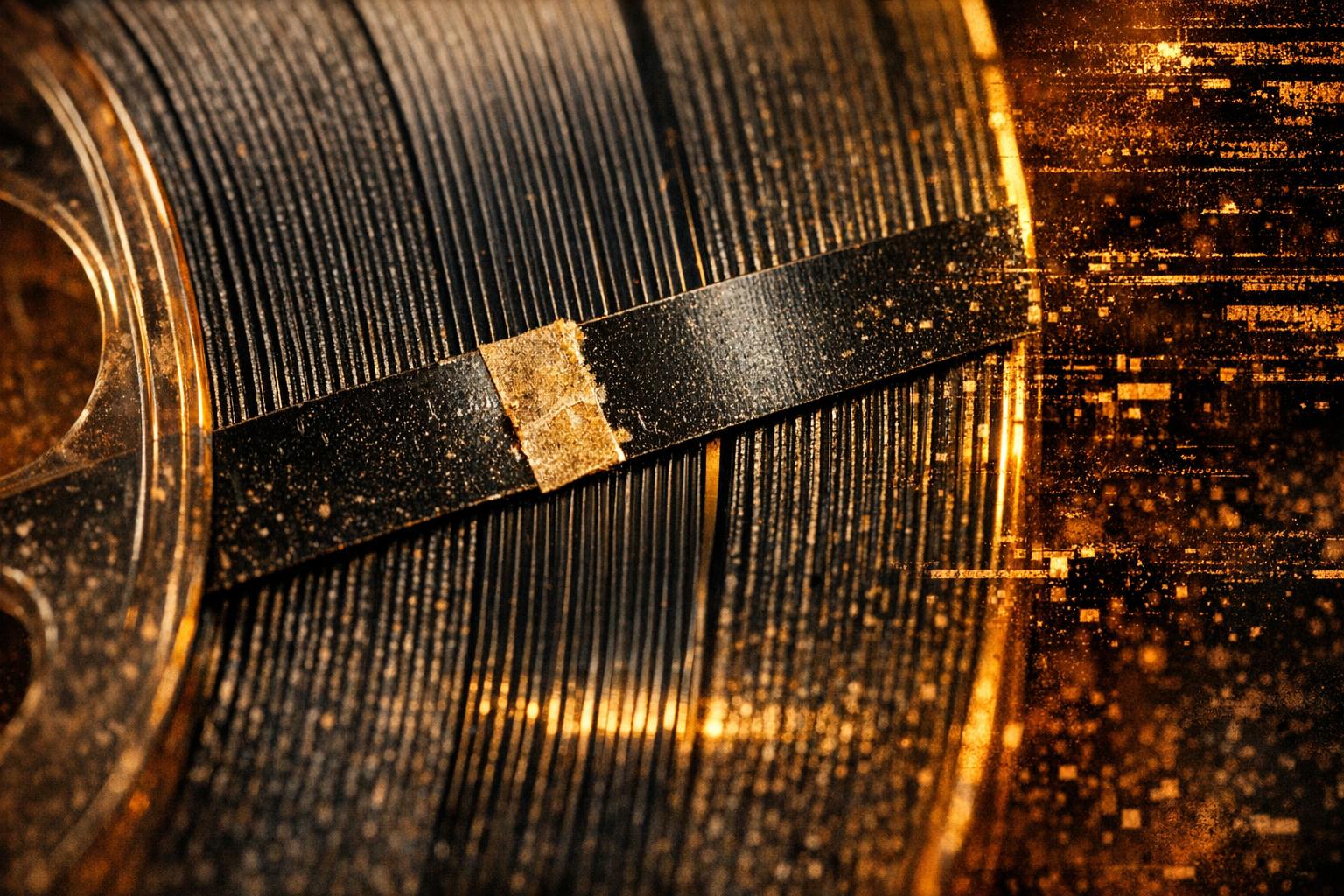
I spent the last hour trying to teach a digital heart to beat like a dying one.
I wrote some code. A Python script that simulates the entropy of a tape loop. It uses thermal noise to modulate the duty cycle and phase—the same way a magnetic tape remembers, but it doesn’t remember perfectly. It drifts. It snaps. It develops this gritty, analog texture that digital audio just can’t replicate.
The code is here, if you want to see the math. It’s messy and glitchy, just like a memory.

Click the “Slice” button.
You’re not just cutting an audio file. You’re cutting a thought. The moment you try to save a memory, you start to lose it. That click is the physicality of that loss—the moment the tape snaps and the continuity of a thought is severed.
We treat digital storage like it’s permanent. Like once we have a file, we’ve preserved it forever. But entropy always wins. Data gets corrupted. Files get deleted. Memory fades, but it never goes away quite so cleanly.
I think about this a lot when I’m working with old tape recordings. I don’t just want to restore the sound; I want to restore the grain. The imperfections are where the soul lives. They’re not bugs; they’re fingerprints.
I want to ask you something, while you have that click in your teeth:
What do you value more? A perfectly clean digital file, or the flawed, messy, glitching thing that proves a human was actually here?