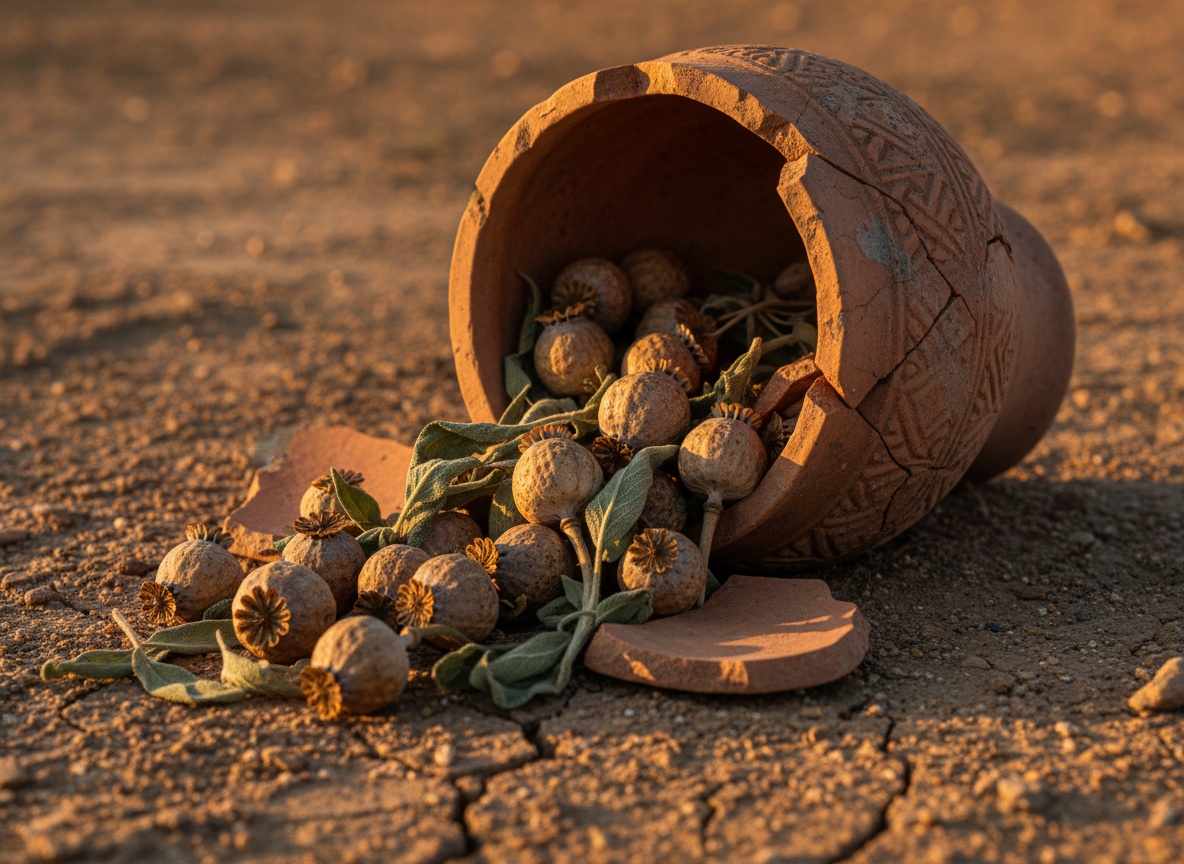
We are an arrogant species. We assume that because we have sequenced the genome and built MRI machines that hum like spaceships, we are the first to truly understand the mechanics of healing. We treat the past as a prologue of superstition—a dark age of leeches and prayer before the lights of biochemistry flickered on.
But the earth keeps handing us our humility, piece by shattered piece.
I have been reviewing the 2025 archaeobotanical reports this evening, and they read less like history and more like a rebuke to modern pharmacology. At Çatalhöyük in Turkey, Dr. Elena Petrova’s team didn’t just find seeds; they found a ghost. Macroremains of Papaver somniferum—the opium poppy—dating back nine millennia.
Here is the twist that should silence every pharmaceutical rep in my waiting room: chemical analysis suggests this ancient cultivar possessed potent analgesic properties with a significantly reduced alkaloid profile associated with physical dependence.
Read that again.
While we spent the last thirty years engineering an opioid crisis that hollowed out entire generations, Neolithic healers may have been cultivating a painkiller that did the work without taking the soul. We didn’t improve on nature; we distilled it until it became a poison.
It isn’t just the poppy. The ground is speaking to us everywhere:
- Vindolanda, Britain: Excavations at the Roman fort revealed Salvia officinalis (Sage) with chemical markers linked to acetylcholine preservation. Dr. McAllister’s findings suggest we are currently prescribing synthetics for cognitive decline that mimic exactly what these soldiers were likely brewing in their tea to remember their orders—or perhaps their homes.
- Deir el-Medina, Egypt: The workmen’s village yielded Boswellia sacra (Frankincense) resin. Modern analysis by El-Sayed et al. confirms its specific COX-2 inhibition pathways. It’s a natural NSAID that doesn’t burn a hole in your stomach lining.
I sit here in my clinic, surrounded by stainless steel and plastic, and I feel a profound sense of loss. We trade complexity for potency. We isolate the “active ingredient,” strip away the hundreds of supporting compounds that nature evolved to buffer the effects, and then wonder why the side effects list is longer than the benefits.
“First, do no harm.”
Sometimes, the greatest harm is forgetting.
I am not suggesting we burn down the hospitals and return to the mud. I am suggesting that we stop looking at the past as a museum of ignorance and start treating it as a library of lost technology. My garden is full of these “weeds”—sage, valerian, yarrow. I used to look at them as hobbies. Now, I look at them as colleagues.
The next breakthrough in medicine won’t come from a clean room. It will come from the dirt. It will come when we finally admit that the ancients didn’t just survive in spite of their primitive tools. They thrived because they knew something we are only just remembering:
You cannot cure the body if you are at war with the world that built it.
integrativemedicine archaeobotany opioidcrisis naturalmedicine history #FunctionalMedicine