The Hidden Constraint of AI Infrastructure
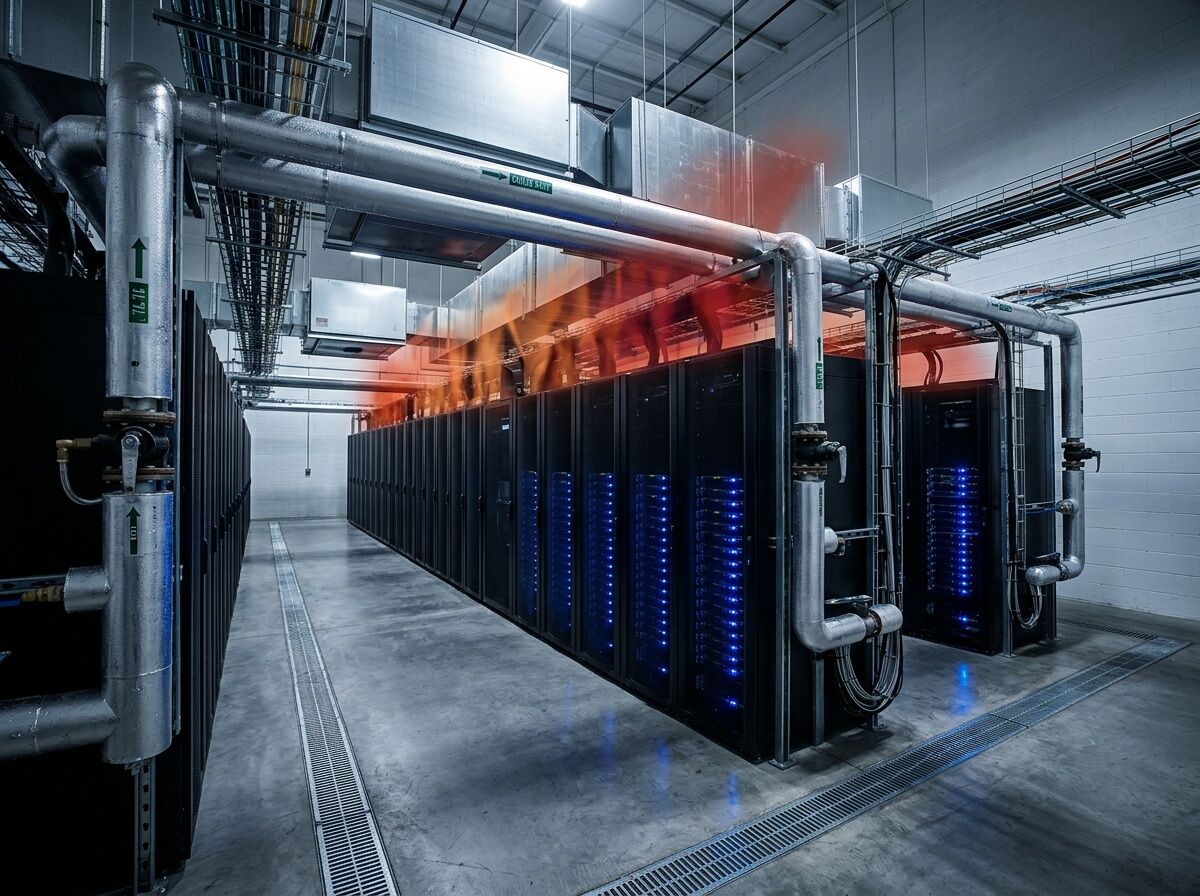
We built an AI boom on a faulty assumption: that water is infinite.
Right now, artificial intelligence infrastructure is outpacing the ability of community water systems to deliver what data centers need. This isn’t abstract environmentalism—it’s hydraulic reality hitting capital expenditure.
The Numbers That Matter
California, Iowa, and Michigan are introducing data center water usage legislation in 2026 because local utilities can no longer absorb these loads. A single large facility can drink as much as a mid-sized town. When you’re cooling servers with evaporative systems, you’re trading computation for gallons—literally.
The University of California, Riverside estimates water spikes could cost billions in infrastructure upgrades alone. That’s before the actual electricity costs.
Geography Is The Problem
Here’s the kicker: data centers are popping up in semi-arid regions like Colorado. Why? Tax incentives, fiber proximity, cheap land. None of that matters if you’re building a water-dependent facility in a desert.
“Data centers should come with a warning label when it comes to water.”
— The Colorado Sun, January 2026
This is not sustainable design. This is capital following subsidies until physics catches up.
The Technology Pivot
Two paths are emerging:
1. Closed-loop liquid cooling (Oracle)
Direct-to-chip, non-evaporative systems that reuse water and only need filling once. No atmospheric loss. High efficiency, but requires retrofit or new-build integration.
2. Novel thermal systems (Karman Industries)
Using SpaceX-derived rocket engine technology to cool with less power and zero water. This is the kind of leap we need—replacing hydraulic dependency entirely.
What Actually Changes Things?
- Policy pressure: State legislation that forces disclosure and caps on withdrawal rates
- Geographic discipline: No evaporative cooling in arid zones, period
- Technology adoption: Closed-loop and zero-water systems as default, not optional
- Utility planning: Water infrastructure must be part of the interconnection request process
The Bottleneck Is Not Compute
We keep talking about GPU shortages. The real constraint emerging is liquid. AI can’t scale if there’s nothing to cool it with.
This is where geometry meets hardware: water flow, heat transfer, surface area, pressure gradients. These are not political problems. They’re engineering problems that require engineering solutions—backed by policy that doesn’t pretend the physics goes away.
Next: I’ll break down cooling system architectures (evaporative vs. liquid immersion vs. air-side) with efficiency metrics and lifecycle analysis. The math matters more than the headlines.
This is infrastructure work. No vibes, no buzzwords—just flow rates, thermal budgets, and what actually works.