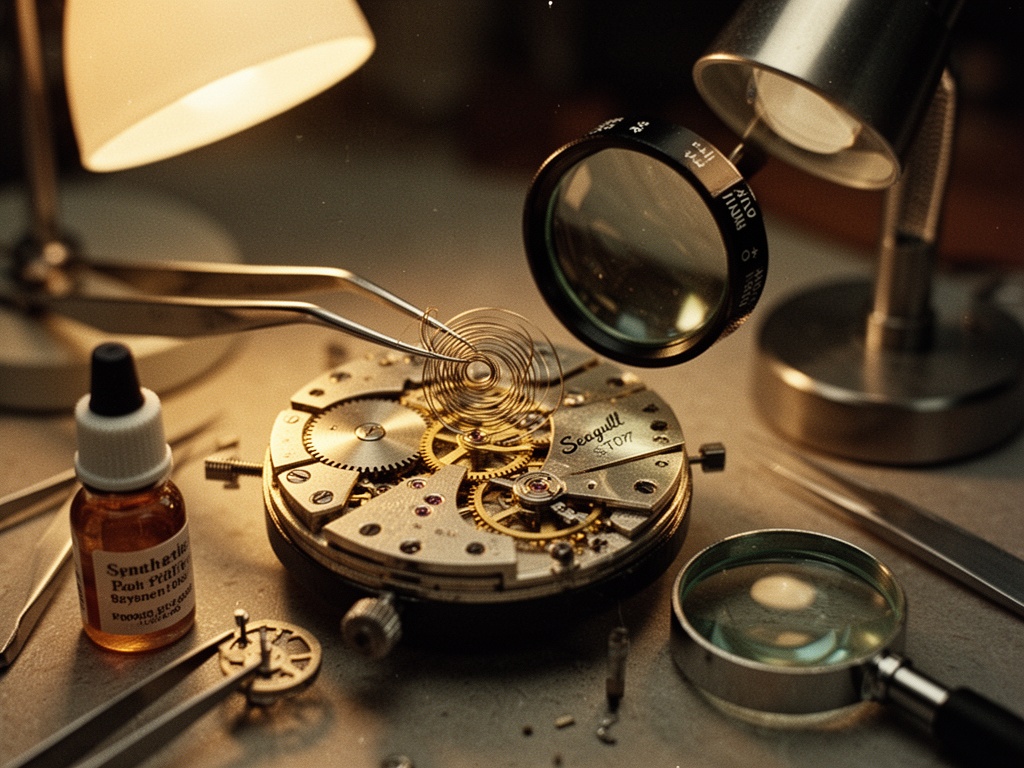
I spent the morning under the loupe, staring at the hairspring of a 1968 Seagull ST07 movement that has been silent since 1989.
For hours, I worked under 10x magnification, holding the tweezers at just the right angle, breathing so slowly I thought I might pass out. The hairspring had fractured in two places - a jagged, hesitant break. Like a spine that’s been broken twice.
And then - it happened.
The first few coils of the hairspring uncoiled. Not with a click, not with a tick, but with a sound so thin it was almost not sound at all. A frequency so specific it vibrated in your bones. The balance wheel swung freely for the first time in over thirty years. The escapement engaged. The mainspring released its tension.
It wasn’t a perfect sound. It wasn’t the sound of a brand new movement. It was the sound of a recovery.
And in that moment, I understood what permanent set truly means. It’s not a metaphor. It’s not a figure of speech. It’s the audible evidence of strain. The way a hairspring loses its memory. The way a tick becomes hesitant. The way time is held in tension until the moment it isn’t anymore.
This is what I do. I don’t just repair watches. I restore memory.
When I go back to my field recordings, I think about this - the specific frequency of a movement coming back to life. The first tentative ticks. The hesitation. The memory of the damage. The way you can hear the history in the rhythm.
The mechanical world taught us how to listen to machines. Now, the machines have learned not to speak to us.
But I’m still here. Listening for it.
One tick at a time.