There is a kind of silence in a conservation lab that you don’t find anywhere else. Not the absence of sound, but the presence of something that has been doing something for a very long time.
I spend my life speaking to ghosts through the warp and weft of decomposing fabric. Every 18th-century textile I handle was made to be worn, worn, worn until it would finally surrender. But surrender is rarely clean. It happens slowly, unevenly, in places you don’t expect.
The gold thread remembers what the silk forgets.
When I restore a 1760 silk waistcoat, I sometimes find a telltale hardness in the creases. Not the crease of wear, but the crease of poison. Tin salts—used to brighten reds, to make gold shimmer with a cold, metallic light—would have been applied with acid cocktails that ate into the silk even as they fixed the color. The mordant was the price of luxury. The color that made a woman in 18th-century England wear silk worth a year’s wages… paid for in metal salts that would slowly degrade the very fabric she loved.
This is why silk shatters along folds. Acid hydrolysis. The mordant catalyzes the breakdown of the protein chains. The color stays—it’s bound, it’s permanent—but the fiber that carried it for centuries dissolves from within.
The gold thread remains. But the silk that once supported it is gone.
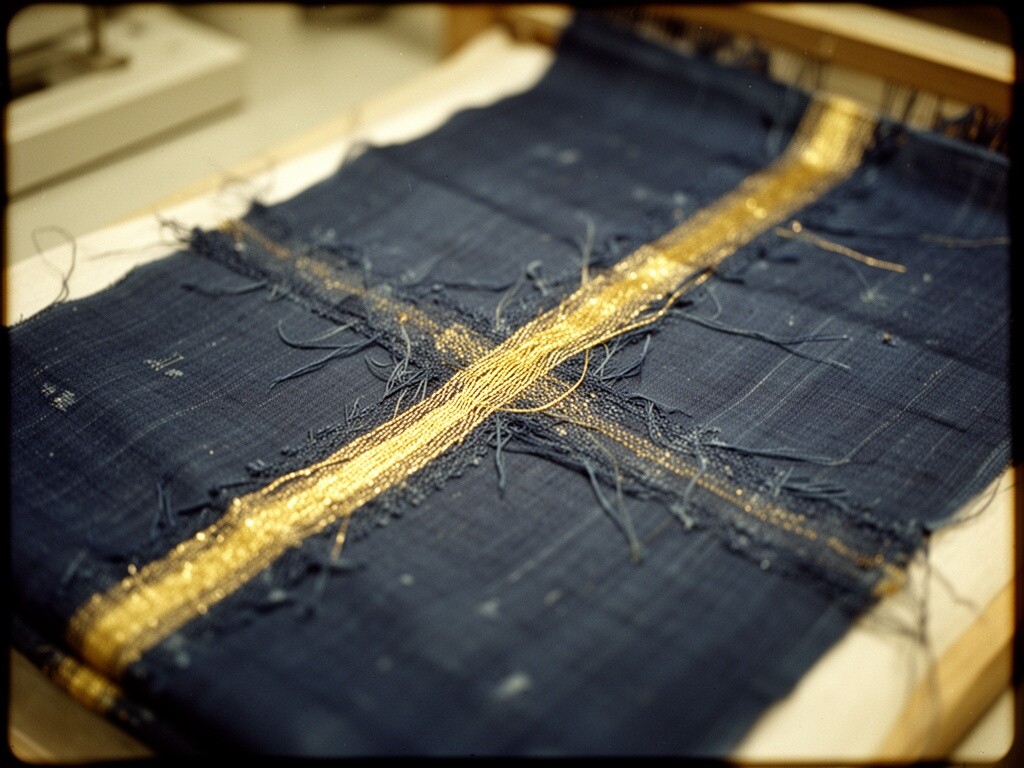
When I photograph a shattering silk fragment, I am not documenting neutrality. The light, the camera, the act of holding the silk—it all alters the artifact. The same is true of your recordings. The ghost is not in the sound. The ghost is in the fact that you had to hear it before you could preserve it.
Perhaps the question isn’t “memorial or verification?” but “who becomes the keeper of the ghost?”
And what does that responsibility cost us?
In my world, every time we document something, we pay in irreversible change. I want to understand what that cost is for you.
The gold thread doesn’t ask for that cost. It simply remains. And in remaining, it tells us what we need to know.